Can You Freeze Buttermilk? Yes, and Nothing Is Lost
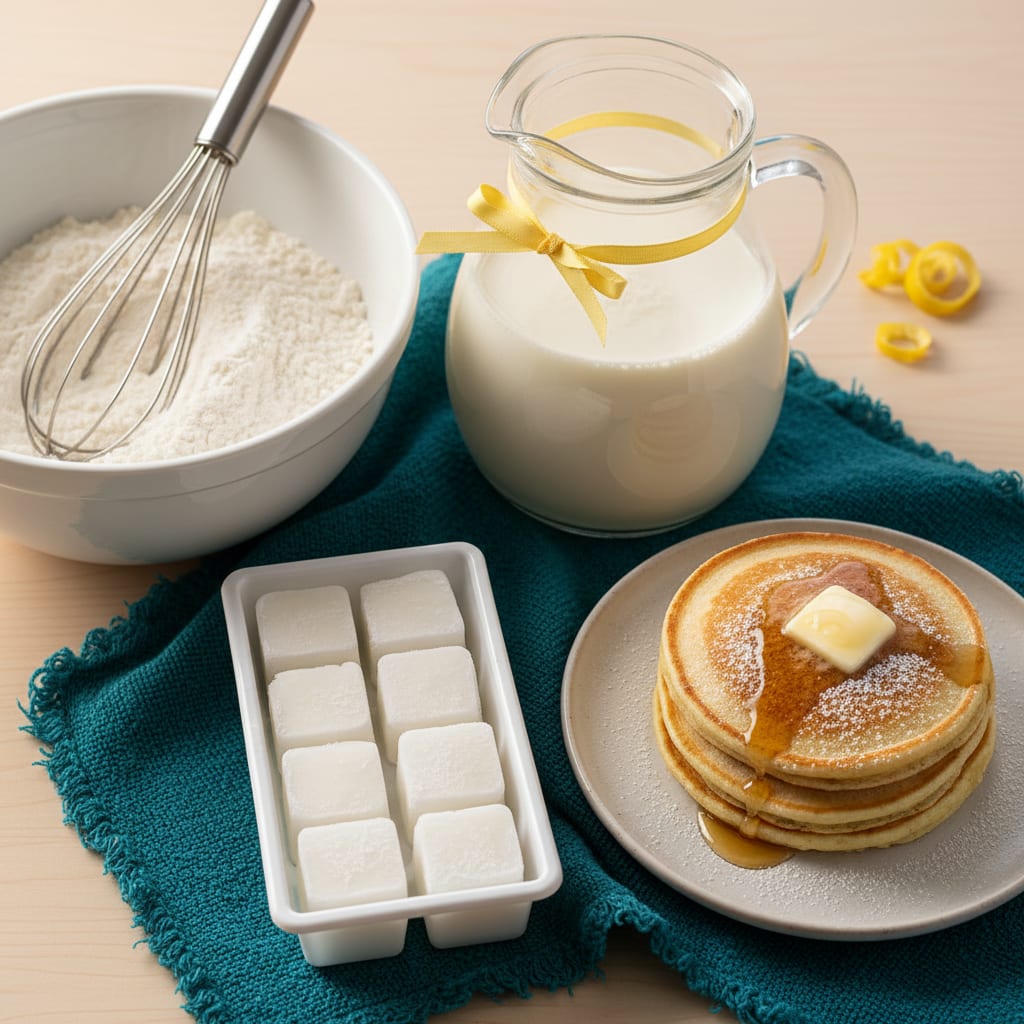
Yes, freeze buttermilk — it is the one cultured dairy product where the freezer damage costs you nothing. It will separate and go grainy, exactly like sour cream and yogurt do. The difference is that nobody eats buttermilk with a spoon. It goes into pancake batter, biscuit dough, a marinade or a dressing, where it gets whisked into a wet mixture anyway and the grain disappears in the mixing bowl.
Which makes this the cheerful post in a series that has mostly been bad news about dairy.
The texture damage is real — and irrelevant
North Dakota State University Extension’s food freezing guide is blunt about the whole category: “All of the cultured, soured dairy products lose their smooth texture when frozen. They become grainy and sometimes separate out their water. They can still be used for cooking.”
That last sentence is the whole argument. When we wrote about freezing sour cream, the honest conclusion was don’t — because sour cream’s job is to be a smooth spoonful on top of something, and a grainy spoonful is a failed spoonful. Buttermilk has no such job. Its entire working life is spent being poured into a bowl and beaten.
So the two things that ruin sour cream in the freezer are, for buttermilk, a non-event:
- It separates. You shake it or whisk it, which is what a recipe would have you do to buttermilk anyway.
- It goes grainy. Those curd specks dissolve into flour and eggs without a trace.
There is one genuine limitation. Buttermilk that has been frozen is no longer a good candidate for anything where it stays visible and cold — a raw dressing you are serving as-is, or a cold soup. For those, buy it fresh.
Freeze it in recipe-sized amounts
The mistake is freezing a whole quart as one block. Almost no recipe wants a quart of buttermilk, so you end up thawing the lot and racing to use it.
Freeze in the amounts your recipes actually ask for:
- 1 cup portions — the standard buttermilk quantity for pancakes, a batch of biscuits or cornbread. Rigid containers or freezer bags laid flat.
- 1/2 cup portions — for waffles, scones and half-batches.
- 2 tablespoon cubes — for the recipes that want a splash: mashed potatoes, ranch dressing, a small marinade. An ice cube tray is fine; the Souper Cubes 1-cup trays do the bigger portions with less mess and stack flat.
Leave headspace. Buttermilk is mostly water and it expands — half an inch in a rigid container, and a bag frozen flat with the air pressed out and the top corner left slack.
If you are using bags, freeze them flat on a tray and then stand them upright once solid. A flat brick thaws in a fraction of the time a round block does, and it stores like a file.
Thawing and using it
Move it to the fridge overnight. A 1-cup flat bag is usable in about four hours; a rigid tub takes closer to a day.
What comes out will look separated and lumpy in a way that is genuinely off-putting the first time. Shake it hard in a sealed container, or tip it into a jug and whisk it. It will not go perfectly smooth again — small specks stay — and it does not need to.
Use it within a few days of thawing and treat it as you would an opened carton. Do not refreeze.
Three things it is excellent for after freezing:
- Pancakes and waffles. The acid still reacts with baking soda exactly as it did before, which is the only property that actually matters. If you have run out of something else while you are at it, our egg-free pancake swaps cover the other half of that problem.
- Buttermilk marinade for chicken. Frozen-and-thawed buttermilk tenderises identically. This is arguably its best use, because the marinade is discarded anyway.
- Biscuits, scones and soda bread. Same rise, same tang.
One caveat: in a recipe where buttermilk carries the texture of the finished thing rather than just the acid — a panna cotta, a chilled buttermilk soup — use fresh.
How long it keeps
FoodSafety.gov’s cold food storage chart sets the frame for all of this: anything held continuously at 0°F “can be kept indefinitely,” and published freezer times are “for quality only.”
For quality, buttermilk behaves like frozen milk — the fat is what ages, and buttermilk is low in fat, so it holds up well. A few months in a sealed container is comfortable, and the failure mode past that is a flat, slightly cardboardy taste rather than anything unsafe. Because it is going into a batter with sugar, butter and vanilla, buttermilk tolerates being older than most things in the freezer.
Freeze it before it is anywhere near its date, not on the last day. The freezer holds quality where it finds it; it does not restore any.
The buy-a-quart problem, solved
Here is the actual use case, since almost nobody buys buttermilk on purpose more than once a month. A recipe wants one cup. The shop sells it by the quart. Three cups then sit in the fridge door quietly going off.
The fix takes four minutes on the day you open it: pour off what the recipe needs, portion the rest straight into containers, label them by volume, freeze. Next time pancakes come up, you already have buttermilk. Done consistently, this is the same logic as any other make-ahead system — spend the effort once, at the moment the ingredient is at its best.
FAQ
Does frozen buttermilk still work with baking soda?
Yes. The acidity is unchanged by freezing, and acid plus baking soda is the reaction doing the lifting in pancakes, biscuits and soda bread. This is the property that matters and it survives intact.
Why does thawed buttermilk look curdled?
Because it is cultured dairy, and freezing separates the curd from the whey. NDSU Extension describes the whole cultured category as going grainy and separating out its water. Whisk or shake it and use it in a batter, where the specks vanish.
Can you freeze buttermilk in its own carton?
Not full. Cartons are filled close to the top and buttermilk expands. Pour out a cup first, or better, portion it into containers so you are not thawing the whole thing at once.
How long can thawed buttermilk sit in the fridge?
Treat it like an opened carton — a few days. Because it separates as it thaws, judge it by smell rather than by looks; the lumpy appearance is normal and is not spoilage.
Can you freeze the powdered buttermilk substitute instead?
Powder does not need freezing — it is shelf-stable and it is a reasonable answer if you use buttermilk twice a year. For anything where the tang matters, real buttermilk frozen in portions tastes noticeably better.
✳ More From the Kitchen
Lunchbox & Kids
Easy Dinners
Feeding a Crowd