Can You Freeze Hummus? Yes, With One Fix on Thaw
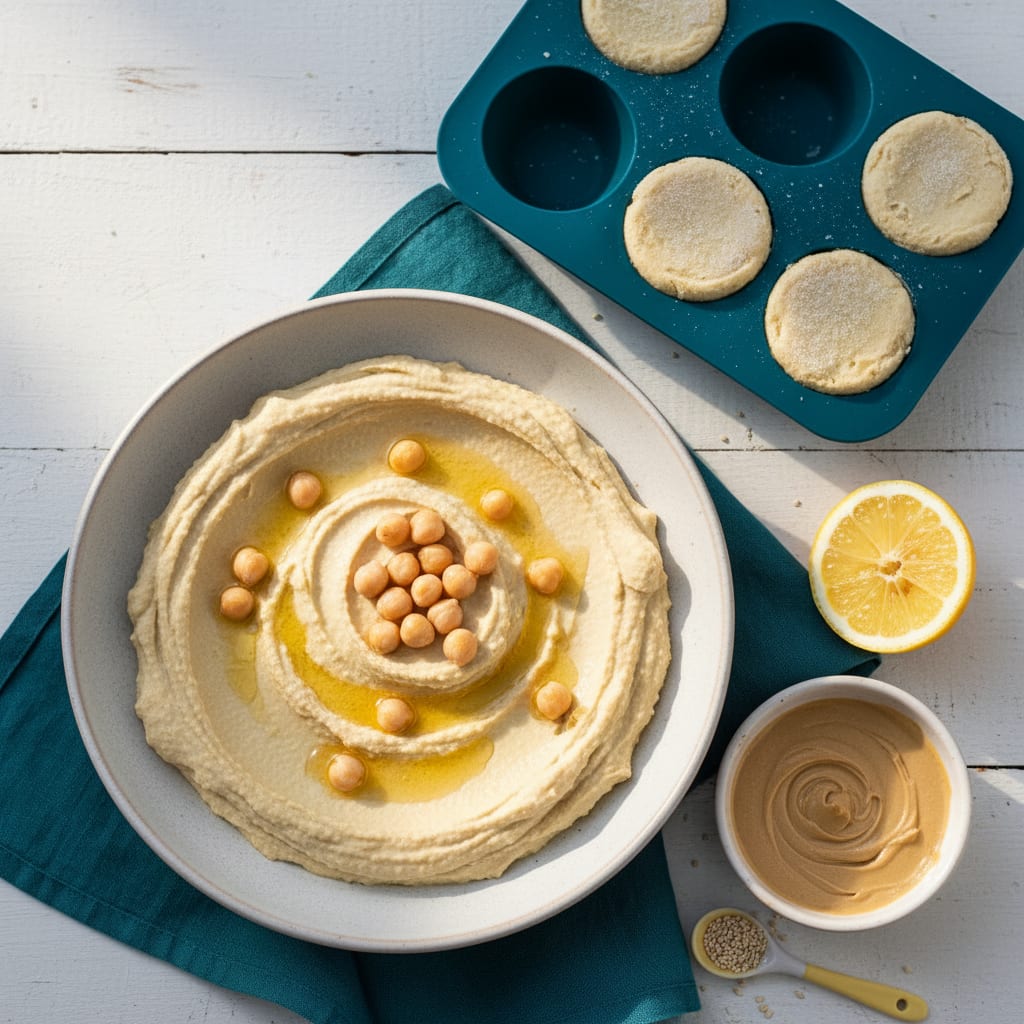
Yes, you can freeze hummus, and it comes out of the freezer in better shape than almost anything else in this series — because it is already a purée, there is no texture left to ruin. What you do lose is the emulsion: the oil and water pull apart as it thaws and the whole thing tastes flatter than it went in. Both are fixed in about thirty seconds with a hard stir, a splash of olive oil and a squeeze of fresh lemon.
If you buy the big tub because it is better value and then throw half of it away in ten days, this is the post that fixes that.
Why hummus survives the freezer
Most of the damage freezing does to food is structural. Ice crystals puncture cell walls, and when they melt the water runs out and leaves you with something limp — that is the whole story with a frozen watermelon or a raw potato. Hummus has no structure to break. Chickpeas were cooked and then blitzed to a paste long before they got anywhere near your freezer, so there is nothing to collapse.
What hummus does have is an emulsion. Tahini, oil, lemon juice and water are held together in a suspension, and freezing splits it the same way freezing splits a cream sauce. The National Center for Home Food Preservation’s list of foods that do not freeze well puts mayonnaise and salad dressing in exactly this class, with “Separates” as the result.
The difference — and it is the difference that matters — is that hummus is a much looser, more forgiving emulsion than mayonnaise, held largely by ground sesame rather than by egg yolk. Stirred hard, it goes back together. Mayonnaise does not.
Worth saying plainly: there is no NCHFP page for hummus, and I have not found a university extension one either. The safety framework below is sourced; the texture advice comes from doing it repeatedly with supermarket tubs and homemade batches.
Freeze it in the portion you will actually use
This is the only real decision, and getting it wrong is what makes people say hummus does not freeze.
A whole 17-ounce tub frozen as one block gives you a single thawing event and five days to eat it. Frozen in portions, the same tub is six or eight separate lunches.
- Lunchbox portions. Two or three tablespoons per compartment. A silicone tray with marked fill lines makes this quick — the Souper Cubes 2-tablespoon trays pop out clean and go straight into a bag once frozen. Ordinary ice cube trays work fine too.
- Snack-plate portions. Half a cup, in small screw-top containers, for a night when dinner is a plate of bits.
- Party portion. The whole tub, if you know it is going out as a dip on a specific day.
Leave about half an inch of space at the top of any rigid container — hummus expands as it freezes, and a full tub will push its lid off.
Smooth the surface flat and pour a thin film of olive oil over the top before you seal it. That oil layer is doing the same job it does in the fridge: keeping air off the surface so the top does not go grey and dry.
Thawing, and the thirty-second fix
Move it to the fridge the night before. Do not thaw hummus on the counter, and do not microwave it — warm hummus separates further and the garlic turns bitter.
What comes out will look wrong. There will be a puddle of oil on top, the paste underneath will look grainy or slightly curdled, and it will smell of very little. This is the normal, expected result and it is not a sign the hummus has gone off.
Then:
- Pour off nothing. That oil is part of the recipe. Stir it back in.
- Beat it hard with a fork or a small whisk for thirty seconds. A food processor is better if you are doing a whole tub. It comes back together and goes glossy.
- Add a tablespoon of fresh olive oil and a good squeeze of lemon per cup. Freezing dulls acidity and aromatics more than it dulls anything else, and this is what brings the flavour back rather than adding anything new.
- Grate in a little raw garlic if it still tastes flat. Frozen garlic loses most of its bite.
Eat within about five days of thawing, the same window a fresh opened tub gets, and do not refreeze it.
How long it keeps
FoodSafety.gov is the anchor here: food held continuously at 0°F “can be kept indefinitely,” and every freezer time you see anywhere is “for quality only.” Nothing goes unsafe in a working freezer.
For quality, hummus is limited by its oil rather than its chickpeas — fats pick up stale, cardboardy notes over time, which is the same clock that governs frozen bacon though nothing like as fast, because there is no curing salt driving it. Well sealed, in a container it fills, hummus is very good for a few months and noticeably duller past that. I work on the assumption that anything still in there after four months is going into a soup or a marinade rather than onto a snack plate.
Two things shorten that window sharply: air in the container, and a big headspace above a small amount of hummus. Both are worth fixing before you freeze rather than after.
What to do with hummus that came back dull
Not every thawed tub is worth serving as a dip, and there is no shame in a batch that just tastes tired. It is still perfectly good as an ingredient:
- Thinned with lemon juice, water and oil into a dressing for a grain bowl.
- Stirred into a pan of roasted vegetables at the end to coat them.
- Spread thinly on the inside of a wrap instead of mayonnaise — this is the best use for a slightly split batch, because nobody notices texture in a wrap.
- Whisked into a chicken marinade with yogurt and lemon.
For where hummus sits against everything else on the shelf, our freezer storage chart by dish lines it up. And for lunchboxes specifically, frozen hummus portions slot straight into the no-cook school lunch rotation — a cube thaws in a lunchbox by mid-morning.
FAQ
Does frozen hummus taste different?
Slightly, yes. It comes back flatter — less lemon, less garlic, less sesame. That is a loss of volatile aroma rather than spoilage, and fresh oil, fresh lemon and a scrape of raw garlic put nearly all of it back.
Can you freeze store-bought hummus in its original tub?
Only if it is not full. Supermarket tubs are usually filled close to the rim, and hummus expands. Take a couple of spoonfuls out first, or move it to a container with room at the top.
Why did my hummus turn watery after freezing?
The emulsion split, which is what freezing does to any oil-and-water suspension. The water has not gone anywhere — it is sitting separately. Stir it hard and it re-combines.
Can you refreeze hummus after thawing it?
No. Refreezing splits it a second time, and the second split does not stir back nearly as well. Freeze in small portions so you never need to.
Does homemade hummus freeze better than shop-bought?
Marginally, in my experience, because homemade is usually thicker and higher in tahini. Both work. Shop-bought versions with a lot of added water tend to be the wateriest on thaw.
✳ More From the Kitchen
Lunchbox & Kids
Freezer & Meal Prep
Freezer & Meal Prep