Can You Freeze Sour Cream? Yes, With One Big Catch
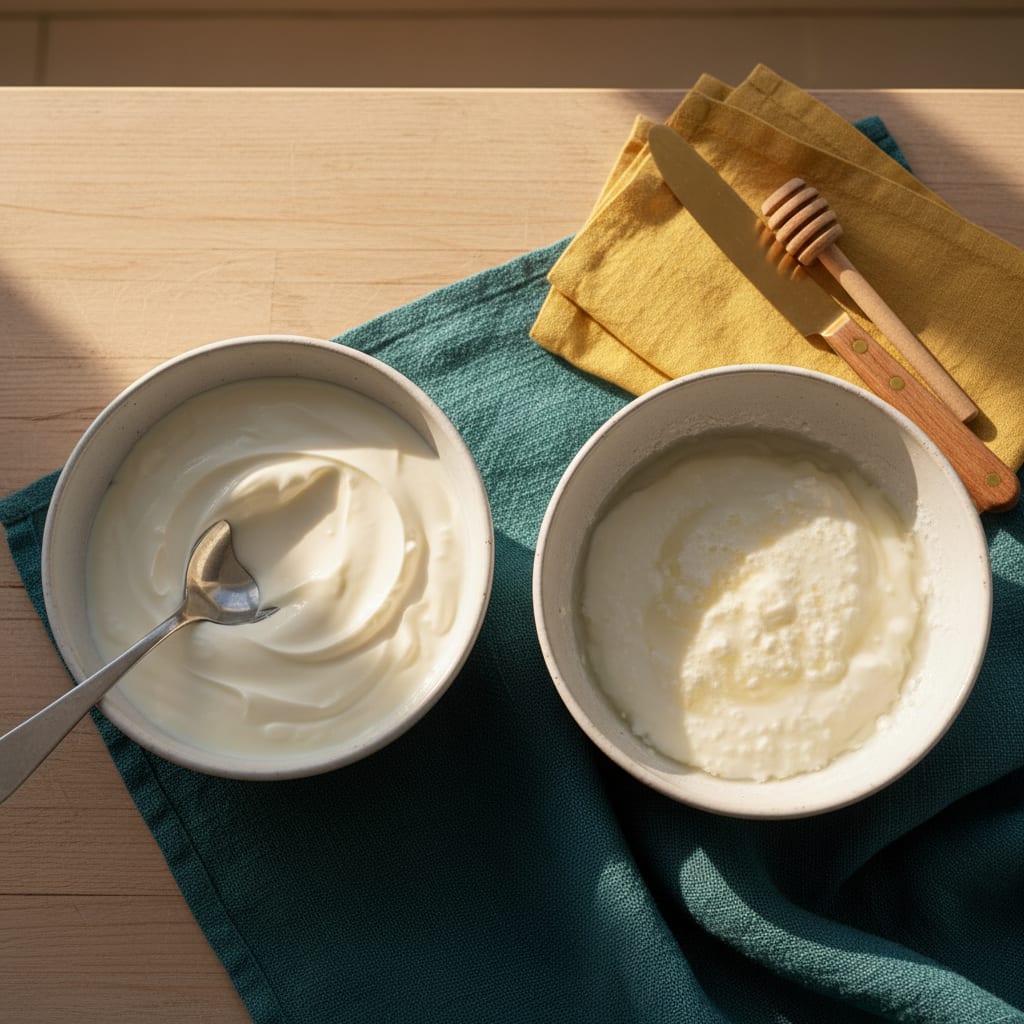
You can freeze sour cream safely, but you should not expect to get sour cream back. The National Center for Home Food Preservation is blunt about it: sour cream should not be frozen, because it separates and “will not blend back together acceptably.” Nothing about that is a safety problem — frozen dairy stays safe indefinitely at 0°F. It’s a texture problem, and it’s permanent. What comes out of the tub after thawing is grainy, watery, and impossible to spoon onto a baked potato. It is still perfectly good stirred into something hot.
So the real question isn’t whether you can. It’s whether the thing you want it for survives the trip.
What actually happens in the tub
Sour cream is cultured cream: a loose mesh of milk protein and fat holding a lot of water in suspension. That mesh is the entire reason it’s thick and glossy rather than pourable.
Freeze it and the suspended water crystallizes, and the crystals shove the protein and fat aside as they grow. Thaw it and the mesh no longer holds anything — the water runs out and pools on top, the fat sits in visible grains, and stirring only redistributes the grains. There’s no whisking it back, and no amount of resting at room temperature repairs it. North Dakota State University Extension puts the whole category in one line: cultured, soured dairy products “lose their smooth texture when frozen. They become grainy and sometimes separate out their water.”
Full-fat sour cream comes through marginally better than light or fat-free versions, which carry more water and lean on added stabilizers. Marginally is the operative word. Nobody will mistake either for fresh.
Why the cooked-dish exception is real
Here’s the useful part, and it’s the reason this isn’t simply a “no”: every failure above is a failure of appearance and mouthfeel in a cold spoonful. Once thawed sour cream goes into something hot and stirred, none of it registers.
NDSU’s guidance on the same cultured products is that they “can still be used for cooking,” and that’s exactly how a thawed tub earns its place. In practice:
- Stirred into a soup or chowder off the heat, at the very end.
- Whisked into a stroganoff or a pan sauce as the finish.
- Beaten into a cake, muffin or cornbread batter, where it’s doing tenderizing work.
- Mixed into mashed potatoes, dips that get baked, or a casserole topping.
- Blended into a dressing or a marinade, where the blender does the smoothing.
Where it will not work: as a dollop on chili or a taco, in a cold dip served straight, on a baked potato, or swirled on top of anything for looks.
Freezing it anyway, properly
If you have most of a tub and the alternative is throwing it out, this is the way that gives you the best version of a compromised product.
- Stir it smooth first, and pour off any liquid already sitting on the surface.
- Portion by the recipe, not by the tub. Half-cup portions in a small container, or tablespoons frozen in an ice-cube tray then bagged, so you thaw only what a single dinner needs.
- Leave about half an inch of headspace. It expands.
- Press out air and seal tightly. Dairy fat picks up freezer odors readily.
- Use it within a couple of months. It stays safe far longer than that at 0°F, but the graininess gets worse the longer it sits.
- Thaw in the fridge overnight, never on the counter, then stir hard and use it in something hot the same day.
Whisking the thawed cream for a minute, or pulsing it in a blender, genuinely helps — it won’t restore the gloss, but it breaks the visible grains down enough that they vanish into a sauce.
A better move: freeze the dish, not the dairy
This is where most of the value is. Sour cream that’s already been cooked into something is stabilized by everything around it — flour, starch, egg, cheese — and freezes far better than the tub ever will.
So instead of freezing the leftover half tub, spend twenty minutes turning it into the thing you were going to make with it:
- A tray of stroganoff or a creamy chicken bake, cooled and frozen in portions.
- A batch of sour-cream muffins or coffee cake, frozen after baking.
- A pot of creamy potato soup, frozen flat in bags.
- Baked dip mixtures, frozen before baking.
That’s the same logic that runs through the rest of our freezer work — the storage windows by dish type are in how long freezer meals last, and the dairy that behaves like this as an ingredient is covered in can you freeze cream cheese, which splits on thaw for the same structural reason and rescues the same way.
And the honest option nobody mentions: an unopened tub of sour cream keeps in the fridge for a long time by dairy standards, and an opened one keeps for a week or two past the point most people assume. Check it before you assume it needs saving. Freezing is the last resort, not the first.
Substitutes worth knowing
If you froze it and now need a cold dollop, the swap is easier than the rescue. Plain Greek yogurt is the closest match for topping, thicker and tangier. Crème fraîche is richer and, usefully, doesn’t split when it hits heat. Cottage cheese blended smooth works in dips and batters. Buttermilk stands in for sour cream in baking if you cut some of the other liquid — the same milk-swap logic applies about fat content and thickness.
FAQ
Does sour cream go bad if you freeze it?
No. It stays safe, because freezing at 0°F stops bacterial growth. It goes grainy and watery, which is a quality change rather than a spoilage one. Still check it after thawing — if it smells off or has mold, it was already turning before it went into the freezer.
How long can sour cream stay frozen?
It keeps indefinitely at 0°F from a safety standpoint, but the texture keeps degrading, so aim to use it within a couple of months. Beyond that you’re mostly reheating grains suspended in water.
Can you fix separated sour cream after thawing?
Not fully. Whisking hard or a quick blitz in a blender breaks the grains down enough to disappear into a hot sauce or a batter, and that’s the realistic ceiling. It will not return to a glossy, spoonable state.
Can you freeze a dip made with sour cream?
Baked dips freeze reasonably well, because the cheese, starch and egg hold the structure. Cold dips — onion dip, ranch, anything served straight from the fridge — separate badly and are not worth freezing.
Is it better to freeze sour cream or use it up?
Use it up. Sour cream keeps longer in the fridge than most people expect, and it disappears easily into pancakes, mashed potatoes, muffins, chili or a pan sauce. Freezing only makes sense when the choice is between a compromised ingredient and the bin.
✳ More From the Kitchen
Lunchbox & Kids
Kitchen How-Tos
Lunchbox & Kids