Can You Freeze Potatoes? Not Raw — Here's What Works
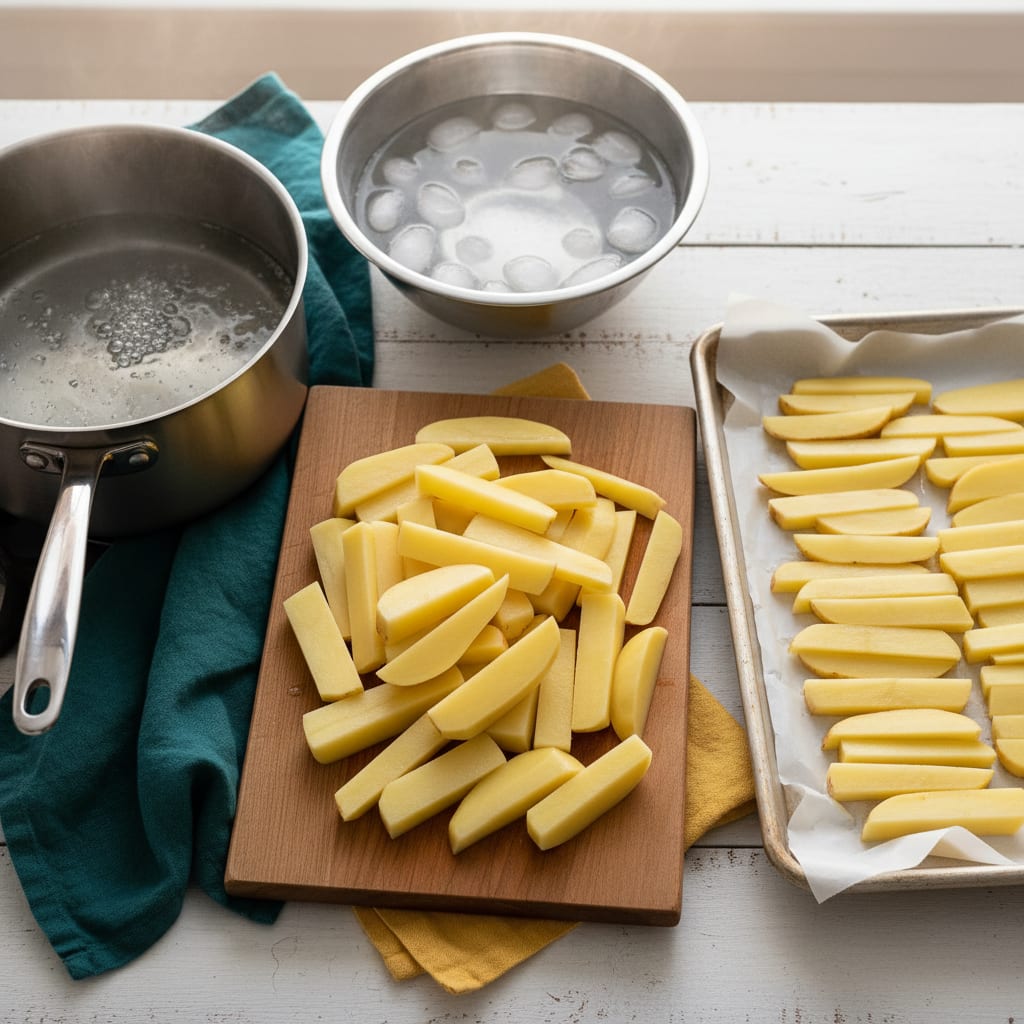
You can freeze potatoes, but never raw. A raw potato put straight in the freezer thaws watery and often darkens in the middle, and no packaging fixes either problem. The rule is that heat comes first — a blanch, a par-fry, or a full cook — and then the potato freezes fine. The National Center for Home Food Preservation gives the blanch as “3 to 5 minutes, depending on the size,” then “cool, drain and package whole or sectioned, leaving 1/2-inch headspace.”
That one step is the whole difference between a bag of grey mush and a freezer full of dinner starters.
Why raw potatoes come out wrong
Two separate things go wrong, and they have different causes.
The first is texture. Penn State Extension explains it in one sentence: “when a potato is frozen, the water in the potato separates from the starch causing the reheated potato to be watery.” A potato is a dense starch matrix holding a lot of water. Freeze that water into crystals and it tears the matrix apart; thaw it and the water has nowhere to go back to, so it runs out and leaves the starch behind.
The second is color. Raw potato flesh is full of active enzymes, and the freezer slows them without stopping them. Penn State again: “the potato needs to be heated through completely to stop enzymatic reactions. Inadequate heating will result in the center of the potato turning dark.” That’s why a half-hearted thirty-second dunk is worse than no blanch at all — the outside is set and the middle is still running.
Heat solves both. It denatures the enzymes and it pre-collapses some of the starch structure so the ice crystals have less to wreck.
Blanching whole or cut potatoes
This is the route for potatoes you’ll later roast, add to a stew, or turn into a hash.
- Peel or scrub, and cut to the size you’ll cook them at. You cannot chop a frozen potato usefully, so decide now.
- Bring a large pot to a hard boil — roughly a gallon of water per pound, so the temperature doesn’t crash when the potatoes go in.
- Blanch. NCHFP’s figure for new potatoes is 3 to 5 minutes by size. Penn State gives a longer scale for bigger pieces: “blanch 4 to 6 minutes if smaller than 1 to 1½ inches” and “8 to 10 minutes if larger.”
- Move them straight into ice water for about the same length of time, until they’re cold through.
- Drain hard and pat dry. Surface water is what welds pieces into a single brick.
- Tray-freeze on a lined sheet pan for an hour if you want them loose, then bag them with half an inch of headspace.
The half-inch headspace here is worth noticing, because it’s the opposite of what freezing celery calls for — celery is packed with no headspace at all. Blanched celery has already collapsed; potato pieces hold their shape and still have water to expand. The vegetable sets the rule, not habit.
The par-fry route for fries and roasties
If what you actually want is a bag of chips you can throw in the oven, NCHFP’s french-fry method is the one to copy, and its details are specific. Start with “mature potatoes stored 30 days” — older potatoes have converted more of their sugar to starch and brown more predictably. Cut into “1/3-inch sticks lengthwise, then crosswise into 3/8-inch strips,” rinse in cold water and dry thoroughly.
Then the key step: “fry small amounts in deep, hot fat (360ºF) about 5 minutes until tender but not brown.” Drain on paper towel, cool, package, seal, freeze. To serve, “finish browning in a hot oven (475ºF).”
Cooked-through but pale is the target. If they take color in the first fry, they’ll be dark and bitter after the oven. Cool them completely before bagging — steam trapped in a warm bag turns into frost, and frost turns into soggy fries.
Mashed and the other cooked forms
Cooked potato dishes freeze more forgivingly than plain potato, because the fat and dairy in them buffer the ice damage. That’s the whole reason mashed potatoes freeze better than you’d expect — the butter and cream coat the starch and keep it from going grainy.
The same logic covers twice-baked potatoes, potato soup made with cream rather than milk, shepherd’s pie with a mash lid, and gratins. Thin, low-fat preparations do worst: a broth-based potato soup, plain boiled potatoes with nothing on them, and diced potato in a watery stew all come back grainy.
Two things never work, whatever you do. Potato salad splits, because the mayonnaise emulsion breaks. And a whole baked potato in its skin goes hollow and mealy inside.
How long frozen potatoes actually keep
This is where potatoes differ sharply from most frozen vegetables, and it’s the figure most blog posts skip. Penn State says prepared cooked potatoes “should be stored for only a few weeks,” and gives stuffed baked potatoes a window of “2 to 4 weeks.”
Weeks, not months. Safety isn’t the issue — food held continuously at 0°F stays safe indefinitely — but potato quality falls off fast, and a bag that’s been in there since spring will taste of freezer no matter how well it was wrapped. Blanched raw-frozen potato pieces hold a little longer than cooked dishes, but the honest planning number for anything potato is one to three months.
Practically, that means potatoes belong in the short-cycle part of your freezer, not the deep-storage part. If you’re doing a big shop, buying by headcount and freezing only what won’t get eaten in the next month is a better plan than banking twenty pounds.
FAQ
Can you freeze raw potatoes without blanching?
You can, but the result is poor: watery when reheated, and often dark in the centre because the enzymes were never deactivated. Blanching for a few minutes costs almost nothing and is the difference between a usable bag and a wasted one.
Do you have to thaw frozen potatoes before cooking?
No, and mostly you shouldn’t. Blanched potato pieces go straight into a hot oven, a pan or a pot of soup from frozen. Thawing them first just gives the water time to run out onto the board. The exception is a fully cooked casserole, which reheats more evenly if thawed overnight in the fridge.
Why did my frozen potatoes turn black?
Almost always incomplete heating before freezing. Enzymes left active in the centre of a piece keep working slowly at 0°F and darken the flesh. Blanch long enough for the heat to reach the middle — 3 to 5 minutes for small pieces, up to 10 for large ones.
Can you freeze boiled potatoes?
Yes, and they’re one of the better candidates, since they’re fully cooked through. Cool them completely, freeze them on a tray so they stay separate, and use them within a month or so — they’re best crisped in a pan for a hash rather than eaten plain. Timings for cooking them in the first place are in our boiling guide.
Can you freeze potato soup?
If it’s a creamy, higher-fat soup, yes. A thin brothy one with chunks of potato in it comes back grainy. Puréeing the soup before freezing helps a lot, because there are no potato chunks left to fall apart.
✳ More From the Kitchen
Lunchbox & Kids
Easy Dinners
Lunchbox & Kids