Can You Freeze Heavy Cream? Yes — but Not to Whip
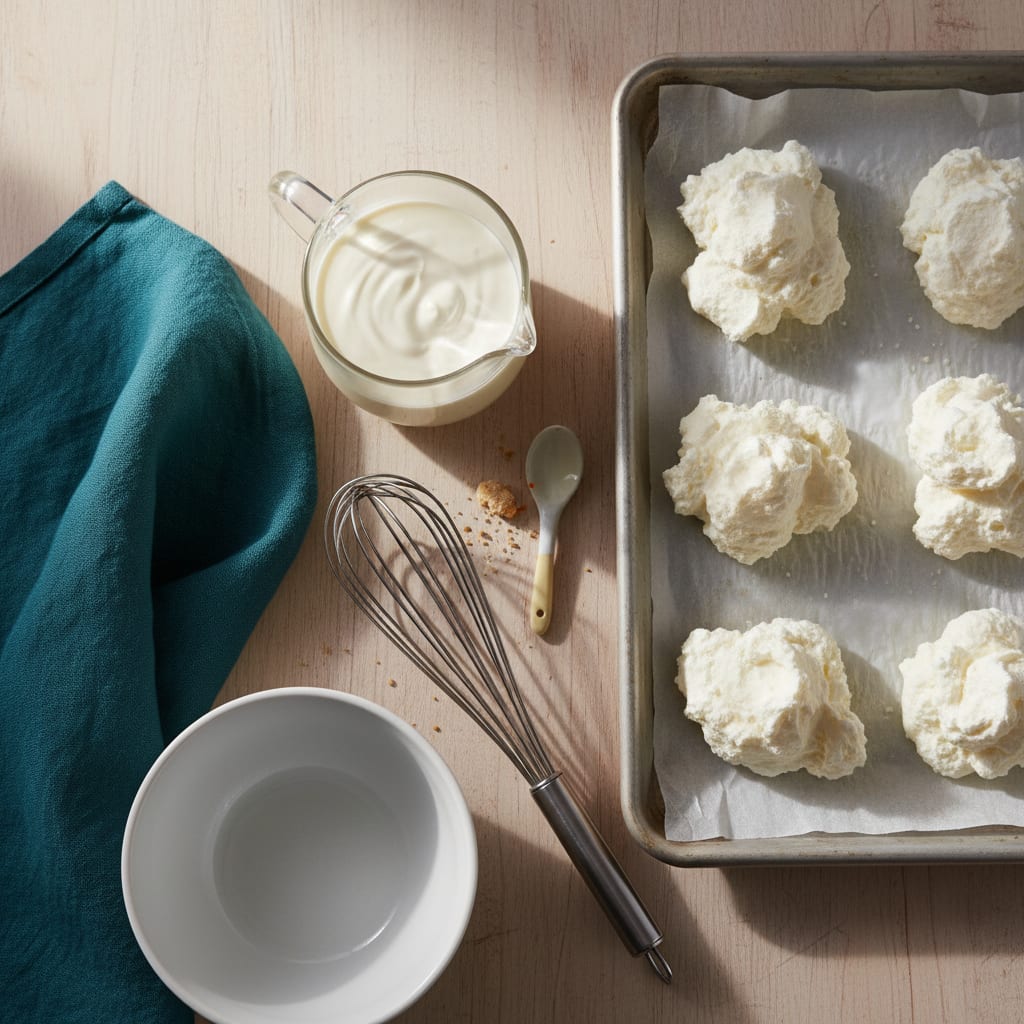
Yes, you can freeze heavy cream, but understand what you are giving up: it will not whip properly afterwards. For sauces, soups, mashed potatoes, scrambled eggs, custards and anything else where the cream is going into a hot pan, freezing costs you almost nothing. For a bowl of whipped cream on a birthday cake, freeze it already whipped, or buy it fresh on the day.
That single distinction is the entire post, and it is the thing most half-carton decisions turn on.
The whip is what you lose
North Dakota State University Extension states it flatly in its dairy freezing guide: “Cream that has been frozen will not whip to the usual volume.”
The National Center for Home Food Preservation agrees from the other direction, noting on its whipped cream page that “cream whipped after freezing and thawing does not become as stiff as never-frozen cream,” and adding a separate warning that “freezing ultrapasteurized whipping cream is not recommended.”
The mechanism is straightforward. Whipping works by knocking fat globules into a network that traps air. Freezing shatters and clumps those globules and adds free water back into the mix as ice thaws, and a slightly watered, partly clumped cream will foam a little and then give up. You get soft, weeping peaks instead of stiff ones.
Everything else cream does — enriching, thickening, carrying flavour, splitting the difference between a stock and a sauce — is unaffected.
The butterfat rule
Not all cream is a candidate. NDSU is specific: “Freeze only heavy cream containing 40 percent or more butter fat,” and “Lighter cream and half and half do not freeze well.”
In practical shopping terms:
| Product | Freezes for cooking? |
|---|---|
| Heavy cream / heavy whipping cream | Yes — the best of the group |
| Whipping cream (lower fat than heavy) | Acceptable, more separation |
| Light cream, single cream | Poor |
| Half-and-half | Poor — splits noticeably |
| Ultrapasteurised whipping cream | Not recommended for whipping afterwards |
Higher fat means less water, and less water means fewer ice crystals doing damage. It is the same reason butter freezes almost perfectly and milk comes out of the freezer looking odd.
How to freeze it
Two methods, for two different purposes.
For cooking — portion it. Pour the cream into containers or an ice cube tray in the amounts your recipes want. A quarter cup finishes a pan sauce; half a cup does mashed potatoes for four; a cup covers a pasta sauce or a soup. Leave half an inch of headspace in anything rigid — cream expands. Frozen cubes go into a bag once solid, and drop straight into a hot pan without thawing, which is genuinely the easiest thing in this whole series.
For whipped cream — whip it first. This is NCHFP’s method and it works: “Individual sweetened whipped cream garnishes can be satisfactorily frozen by whipping cream before freezing. Place dollops of whipped cream on baking sheet and freeze.” Sweeten it, whip it to stiff peaks, spoon dollops onto a lined tray, freeze until hard, then bag them. They keep their shape, and NCHFP gives sweetened whipped cream one to two months. Put a frozen dollop on a slice of pie and it softens on the plate.
What you should not freeze is a finished cream sauce. NCHFP’s foods that do not freeze well table lists milk sauces with the result “May curdle or separate.” Freeze the cream, make the sauce later.
Thawing, and the shake that fixes it
Thaw in the fridge, never on the counter and never in the microwave — gentle is the whole game.
Thawed cream looks separated and slightly grainy, with fat sitting at the top of the container. That is expected. Shake it hard in a sealed jar, or whisk it, and it re-combines well enough for cooking. It will not look like it did in the shop and it does not need to.
If it still looks broken, heat is the reliable fix. Cream that refuses to come back together cold will emulsify perfectly the moment it goes into a warm pan with a little starch or cheese in it, which is why the cooking uses below are so forgiving.
What to actually do with a thawed carton
Ranked by how well they hide the texture:
- Pan sauces. Deglaze, add cream, reduce. Undetectable.
- Soups and chowders. Stirred in off the heat at the end.
- Mashed potatoes. Cream and butter together — nothing survives the masher anyway.
- Scrambled eggs and quiche custard. A splash per egg.
- Baked custards, ice cream base, panna cotta. Anything that gets heated and strained.
- Ganache. Hot cream over chocolate re-emulsifies completely.
A cup of cream turns a plain pan of pasta into something worth serving — the same trick our 15-minute pasta dinners lean on, and a good use for the last of a carton that was going to be thrown away.
How long it keeps
FoodSafety.gov sets the safety frame for everything on the shelf: at a constant 0°F food “can be kept indefinitely,” and freezer timings are “for quality only.” NCHFP’s one-to-two-month figure for sweetened whipped cream is a quality window, not a safety one.
For plain cream frozen for cooking, the limit is fat going stale — the same clock as butter, and slower than most people expect if the container is full and sealed. A couple of months is comfortable; past that it starts tasting faintly of the freezer. Where cream sits against everything else, our freezer storage chart by dish has the comparison.
FAQ
Can you whip cream that has been frozen and thawed?
Not reliably. Both NDSU Extension and NCHFP say frozen cream will not reach the usual volume or stiffness. It may foam softly and then collapse. If you want whipped cream from freezer stock, whip it before freezing and freeze it as dollops.
Can you freeze half-and-half?
Not well. NDSU puts lighter cream and half-and-half in the does-not-freeze-well category — they separate badly. If you have half-and-half to save, use it in cooking within its fridge life instead.
Why is my thawed cream grainy?
Fat globules clumped during freezing and water separated out. Shake it hard, and if it is still grainy use it in something hot — heat re-emulsifies it completely.
Should I freeze cream in the carton?
Only if there is room at the top, which there usually is not in a full one. Cream expands, and a sealed full carton will split. Portion it into containers or cubes instead, which also saves you thawing the whole lot.
Does frozen cream still thicken a sauce?
Yes. Reduction depends on fat and evaporation, neither of which freezing changes. This is the use case where frozen cream is indistinguishable from fresh.
✳ More From the Kitchen
Lunchbox & Kids

Feeding a Crowd
Freezer & Meal Prep