Can You Freeze Cabbage? Yes, for Cooked Dishes Only
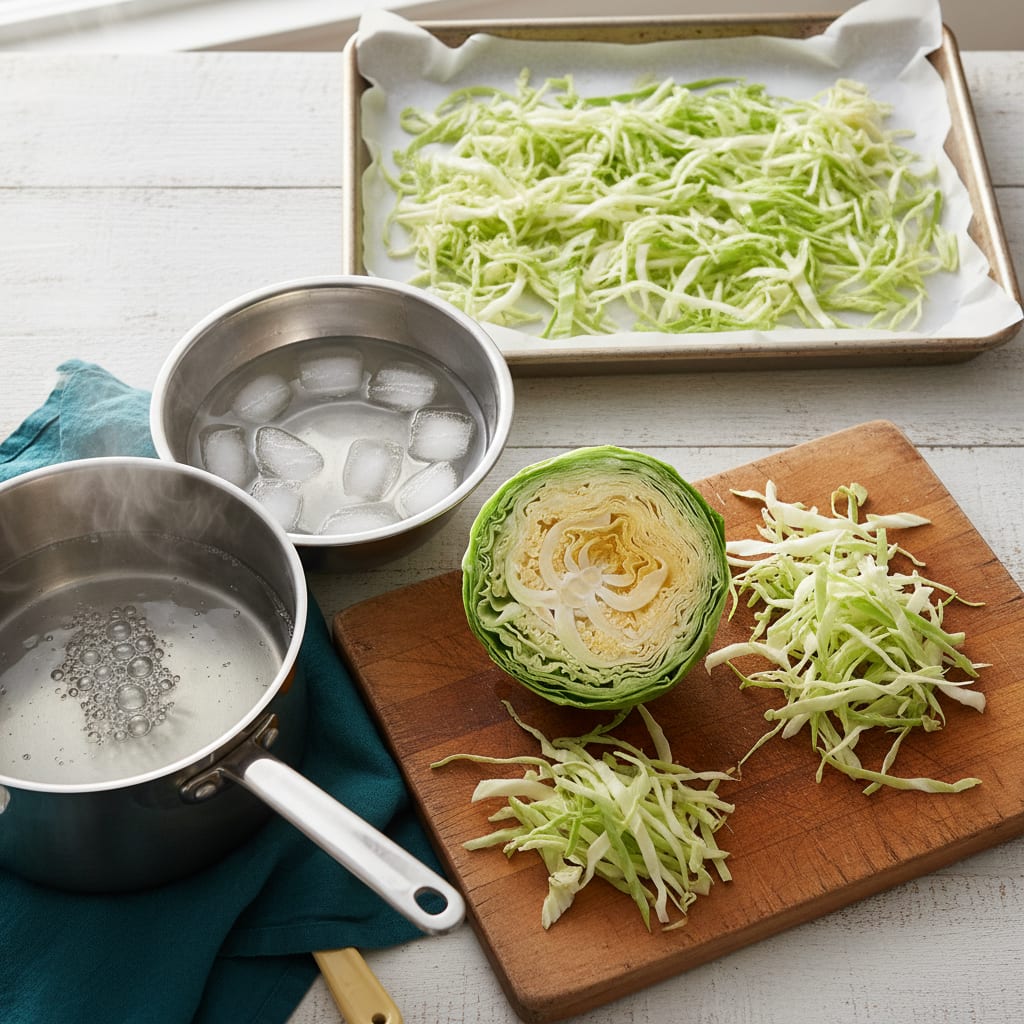
Yes, you can freeze cabbage — blanch it for a minute and a half first, and accept that it comes out of the freezer as a cooking ingredient, not a salad one. The National Center for Home Food Preservation is unambiguous on that second point: “Frozen cabbage or Chinese cabbage are suitable for use only as a cooked vegetable.” There is no method, no bag and no trick that gives you coleslaw crunch after a freeze.
Once you know that going in, cabbage is one of the easier things in this whole freezer series — and half a head going soft in the crisper drawer is exactly the problem it solves.
Why the blanching step isn’t optional
Skipping the blanch is the single most common cabbage-freezing mistake, and it doesn’t fail on day one. It fails at week six, when you open the bag and everything smells faintly of sulphur and tastes bitter.
That’s enzymes. The University of Georgia’s Cooperative Extension puts the mechanism in one line: “Blanching stops the action of enzymes that can cause loss of flavor, color and texture over time in the freezer.” Freezing slows enzymes down, but it doesn’t switch them off, and brassicas — cabbage, sprouts, broccoli — carry the ones that turn sulphurous most aggressively.
A brief dip in boiling water denatures them permanently. It’s ninety seconds of work that decides whether the bag is usable in three months.
Freezing shredded cabbage
This is the version most people want, because it’s what’s left over after a slaw or a stir-fry.
NCHFP’s preparation instruction is to “select freshly picked, solid heads. Trim coarse outer leaves from head. Cut into medium to coarse shreds or thin wedges, or separate head into leaves.” Then: “Water blanch 1½ minutes,” and “cool promptly, drain and package, leaving ½-inch headspace. Seal and freeze.”
In a home kitchen that looks like:
- Bring a large pot of water to a hard rolling boil and set a bowl of ice water next to it.
- Drop in the shreds — a pound or so at a time, so the water doesn’t stop boiling — and start timing at ninety seconds from the moment it returns to the boil.
- Lift them straight into the ice water for the same length of time. This is the step people rush, and undercooling is why cabbage sometimes arrives limp and grey.
- Drain hard, then squeeze. Wet cabbage freezes into a solid brick; cabbage squeezed dry in a clean tea towel stays loose enough to scoop.
- Bag flat, press out the air, leave the half-inch of headspace NCHFP asks for, and freeze at 0°F or below.
Flat bags are worth the extra ten seconds. They stack, they thaw faster, and you can break a piece off without defrosting the lot — the same reasoning behind the tray method in our freezing onions post.
Wedges and whole leaves for cabbage rolls
The other two cuts NCHFP names are worth knowing about, because they unlock dishes shreds can’t.
Thin wedges hold together enough to go into a braise or a tray roast straight from frozen. Blanch and cool them exactly as above, then tray-freeze them separated before bagging so they don’t fuse.
Whole leaves are the standout. Separate them from the head, blanch, cool, pat dry, then stack them with a square of parchment between each one and freeze the stack flat. Frozen and thawed leaves are already pliable — which is the entire reason people blanch cabbage leaves for stuffed rolls in the first place — so you get the pliability for free and skip a pot of boiling water on a weeknight.
What frozen cabbage is actually good for
Everything that was going to be cooked soft anyway. It disappears into:
- soups and minestrone, added in the last ten minutes straight from frozen
- braises with sausage, bacon or a ham hock
- stir-fries, where the extra water is a problem — cook it hot and fast in an uncrowded pan
- cabbage rolls, colcannon, and fried-cabbage-and-noodle dishes
- a tray bake alongside potatoes and onions
Add it frozen in almost every case. Thawing first just gives you a puddle to cook off, and it collapses further while it sits. The one exception is stuffed rolls, where you want the leaves pliable and separate.
For a broader sense of how vegetables behave in the freezer relative to each other, our celery write-up covers the other end of the same problem — a vegetable people freeze specifically for cooked dishes and are then disappointed to find isn’t crunchy.
Can you freeze cabbage without blanching?
You can, and it will be safe, but it’s a short-term move rather than a storage method. Unblanched cabbage is best used within a few weeks, because the enzymes are still working the whole time it sits there.
If you’re going to do it, do it deliberately: shred, bag flat, and plan to use it in the next soup or stir-fry you make rather than treating it as stock for the winter. If the bag is meant to still be good in March, blanch it.
For where cabbage sits against the rest of your freezer inventory, our storage chart by dish type puts the numbers side by side.
FAQ
How long does frozen cabbage last?
Frozen continuously at 0°F it stays safe indefinitely; the limit is quality. Properly blanched and well sealed, expect good results for most of a year. Unblanched cabbage is a matter of weeks before the flavour turns.
Do you have to blanch cabbage before freezing?
For anything you want to keep more than a few weeks, yes. Blanching stops the enzyme activity that causes the sulphurous smell and bitter edge, and NCHFP’s method calls for a 1½-minute water blanch.
Can you freeze coleslaw?
Not the creamy kind — the dressing splits and the cabbage goes limp, so you’d have two failures at once. A vinegar-based slaw survives better but still loses its crunch. Freeze the cabbage plain and dress it after, or don’t freeze it.
Can you freeze a whole head of cabbage?
It’s not recommended. A whole head can’t be blanched through, freezes unevenly and thaws into a wet mass. Cut it into shreds, wedges or leaves first, which is exactly what NCHFP’s instructions call for.
Does frozen cabbage need thawing before cooking?
No, and it’s better if you don’t. Add it frozen to soups, braises and stir-fries. The only case for thawing is stuffed cabbage rolls, where you need the leaves separate and flexible.
✳ More From the Kitchen
Freezer & Meal Prep
Freezer & Meal Prep
Feeding a Crowd