Can You Freeze Shredded Cheese? Yes, and It Pours
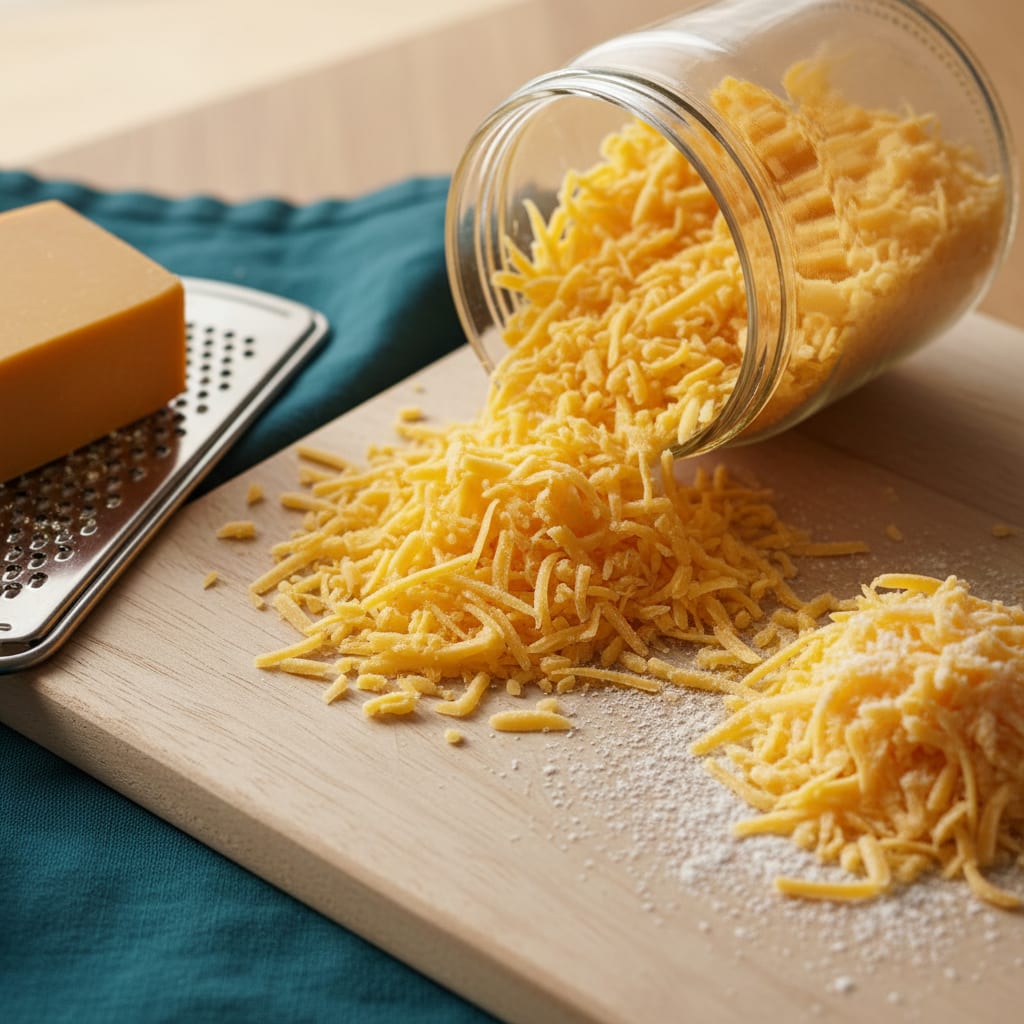
Yes — and shredded is the one form of cheese that freezes with almost no downside. Freezing makes cheese crumbly, which ruins a cheeseboard and matters not at all when the cheese was headed for a hot pan anyway. Better still, a bag of pre-shredded cheese comes out of the freezer pourable rather than welded into a block, because the shreds are already coated to stop them sticking. Two months later you tip out the cup you need and put the bag back.
Which makes it the most useful thing in this whole freezer category: buy the big bag when it’s on offer, freeze most of it, and never run out mid-dinner again.
The freezer damage is real but irrelevant here
The National Center for Home Food Preservation is clear about what happens: hard and semi-hard cheeses can be frozen, but the cheese “may become crumbly and mealy when frozen, but will retain its flavor.”
Read that twice, because it’s the whole argument. The protein structure that gives cheddar its sliceable body takes ice damage and doesn’t recover, so a thawed block crumbles when you try to cut it. The flavor compounds are untouched.
Shredded cheese has already been cut into pieces smaller than the damage. There is no slice left to ruin. And its destinations — a quesadilla, a taco, a lasagne, a baked pasta, a nacho tray — all involve melting, at which point crumbly and sliceable are the same cheese.
This is the practical difference between this post and freezing a block of cheese, where the crumbliness is the main thing you have to plan around, and a much bigger difference from freezing cream cheese, where the emulsion splits and you’re rebuilding a sauce rather than sprinkling.
Why bagged shreds stay loose in the freezer
Turn a bag of supermarket shredded cheese over and read the ingredient list. Alongside the cheese you’ll find potato starch, powdered cellulose, corn starch, or some combination of them. They’re anti-caking agents, added so the shreds don’t fuse back into a lump between the factory and your fridge.
That coating turns out to be exactly what a freezer needs. The reason home-grated cheese freezes into a brick is surface moisture: damp shreds touch, the moisture freezes, and the contact points cement. A dry starch coating keeps the surfaces apart and absorbs the moisture that would otherwise do the welding. So the bagged stuff goes into the freezer loose and comes out loose, and you can genuinely pour a cup out of a bag that’s been frozen for six weeks.
The trade-off is one you already live with in the fridge: those same coatings make bagged cheese melt a little less smoothly than cheese you grate yourself, which is why a really silky cheese sauce is worth grating for. Freezing doesn’t make that worse — it’s the same cheese either way. For a stovetop sauce, our mac and cheese swaps has the fixes that matter more than the cheese format does.
Freezing cheese you shredded yourself
Grating your own is cheaper and melts better, so it’s worth doing. It just needs one extra step to avoid the brick.
- Shred it cold. Cheese straight from the fridge grates into clean shreds; room-temperature cheese smears and packs.
- Toss with a little starch. About a teaspoon of cornstarch or potato starch per two cups of shreds, tossed through with your fingers until the surfaces look dry. This is the same trick the factory uses.
- Tray-freeze first. Spread the shreds in a thin layer on a lined sheet pan and freeze for an hour before bagging. This is the step that actually guarantees loose shreds; the starch is insurance.
- Bag and press the air out. Air is what causes freezer burn, and cheese picks up freezer smells readily. A second bag around the first is not overkill.
- Label with the date. Cheddar, mozzarella and pepper jack all look identical frozen.
Skip the starch entirely if you’re freezing shreds in single-dinner portions and you don’t mind breaking a small block apart against the counter. For a big bag you want to dip into repeatedly, don’t skip it.
Storage times
NCHFP gives hard cheese such as cheddar and Swiss a freezer window of 6 months, with soft cheeses like Brie at the same figure. That’s a quality window, not a safety one — FoodSafety.gov states that “frozen foods stored continuously at 0°F (-18°C) or below can be kept indefinitely.”
In a real family freezer that gets opened eight times a day, aim lower. Three to four months is where bagged shreds still taste like themselves; past six they start tasting faintly of the freezer, and mozzarella goes there faster than cheddar because it’s wetter to begin with.
A note on packaging: NCHFP recommends cutting cheese into “1-1/2- to 1-pound sizes and packaged in moisture-vapor resistant material.” For shreds the equivalent is portioning into amounts a single dinner uses — two cups covers a family lasagne, one cup does a tray of quesadillas — rather than opening and reclosing one enormous bag all winter.
Cooking with it straight from the freezer
Don’t thaw it. Frozen shreds go directly onto the pizza, into the pasta bake, or over the tray of nachos, and they melt in the same time the dish needs anyway. Thawing first gives the shreds time to weep moisture and clump on the plate, which is the one way to make frozen shredded cheese behave badly.
The two things to adjust: add a couple of minutes to a bake that’s relying on the cheese to brown, and for a stovetop sauce, add the frozen shreds a handful at a time off the heat so they don’t drop the pan temperature and seize. For anything on a sheet pan — quesadillas especially — frozen straight from the bag is genuinely no different.
FAQ
Does shredded cheese clump when frozen?
Bagged shredded cheese usually doesn’t, because the anti-caking starch on the shreds keeps them from sticking. Cheese you grated yourself will clump into a block unless you toss it with a little cornstarch or freeze it spread on a tray first.
Can you freeze mozzarella and cheddar the same way?
Yes, though mozzarella has more moisture and comes out slightly wetter and more crumbly. Both melt fine. Fresh mozzarella in water is a different product and doesn’t freeze well at all — that’s the soft, high-moisture category.
How long does shredded cheese last in the freezer?
NCHFP puts hard cheese at six months for best quality. Frozen continuously at 0°F it stays safe well beyond that, but the flavor fades. Three to four months is a realistic target for cheese that still tastes good.
Can you refreeze shredded cheese?
If it thawed in the fridge and stayed cold, yes — the texture takes another hit but it’s safe. Cheese that sat out on the counter for hours should go in the bin rather than back in the freezer.
Why is my thawed cheese crumbly?
That’s the normal, expected result. Ice crystals disrupt the protein structure that holds cheese together, so it crumbles instead of slicing. NCHFP notes the flavor survives intact, which is why frozen cheese is for melting rather than for a cheeseboard.
✳ More From the Kitchen
Lunchbox & Kids
Lunchbox & Kids
Feeding a Crowd