Out of Milk? 8 Mac and Cheese Swaps That Work
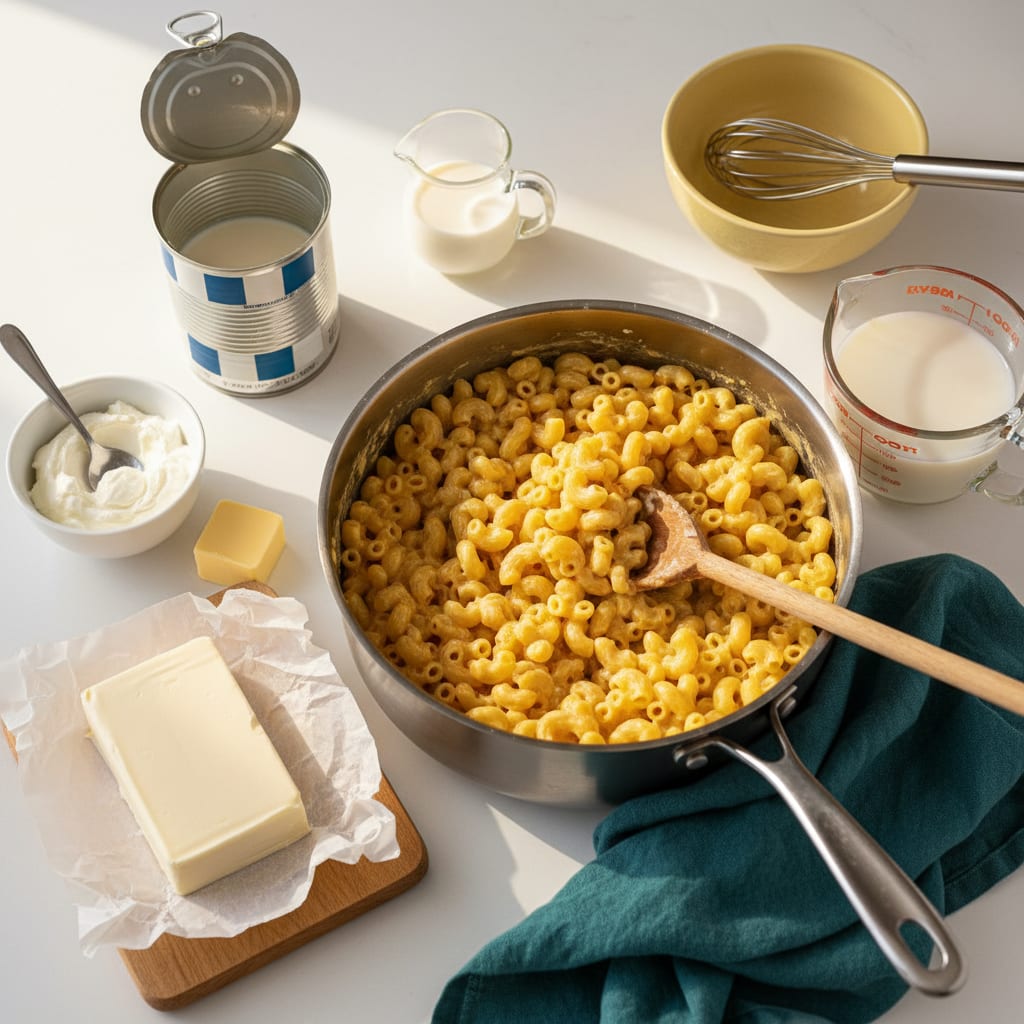
The best substitute for milk in mac and cheese is evaporated milk, used straight from the can at half the volume the box calls for. After that: heavy cream cut with water, sour cream thinned with pasta water, plain yogurt, cream cheese, or — the free option that’s already in your kitchen — the starchy pasta water itself. Every swap below includes the ratio, because the fix isn’t just what you pour in, it’s how much. Here’s what works, what it tastes like, and what to avoid entirely.
Quick answer chart
For a standard blue-box mac and cheese calling for 1/4 cup milk and 4 tablespoons butter:
| Swap | Use this much | Result |
|---|---|---|
| Evaporated milk | 2 tbsp | Richest, closest to boxed instructions — best overall |
| Heavy cream | 2 tbsp + 2 tbsp water | Very rich, slightly heavy |
| Half-and-half | 1/4 cup | Nearly identical to milk, no adjustment needed |
| Sour cream | 2 tbsp + 2 tbsp pasta water | Tangy, extra creamy — a genuine upgrade |
| Plain yogurt | 2 tbsp + 2 tbsp pasta water | Tangy, thinner; stir off heat |
| Cream cheese | 2 tbsp, softened + 3 tbsp pasta water | Thickest, glossiest sauce |
| Pasta water | 1/4 cup | Free, thinner, needs an extra tbsp butter |
| Unsweetened plain non-dairy milk | 1/4 cup | Works fine — the word unsweetened is doing the work |
The eight swaps, in order
1. Evaporated milk — the best one
Evaporated milk is milk with about 60% of its water removed, so it’s already a concentrated dairy. Use half the milk the recipe asks for and you land somewhere richer than the intended sauce. It doesn’t break, it doesn’t curdle, and an unopened can lives in the pantry for a year — which is exactly why we keep two on the shelf specifically for the nights we’re out of everything.
2. Heavy cream or half-and-half
Half-and-half swaps one-for-one with no thought required. Heavy cream is too rich straight — cut it half-and-half with water or pasta water, or the sauce coats your mouth in a way kids notice and complain about.
3. Sour cream
The dark-horse favorite. Two tablespoons of sour cream loosened with a little hot pasta water makes a tangier, thicker sauce than milk ever did. Add it off the heat — direct heat can make it grainy. This is the swap that turned into the way we actually make it now.
4. Plain yogurt
Same rules as sour cream: off the heat, thinned with pasta water, plain and unsweetened only. Greek yogurt is thicker and needs a little more liquid. The tang is more pronounced than sour cream, which some kids love and some flag immediately.
5. Cream cheese
Two tablespoons of softened cream cheese plus three of hot pasta water melts into the glossiest sauce on this list. It’s the technique behind restaurant-style creamy pasta generally — the same starch-and-fat emulsion that makes our buttered noodles work with almost nothing in the pot. Cut it into small pieces first or you’ll be chasing lumps.
6. Pasta water
Free, always available, and better than its reputation. The starch suspended in the cooking water genuinely emulsifies with butter and cheese powder into a sauce. It’s thinner than a milk-based version, so add an extra tablespoon of butter to compensate. Reserve the water before you drain — the most common way this swap fails is remembering it two seconds too late.
7. Unsweetened non-dairy milk
Unsweetened plain soy, oat, or almond milk all work at a one-for-one ratio. Oat milk is the creamiest of the three. The trap is vanilla or sweetened versions, which turn dinner into something genuinely strange. Check the carton — “original” often means sweetened.
8. Butter and a splash of water
The bare-cupboard option. Increase the butter by half and add water a tablespoon at a time until the powder dissolves. It’s not as creamy, but it’s hot pasta with cheese on it, and on a Tuesday that’s the entire job.
What not to use
- Sweetened condensed milk. Not the same thing as evaporated milk, despite the identical-looking can. It’s sugar syrup and it will ruin the pot.
- Flavored or sweetened non-dairy milks. Vanilla oat milk plus cheese powder is a memorable mistake.
- Buttermilk, straight. Too tangy and too prone to breaking under direct heat. If it’s all you have, use half buttermilk and half water, off the heat.
- Coconut milk from a can. It works texturally, but the flavor takes over completely.
For homemade mac and cheese, not the box
If you’re making a roux-based sauce from scratch, the same swaps apply with one change: the liquid needs to go in warm and gradually. Evaporated milk and half-and-half both behave like whole milk here. Sour cream, yogurt, and cream cheese are finishing ingredients, not roux liquids — build the sauce with something pourable, then stir the tangy dairy in at the very end with the heat off.
Undercook the pasta by a minute if the mac is going into the oven, and reserve a full cup of pasta water rather than a splash. Baked mac tightens as it sits and that reserved water is what loosens it back up.
Pantry-rescue thinking
Running out mid-recipe is not an emergency; it’s a ratio problem. The rule that covers most of them: replace a liquid with another liquid of similar fat content, or use a concentrated version at a smaller volume. It’s the same logic behind our egg-free pancake swaps — know which job the missing ingredient was doing, and you can almost always find something in the fridge that does it too.
Two things worth stocking permanently so this stops happening: a couple of cans of evaporated milk, and a block of cream cheese in the freezer. Both are shelf- or freezer-stable, both rescue a dozen different recipes, and neither costs much. And if the pasta itself is what you’re short on, our pasta portion charts will tell you whether the box in the cupboard actually stretches to feed everyone.
FAQ
What can I use instead of milk in Kraft mac and cheese?
Evaporated milk is the best swap — use half the amount of milk called for. Heavy cream cut with water, half-and-half at a one-to-one ratio, sour cream thinned with pasta water, or reserved pasta water plus extra butter all work well too.
Can you make mac and cheese with just butter and water?
Yes. Increase the butter by about half and add hot water a tablespoon at a time until the cheese powder dissolves into a sauce. The result is thinner and less rich than the boxed version, but it’s perfectly good — starchy pasta water works better than plain tap water if you saved some.
Can I use sour cream instead of milk in mac and cheese?
Yes, and many people prefer it. Use about 2 tablespoons loosened with 2 tablespoons of hot pasta water, and stir it in off the heat so it doesn’t turn grainy. The sauce comes out thicker and slightly tangy.
Does evaporated milk work in mac and cheese?
It works better than regular milk. Because roughly 60% of the water has been removed, use half the volume the recipe calls for. It won’t curdle, it makes a richer sauce, and an unopened can keeps in the pantry for about a year.
What about almond or oat milk?
Both work at a one-to-one substitution as long as they’re plain and unsweetened. Oat milk is the creamiest option and the closest match to dairy. Avoid anything labeled vanilla, original, or sweetened — the sugar clashes badly with cheese.
✳ More From the Kitchen

Lunchbox & Kids
Freezer & Meal Prep
Freezer & Meal Prep