Lunch Notes for Kids: 60 Short Ones to Tuck In
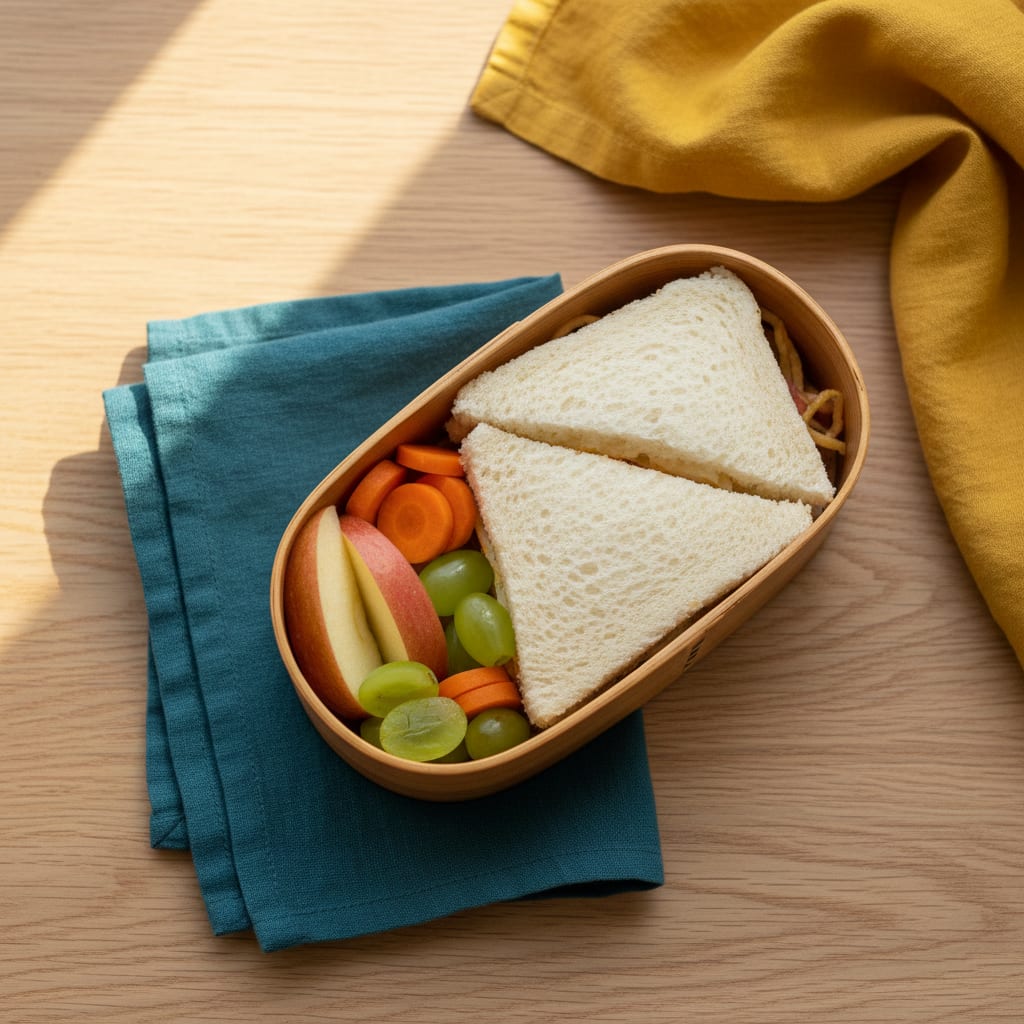
The best lunch notes for kids are short enough to read in one glance, match the child’s reading level, and say one specific thing — “I hope the spelling test felt easy” beats “Have a great day!” every time. Below are 60 ready-to-copy lunch box notes sorted by age (pre-readers to tweens) and by the kind of day it is (first day, test day, Friday, after a hard morning). Write one on a napkin or a sticky note on the lid, and keep it to a line or two.
Everything here is written to be copied straight onto a napkin. Nothing to print or download, and nothing to buy.
How to write a lunch box note they’ll actually read
- One line is plenty. A note gets read in the first thirty seconds of lunch, between opening the box and trading the crackers.
- Match their reading. Pre-readers get a drawing and a word they know. Early readers get short words. Older kids get a real sentence.
- Be specific. Mention the thing that’s happening today: the test, the game, the new kid, the field trip.
- Keep it private-proof. Kids read notes at a crowded table. Nothing about worries they wouldn’t want a friend to see.
- Not every day. A note two or three times a week stays a nice surprise. Every single day, it becomes wallpaper.
- Put it where it’ll be found. On top of the food, under the lid, or folded around the sandwich.
Pre-readers: preschool and kindergarten notes
Pair each with a tiny drawing — a heart, a sun, a smiley face, the family dog. The picture does the reading.
- Love, Mom (draw a big heart)
- Hi! (draw a waving hand)
- You + me (draw a heart)
- Big hug!
- I love you (draw a heart in place of “love”)
- See you soon! (draw the school gate)
- XOXO
- Yum! (draw their favorite snack)
Early readers: grades 1-2
Short words, big letters, and a little silliness.
- You are my sunshine.
- Eat your lunch. Then go play!
- I love you to the moon.
- You are brave and kind.
- Hi, superstar!
- Guess what? I’m proud of you.
- Crunch, munch, love you lots.
- You can do hard things.
- Save me a hug for later.
- What did the lettuce say to the carrot? “Lettuce be friends!”
- Why did the cookie go to the doctor? It felt crummy.
- Have the best day. Then tell me all about it.
Older kids: grades 3-5
Real sentences, a bit of humor, and something to talk about at dinner.
- I hope something today makes you laugh so hard milk comes out of your nose. (Not literally.)
- You worked hard on that. It shows.
- Ask a friend their favorite food today. Report back at dinner.
- You make our family better just by being in it.
- Fun fact: I was thinking about you at 10:15 this morning.
- Mistakes mean you’re trying. Try lots today.
- Be the kid who asks the new kid to sit with you.
- I bet you can’t guess what’s for dinner. (Hint: you’ll like it.)
- Thank you for helping this morning. I noticed.
- Proud of you. That’s it. That’s the note.
Tweens: grade 6 and up
Low-key, nothing that will embarrass them if a friend reads it over their shoulder.
- Have a good one.
- You’ve got this.
- Pizza tonight. Just thought you should know.
- Good luck at practice.
- Here’s your daily reminder that you’re doing fine.
- Text me if you need anything.
First day of school
- New year, new start. I’m so excited for you.
- Look around. Someone else is new too. Say hi.
- I’ll be right there at pickup.
- First day done by lunch? You’re halfway there!
Test day
- You studied. Your brain remembers more than you think.
- Breathe in, breathe out, read the question twice.
- Whatever happens on the test, I’m proud of how hard you worked.
- Your best is enough.
- Afternoon test? Eat your sandwich. Brains run on lunch.
Monday
- New week, fresh start.
- Monday’s almost half over already.
- Something good is going to happen this week. Watch for it.
Friday
- It’s FRIDAY!
- You made it through the whole week. High five!
- Weekend plans: sleep in, pancakes, you and me.
- Friday fact: you’re my favorite.
After a hard morning
The mornings that went sideways — the lost shoe, the tears at the door, the snapping (yours or theirs) — are when a note does the most.
- This morning was rough. I still love you all the way.
- I’m sorry I was grumpy this morning. Let’s start again at pickup.
- Rough mornings don’t make rough days. Fresh start right now.
- Everybody has those mornings. Even me.
- Big hug waiting for you at 3:00.
Birthday
- Happy birthday to my favorite person!
- Another year older, another year more awesome.
- You get to pick dinner tonight. Choose wisely.
Ideas to make the note part of the lunch
- Tie it to the food. “Hope you’re not hungry — oh wait, you are. Eat!” tucked next to the sandwich, or a note that names the treat in the box.
- Make it a running story. One sentence a day of a silly adventure, continued tomorrow. Kids will look for the next part.
- Let them write back. Tuck in a blank napkin and a note that says “your turn.” Some kids love leaving one in the empty box.
If the lunch itself is the hard part, our back-to-school lunch ideas cover the box from main to snack, and school lunch ideas for picky eaters is for the box that keeps coming home full. For mornings with no time to cook at all, there’s a whole list of no-cook school lunch ideas.
FAQ
What should I write in my child’s lunch box note?
One short, specific line that fits the day: good luck on the test, see you at pickup, I’m proud of how you helped this morning. Match the length to how well they read, and add a small drawing for younger kids.
How often should I put a note in my kid’s lunch?
We aim for two or three times a week: often enough to feel normal, rare enough that it’s still a nice surprise when the lid comes off.
What do you write in a lunch note for a child who can’t read yet?
Draw it. A heart, a sun, a smiley face or a simple picture of something they love, with one word they recognize like their name or “Mom.” A drawing works without anyone having to read it to them.
What can I write on a lunch note for a teenager or tween?
Keep it short, casual and safe to be seen by friends: “Good luck at practice,” “Pizza tonight,” or “You’ve got this.” Skip the hearts and anything about feelings they wouldn’t share at the table.
What should I write in a lunch note after a bad morning?
Something that resets the day without rehashing it: “Rough mornings don’t make rough days” or “I’m sorry I was grumpy. Let’s start again at pickup.” An apology from a parent in a lunch note can mean a great deal to a child.
✳ More From the Kitchen
Lunchbox & Kids
Lunchbox & Kids
Lunchbox & Kids