10 Fifteen-Minute Pastas Faster Than the Drive-Thru
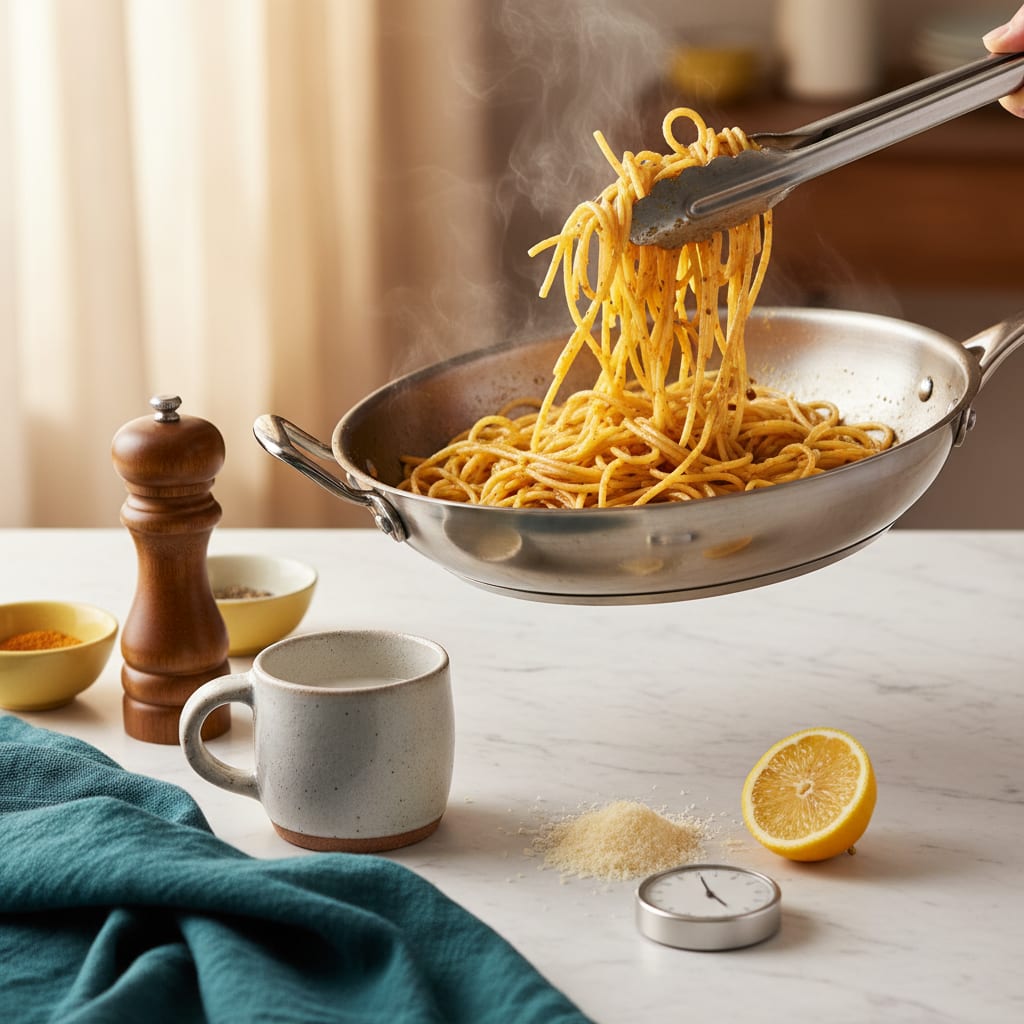
A 15-minute pasta dinner works because the sauce has to be finished before the pasta is — not after. Dried pasta takes 8–11 minutes once the water boils, and getting a big pot to a boil takes about 6–8. That’s your whole clock: everything else has to happen inside it. The ten dinners below are built that way. No sauce here needs longer than the pasta, none of them needs a second pan you’ll have to wash, and every one scales cleanly from two people to six.
The 15-minute rule
Start the water first. Always. It is the only step that can’t be hurried, and every minute the pot spends heating while you chop is a free minute.
Then follow one of three sauce patterns:
- No-cook sauce — pesto, cream cheese, ricotta, butter and cheese. Comes together in the serving bowl while the pasta drains.
- Skillet sauce — something browned (sausage, garlic, bacon) plus a liquid, done in 8 minutes flat.
- Same-pot sauce — vegetables dropped into the pasta water for the last two minutes so nothing extra gets dirty.
And keep a mug of pasta water. Starchy water is the ingredient that turns any of these from “noodles with stuff on them” into an actual sauce, and it costs nothing.
The ten
1. Cacio e pepe. Pasta water, grated pecorino or parmesan, and a lot of coarse black pepper, whisked in the pan off the heat. Four minutes of work.
2. Cream cheese and tomato. A block of cream cheese melted into canned tomatoes makes a rosy sauce with no cream in the house — the full ratio is in our cream cheese pasta.
3. Garlic butter and parmesan. Our butter noodles with garlic softened in the butter first. The dinner that ends arguments.
4. Lemon butter. Butter, lemon zest and juice, a fistful of parmesan, loosened with pasta water. The bright one — lemon butter pasta has the exact proportions.
5. Sausage and broccoli. Brown crumbled Italian sausage while the water heats; drop broccoli florets into the pasta for the last two minutes; toss it all together with a splash of the water.
6. Pesto with peas and ricotta. Jarred pesto, a spoon of ricotta for creaminess, frozen peas cooked in with the pasta. No pan at all.
7. Bacon, egg and pepper (a fast carbonara). Crisp the bacon, beat two eggs with grated cheese, toss the hot drained pasta with the eggs off the heat so they thicken instead of scramble.
8. Tuna, lemon and olive oil. Good canned tuna, olive oil, lemon, capers or olives if you have them, parsley if you don’t. Pantry to plate with nothing thawed.
9. Marinara with a swirl of cream. A jar of sauce, two tablespoons of heavy cream or a spoon of cream cheese, warmed while the pasta cooks. Tastes like a Sunday sauce, took nine minutes.
10. Brown butter and sage. Butter cooked until it smells nutty and speckled, sage leaves crisped in it, parmesan over the top. The one that feels like a restaurant and has three ingredients.
Which pasta shape actually saves time
Shape changes the clock more than people expect. Thin shapes finish in half the time of thick ones, which matters when the pasta is the long pole:
| Shape | Typical cook time | Best for |
|---|---|---|
| Angel hair, capellini | 3–4 min | Oil and lemon sauces |
| Spaghetti, linguine | 8–10 min | Cacio e pepe, carbonara, butter sauces |
| Penne, rotini, farfalle | 9–11 min | Chunky skillet sauces, sausage and vegetables |
| Orzo | 7–9 min | Creamy sauces, kid plates |
| Fresh refrigerated pasta | 2–3 min | Any night you’re genuinely out of time |
Fresh refrigerated pasta is the real cheat code on a 15-minute night — it cooks in the time it takes to grate cheese.
Scaling any of these up
The sauces above are written for a pound of pasta, which realistically feeds four adults or a family of five with a kid-sized portion or two. To go bigger, scale the pasta and the fat linearly but hold back on salt and acid until you taste — lemon and cheese are far easier to add than remove.
Water is the thing people under-scale. A pound of pasta wants at least four quarts, and doubling the pasta without doubling the water gives you a gummy, slow-boiling mess. Our guide to how much pasta per person has the dry-weight math for anything from two people to twenty.
Getting under 15 minutes for real
- Salt the water heavily and only once. It’s the only chance the pasta itself has to taste like anything.
- Grate cheese while the water heats. Dead time is the enemy.
- Undercook by one minute and finish the pasta in the sauce for 60 seconds. It absorbs flavor instead of sitting under it.
- Never rinse the pasta. You’d be rinsing off the starch that makes the sauce cling.
- Use a wide skillet, not a saucepan, for anything you toss together — more surface, faster everything.
FAQ
What is the fastest pasta dish to make?
Cacio e pepe or garlic butter parmesan — both are finished in the pan with cheese, fat and pasta water in under five minutes of actual work, so the only real clock is the pasta itself. With fresh refrigerated pasta, either one is on the table in about eight minutes total.
How long does pasta take to cook?
Most dried shapes take 8–11 minutes at a rolling boil, thin shapes like angel hair take 3–4, and fresh refrigerated pasta takes 2–3. Add 6–8 minutes to get a large pot of water boiling in the first place — that’s the part that decides whether a “15-minute” recipe is honest.
Can I make these ahead?
Cook the sauce ahead, not the pasta. Skillet sauces keep in the fridge for two or three days and reheat while fresh pasta boils. Fully assembled pasta softens overnight, though a baked leftover — sauce, pasta and cheese in a dish at 375°F — is very good in its own right.
How much pasta do I cook per person?
About 2 ounces of dry pasta per person for a side and 3–4 ounces for a main course, which puts a standard one-pound box at four to five main-course servings. Kids generally land closer to 1.5–2 ounces.
Do I really need to save pasta water?
For anything creamy or cheesy, yes. Starchy water emulsifies fat and cheese into a sauce that coats the noodles rather than pooling at the bottom of the bowl. Scoop out a mug before you drain — it’s the step most often skipped and most often the reason a sauce breaks.
✳ More From the Kitchen
Lunchbox & Kids
Feeding a Crowd
Freezer & Meal Prep