Can You Freeze Butter? Yes, and Nothing Changes
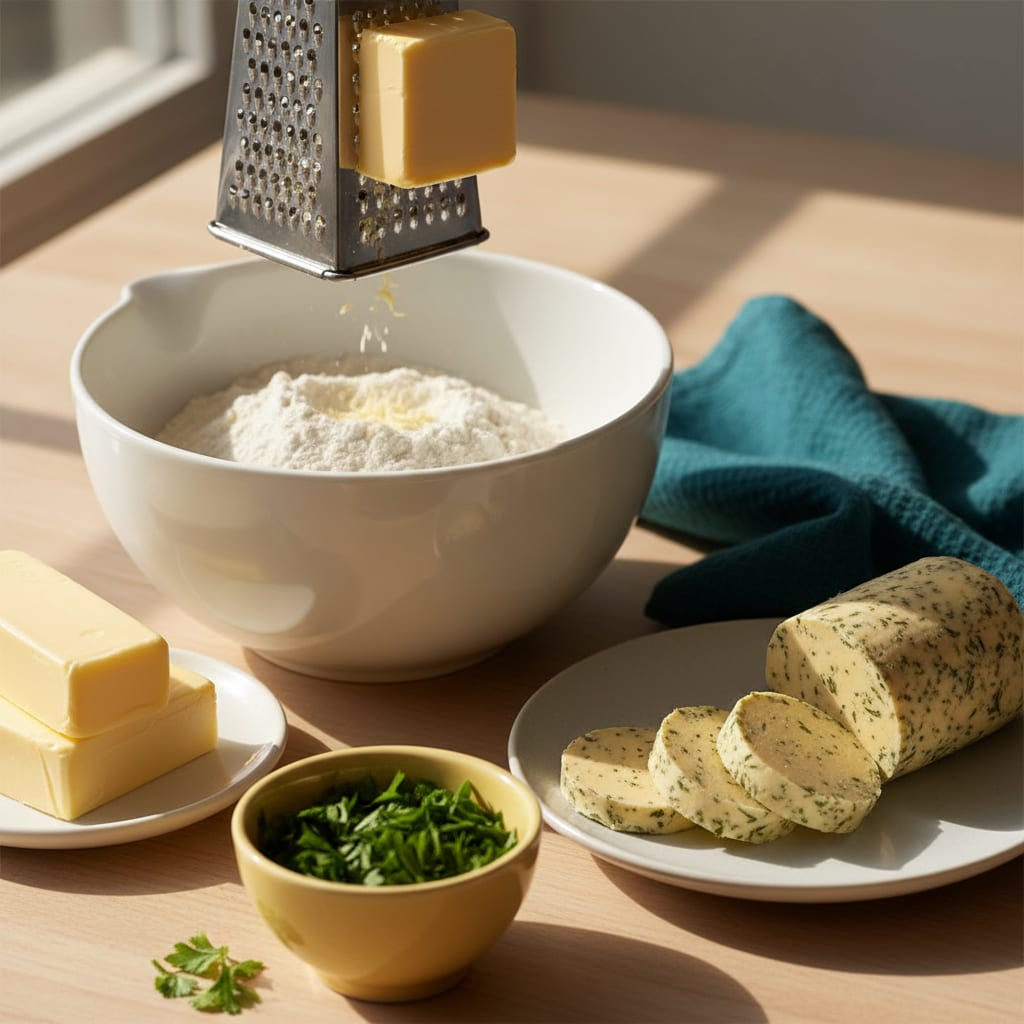
Yes, you can freeze butter, and it’s the rare freezer job with almost no downside. Butter comes out of the freezer tasting and behaving like butter — no separation, no grain, no weeping. U.S. Dairy puts unsalted butter at up to five months in the freezer and salted at up to nine, because salt acts as a preservative. Leave it in its original wrapper, add a layer of foil or a freezer bag, and thaw it in the refrigerator.
If you’ve been burned by freezing cream cheese or sour cream, butter is the opposite experience. It’s the one dairy item we buy deliberately on sale and freeze without a second thought.
Why butter survives the freezer so well
The reason most dairy suffers in the freezer is water. Ice crystals form, push the structure apart, and the thing thaws separated. Butter is roughly 80% fat and only about 16–18% water, and that small amount of water is already locked into tiny droplets scattered through the fat. There’s simply not enough free water to wreck the structure.
What butter is vulnerable to is air and odor. Fat is where off-flavors live, and an unwrapped stick will pick up whatever else is in your freezer — onions, fish, last month’s chili — within weeks. That’s the whole risk, and it’s solved with wrapping.
The practical rule: wrap it against air, not against cold.
How long each kind keeps
| Type | Freezer window | Notes |
|---|---|---|
| Salted sticks | Up to about 9 months | The salt is doing preservative work |
| Unsalted sticks | Up to about 5 months | Freeze these first, use these first |
| European high-fat butter | Like unsalted | Even less water; excellent performer |
| Cultured butter | Like unsalted | Tangy flavor mellows slightly |
| Whipped butter in a tub | Fair | Air whipped in collapses on thaw |
| Compound (herb/garlic) butter | Very good | Freeze in a log, slice off coins frozen |
| Clarified butter and ghee | Excellent | Almost no water at all |
| Margarine and oil spreads | Poor | Emulsifiers split; texture goes greasy |
Those windows are quality guidance. FoodSafety.gov notes that anything held continuously at 0°F is safe indefinitely — the dates tell you when it stops tasting fresh, not when it becomes a problem.
How to freeze it
- Leave the wrapper on. The waxed paper or foil a stick comes in is already a decent moisture barrier, and it keeps you from having to guess which stick is salted.
- Add a second layer. A freezer bag with the air pressed out, or a wrap of foil over the box. Two layers is the difference between butter that tastes like butter in July and butter that tastes like the freezer.
- Freeze it as sticks, not as a solid brick of four. Individual sticks thaw in a couple of hours; a full box takes most of a day.
- Make compound butter while you’re at it. Soften a stick, mash in minced garlic and chopped parsley, roll it into a log in parchment, and freeze. You slice frozen coins off it straight onto steak, corn or bread — no thawing at all. This is the single most useful thing in our freezer door.
- Freeze it fresh. Butter that has started to taste stale in the fridge will taste exactly that stale in three months.
Thawing — and the times you shouldn’t bother
For most jobs, move a stick to the refrigerator the night before and forget about it. It’ll be ready to spread or cream by morning.
The better trick, and the one that changed how we bake, is to skip thawing entirely. Frozen butter grates. Run a frozen stick over the coarse side of a box grater and you get cold, pea-sized shreds that fold straight into biscuit, scone and pie dough — which is exactly the texture those recipes are asking for when they say “cut in cold butter.” Frozen butter is easier to grate than cold butter, and it never gets warm enough in your hands to smear.
For a pan sauce or melted butter, chop a frozen stick and melt it slowly. There’s no reason to thaw first.
What not to do: leave a stick on the counter to thaw all day, or microwave it to speed things up. Butter goes from firm to a puddle of separated oil and solids in about eight seconds of microwave, and it never comes back.
Where frozen butter earns its shelf space
Because there’s no texture penalty, frozen butter goes anywhere fresh butter goes. The reason to stock it is price and timing, not rescue:
- Weeknight pasta. A stockpile of butter is the reason we can make butter noodles at 6:15 on a night that fell apart, and it’s the backbone of our lemon butter pasta too.
- Holiday baking. Butter goes on sale hard in November and December. Buying six boxes then and freezing them is the cheapest cooking decision of the year.
- Biscuits, scones and pie crust. Grated frozen butter beats cold butter, so the freezer is the correct place to keep it.
- Compound butter coins. Garlic-herb on bread, honey-cinnamon on pancakes, chili-lime on corn.
- Pan sauces and finishing. A cold cube whisked into a hot sauce off the heat is what makes restaurant sauces glossy.
Fitting it into the freezer shelf
Butter is a component, like a bag of grated cheese or a container of cooked rice — it makes half-finished dinners into complete ones. Keep it in the door or a front basket, not buried, because the whole point is grabbing it without thinking. If you’re organizing the shelf properly, our freezer storage chart sets the rotation order so the unsalted sticks get used before the salted ones.
And if you’re stocking dairy generally, freezing cheese is the other half of the same trip — cheese comes back crumbly and melts perfectly, butter comes back unchanged, and between them most weeknight dinners are covered.
FAQ
How long can you freeze butter?
Around nine months for salted butter and around five for unsalted, per U.S. Dairy. It stays safe well beyond that at a steady 0°F; the window is about flavor, and butter’s main enemy in the freezer is absorbed odor rather than time.
Does freezing butter change the taste or texture?
Barely, if it’s wrapped properly. Butter has very little free water, so there’s almost nothing for ice crystals to damage. The flavor change people notice is nearly always absorbed freezer odor from a torn or single-layer wrapper.
Can you freeze butter in its original box?
Yes, but add a freezer bag or foil around the box. The inner waxed wrapper is a reasonable barrier on its own for a few weeks — for months, you want the second layer.
Can you bake with frozen butter without thawing it?
For anything that calls for cold cut-in butter — biscuits, scones, pie crust — grated frozen butter is better than thawed. For creaming with sugar in a cake or cookie dough, thaw it in the fridge first; it needs to be pliable to trap air.
Why did my frozen butter taste stale?
Almost certainly absorbed odor, not age. Butter fat pulls in whatever else is in the freezer through a thin or damaged wrapper. Double-wrap the next batch and keep it away from anything strongly flavored.
Can you refreeze butter that’s been thawed?
Yes, if it went no warmer than refrigerator temperature and never softened to spreadable. Butter that sat out and melted at the edges has lost its emulsion and should just be used.
✳ More From the Kitchen
Lunchbox & Kids
Lunchbox & Kids
Freezer & Meal Prep