Toddler Drinks Too Much Milk and Won't Eat Dinner? Start Here
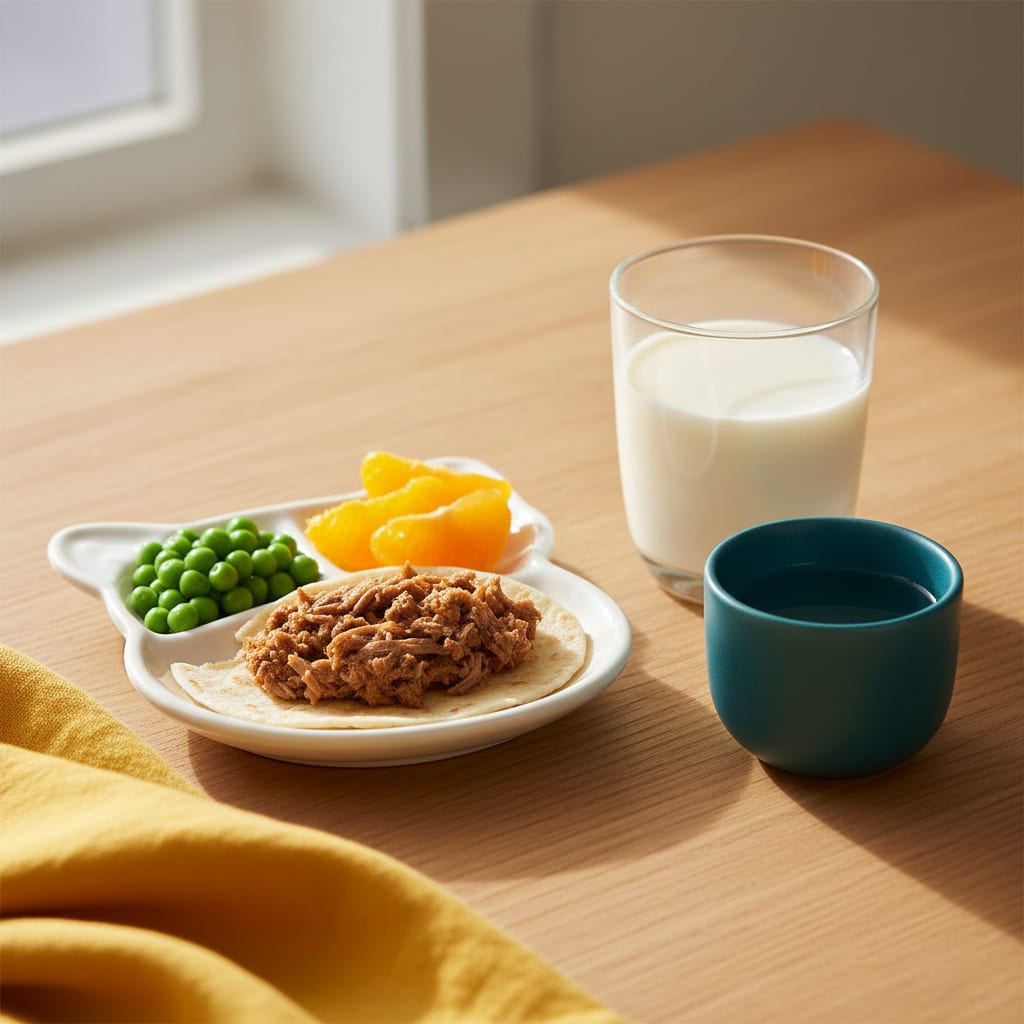
If your toddler drinks milk all day, picks at dinner and then wakes at night, the milk is usually doing the eating. After the first birthday, milk is meant to be a drink alongside meals — roughly two to three cups a day — not the main source of calories. Count every cup for two days, cap the total, move milk to mealtimes with water in between, and make dinner the meal they arrive hungry for. Give each change a few days to settle; when hunger was behind the night waking, a fuller dinner is what takes it away.
This is the daytime half of the problem. If the 2 a.m. cup is already the main event, our plan for night weaning a toddler who still wants milk at 2am picks up where this one stops.
How much milk is enough after one?
Probably less than you’d guess. Cincinnati Children’s, in its guide to moving babies onto cow’s milk, puts the recommendation at “16-24 ounces per day” and is clear about the rest: “their remaining calories should come from solid foods.” It adds the line worth sticking on the fridge: cow’s milk “should be treated as a beverage, not a meal.”
Canadian guidance is tighter still. SickKids’ AboutKidsHealth page on anemia from too much milk recommends 250 to 500 mL (1–2 cups, 8–16 oz) a day for one-year-olds and says children over one should drink no more than 500 mL, or 16 oz.
Treat the number as a ceiling. Well under 24 ounces a day, milk is probably not your dinner problem; well over it, you have found it. (Under one, it’s the other way round: milk is still the main food, and a baby who started solids and still wakes hungry usually needs more of it, not less.)
Count the cups for two days
Before changing anything, write down every cup for two ordinary days — including the ones in the car, the stroller and the bedroom. Here is how one such day can add up (an illustration, not an average):
| When | What | Ounces |
|---|---|---|
| Wake-up | Bottle or cup in bed | 7 |
| Mid-morning | Sippy cup carried around the house | 5 |
| Lunch | Cup with the meal | 4 |
| After nap | ”Waking-up” cup | 6 |
| Car, late afternoon | Cup to keep the peace | 4 |
| Dinner | Cup with the meal | 4 |
| Bedtime | Bottle or cup | 7 |
| Total | 37 |
That is about half again over the top of the US range. Look hardest at two slots. The after-nap cup lands about an hour before dinner, which is exactly when an appetite should be building. The carried cup never really ends, so the stomach never really empties.
Why milk wins the dinner fight
Milk is familiar, needs no chewing and can be drunk while doing something more interesting; a plate of chicken and broccoli asks for sitting still, chewing and trying. And a toddler’s stomach is small. SickKids puts the mechanism plainly: “if a child drinks too much milk, they will be too full to eat good amounts of iron rich foods.” The child isn’t being difficult at dinner. They are full.
Then dinner is picked at, and a few hours after bedtime an under-fed toddler wakes and asks for the food they trust: more milk. The night cup tops up what dinner didn’t, so the next day’s appetite is blunted again. That loop is why fixing the 2 a.m. feed on its own so often stalls.
Cut back in this order
Change one slot every few days rather than everything at once:
- Carried cups become water. Milk stays, but only at the table. This alone often removes a cup or more a day.
- The after-nap cup becomes a snack with food. Offer a small snack with a little milk in it — yogurt, cheese, oatmeal — and water to drink. The calories still arrive, as food rather than a drink.
- At meals, food first. Put the plate down and pour a small cup a few minutes in, once they’ve started eating. A full cup before the first bite can be most of the meal.
- Bottles go. The NHS says that once a baby is a year old, “feeding from a bottle should be discouraged,” and SickKids notes that children who keep drinking from a bottle past two “tend to drink too much milk.” The NHS prefers an open cup because it teaches sipping rather than sucking.
- Leave the bedtime cup for last. Keep it while the day settles, then make it smaller. The night weaning plan covers that cup and the overnight one.
SickKids also points out that “limiting milk does not mean stopping it completely” — milk is a good source of calcium and vitamins. The goal is two or so cups at sensible times, not none.
Make dinner worth arriving hungry for
The foods milk was crowding out are mostly iron foods, and SickKids suggests offering “meat and meat alternatives and iron-fortified cereals a few times each day.” It also notes that vitamin C “can help iron absorption from foods.” So build dinner around that pairing:
| Dinner | The iron | The vitamin C partner |
|---|---|---|
| Soft beef tacos, cut into strips | Ground beef | Diced tomato or mild salsa |
| Lentil and beef pasta sauce | Lentils and beef | Red pepper cooked into the sauce |
| Egg fried rice with peas | Egg | Peas and soft-cooked pepper |
| Bean and cheese quesadilla | Black beans | Orange segments on the side |
| Chicken thighs and rice | Dark-meat chicken | Steamed broccoli |
| Turkey meatballs in tomato sauce | Turkey | The tomato sauce |
Serve one food they always eat next to the new one, cut everything soft and small, and keep dinner to about twenty minutes. If they’re done, they’re done; with the afternoon milk gone, breakfast will come hungry.
For more plate ideas that work at 5:30 as well as noon, our toddler lunch ideas are built the same way. Betteroo’s collection of easy plates for choosy toddlers is a useful second list. Its own drinks note lands where this post does: milk between meals takes away the hunger that makes new foods appealing.
What about the night waking?
A fuller dinner removes hunger as a reason to wake, and that’s all food can do. On an early or light dinner night, a small bedtime snack for toddlers at the table beats a bottle in bed. But well-fed toddlers still wake when the cup was comfort as much as calories, or when naps and bedtime have drifted. If the plate is full and the nights aren’t, look at the schedule next.

When to call the pediatrician
Too much milk isn’t only an appetite problem. SickKids explains that milk “contains very little iron,” can get in the way of absorbing iron from other foods, and that too much of it can damage the lining of the gut. That’s why a long “milk diet” can lead to iron-deficiency anemia. It advises seeing a health-care provider “if your child drinks a lot of milk and is tired, weak, pale or has a swollen face, legs and feet.” The usual check is a simple blood test.
Talk to your pediatrician too if your toddler is dropping off their growth curve, eats very little of anything once milk is cut, or has a dairy allergy or drinks a plant-based milk.
FAQ
How much milk should a toddler drink a day?
US guidance from Cincinnati Children’s is 16 to 24 ounces (two to three cups) a day from age one, with the rest of a toddler’s calories coming from food. SickKids recommends 8 to 16 ounces and no more than 16. The AAP’s HealthyChildren site advises whole milk from 12 to 24 months.
Can too much milk make a toddler not hungry for dinner?
Yes. Milk is filling and needs no chewing, and a toddler’s stomach is small. A cup an hour before dinner, or a cup carried around all afternoon, can leave little room for food.
Does drinking too much milk cause night waking?
It can contribute: a toddler who drinks instead of eating dinner may wake hungry, drink overnight, and eat less the next day. Habit and schedule play a part too.
How quickly can I cut back my toddler’s milk?
Change one slot every few days rather than everything at once: carried cups first, then the after-nap cup, then bottles, and the bedtime cup last. Done that way, the whole change takes a week or two.
✳ More From the Kitchen
Lunchbox & Kids
Freezer & Meal Prep

Feeding a Crowd