Can You Freeze Mashed Potatoes? What Actually Works
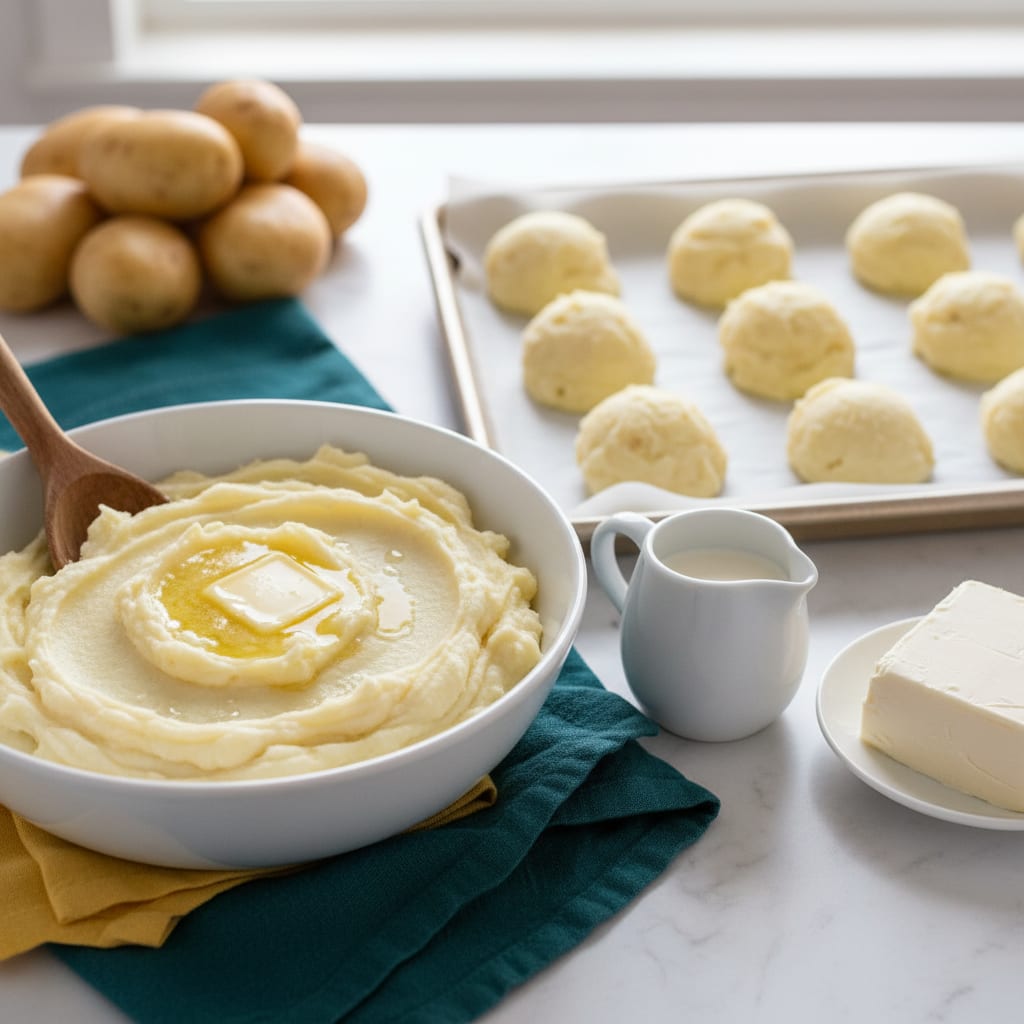
Yes, you can freeze mashed potatoes — but only the rich ones. Fat is what protects the texture: mash made with real butter, cream, sour cream or cream cheese comes out of the freezer smooth, while lean mash made with water or skim milk turns grainy and watery. So the rule is simple. Make the mash a little richer than you would for a Tuesday, cool it completely, freeze it in flat portions or scoops, and reheat it low and slow with a splash of extra cream. Done that way, it’s genuinely hard to tell from fresh.
This is the make-ahead trick that saves holiday cooking. Mashed potatoes are the dish that always lands last, always needs the burner you don’t have, and always makes the cook miss the appetizers.
The fat rule (the whole secret)
Potato starch and water are not friends in a freezer. When mash freezes, the water in it forms ice crystals that puncture the starch structure; on thawing, that water leaks out and you get a grainy, separated bowl. Fat coats those starch granules and buffers the whole process.
That means the mash you freeze should be, in practical terms, the good kind:
| Mash style | Freezes? | What happens |
|---|---|---|
| Butter + heavy cream | Excellent | Reheats creamy, nearly indistinguishable from fresh |
| Butter + sour cream or cream cheese | Excellent | The most freezer-stable of all; tangy and stable |
| Butter + whole milk | Good | Fine with a splash of cream added at reheat |
| Milk only, no butter | Poor | Grainy, watery, needs rescuing |
| Made with water or broth, no fat | Don’t | Separates badly; not worth the freezer space |
| Loaded mash with cheese and bacon | Good | Freeze the mash, add bacon fresh so it stays crisp |
Potato variety matters too. Starchy russets and Yukon Golds mash and freeze best. Waxy red potatoes make a denser mash that gets a little gummy — lovely fresh, less forgiving frozen. Our how many potatoes per person chart has the pounds-per-guest math if you’re batching for a crowd.
How to freeze mashed potatoes
- Make it slightly richer than usual. An extra pat of butter per pound of potatoes is enough insurance. Season it fully — cold food tastes flatter, so a slightly generous hand with salt now pays off later.
- Cool completely. Spread the mash in a shallow layer in a wide dish so it drops to room temperature in 20–30 minutes rather than holding heat in a deep bowl. Warm mash going into the freezer makes condensation, and condensation makes ice.
- Choose your format.
- Flat bags for whole-family portions: press into a thin slab, squeeze the air out, stack like files.
- Scoops on a sheet pan for single servings: ice-cream-scoop portions frozen solid, then bagged. This is how you get one kid-sized helping on a Wednesday.
- The reheat dish for holidays: spread straight into the buttered casserole you’ll bake it in, wrap in plastic then foil, and freeze the whole thing.
- Wrap twice. Potato is a sponge for freezer smells. Bag-inside-a-bag, or foil over plastic wrap.
- Label and use within about 2 months for the best texture. They stay safe much longer at 0°F, but the flavor slowly flattens.
Reheating: four ways, best to worst
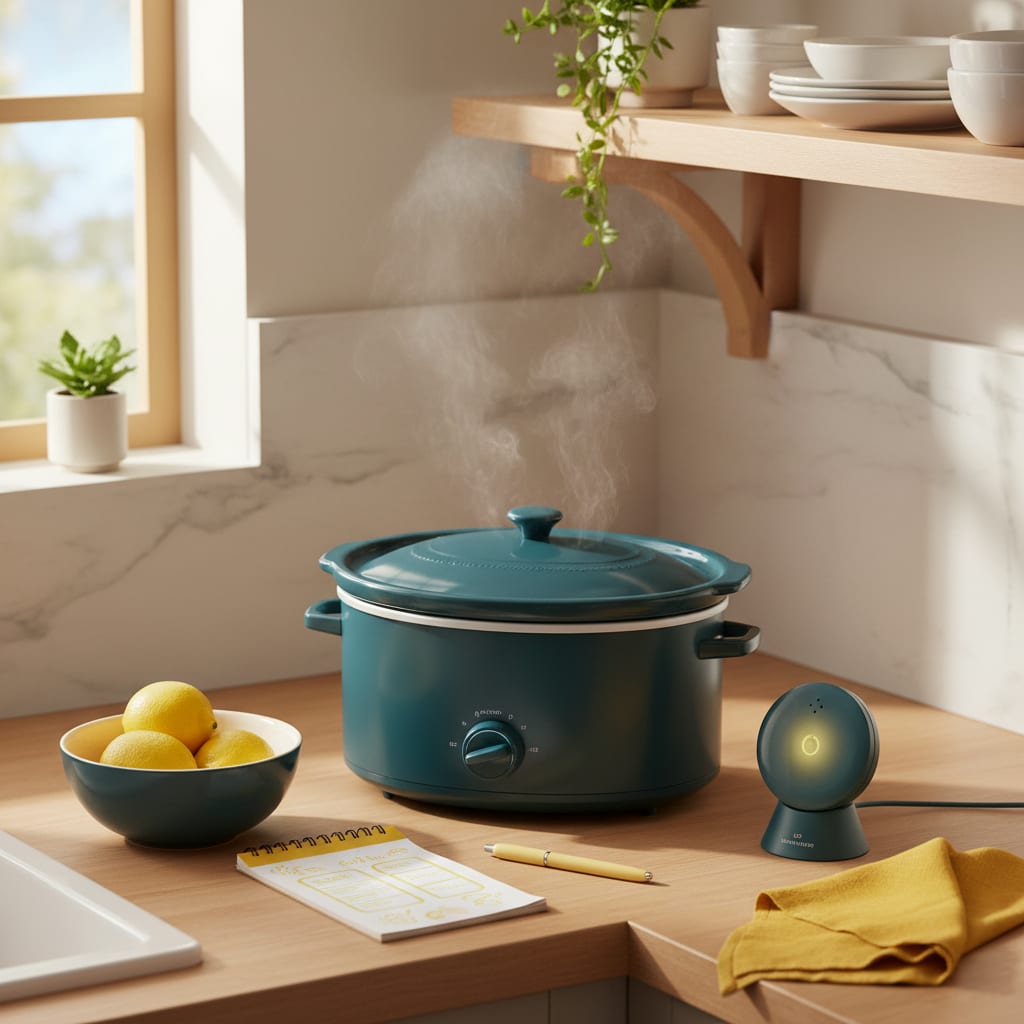
- Slow cooker (best for a crowd). Frozen mash into the crock with a few tablespoons of cream or milk and a knob of butter on top, low for around 3–4 hours from frozen, stirring every hour or so. It reheats gently and then holds at serving temperature for hours, which frees up the stove entirely.
- Oven (best for holidays). Thaw overnight in the fridge, dot the top with butter, cover with foil, and bake at 350°F for about 30 minutes covered, then 10 uncovered for a lightly browned top. From frozen, allow closer to an hour covered.
- Stovetop (best for texture). Thawed mash into a heavy pot over low heat with a splash of cream, stirred constantly. This is the method that most reliably brings a slightly grainy mash back together.
- Microwave (fine for one plate). Covered, at 50% power, stirring every 90 seconds. Full power on frozen mash cooks the edges before the middle thaws and gives you the gluey outcome everyone remembers.
If it comes out grainy anyway
Don’t dump it. Grainy mash is fixable, and usually in one pan:
- Add fat and heat gently. Warm cream, butter, or a spoonful of cream cheese stirred in over low heat re-emulsifies most of it.
- Beat, don’t whip. A hand mixer on low or vigorous stirring with a wooden spoon works. Over-whipping releases more starch and turns mash to wallpaper paste.
- Change its job. Genuinely watery mash becomes a topping — spread it over a skillet of browned beef and vegetables and bake it into a shepherd’s-pie situation, or thin it with broth into potato soup. Nobody will know.
Where it fits in a freezer rotation
Mash is a component, like rice or shredded chicken — the base of a dinner, not the dinner. It pairs with anything you’ve already got frozen, which is exactly how our freezer meal prep for beginners system is built. If you’re stocking the freezer properly, our how long do freezer meals last chart tells you what to eat first, and can you freeze cooked rice covers the other starch worth batching.
For the record: frozen mash is also what turns a pile of leftover baked potatoes into next week’s dinner. Extra bakers get scooped out, mashed with butter and cream cheese, and frozen the same night — no new shopping required.
FAQ
How long do mashed potatoes last in the freezer?
Around 2 months for the best texture, and they remain safe well past that at 0°F. The limiting factor is flavor and freezer odor, not safety. Double-wrap them and write the date on the bag.
Can you freeze mashed potatoes made with milk instead of cream?
Yes, if there’s butter in them. Whole milk plus butter freezes fine; skim milk with no butter is the combination that separates. If your mash is on the lean side, stir in a spoonful of cream cheese or sour cream before freezing — it’s the single most effective insurance policy.
Should you thaw frozen mashed potatoes before reheating?
For the oven and stovetop, yes — thaw overnight in the fridge for even heating. For the slow cooker, no: frozen straight into the crock on low works beautifully and is the easiest option for a holiday table.
Can you freeze leftover mashed potatoes from a restaurant or store?
You can, but you don’t know how rich they are or how long they sat warm. Store-bought refrigerated mash is usually rich enough to freeze well. Restaurant leftovers that rode home in a container are best eaten within a couple of days instead.
Do loaded mashed potatoes freeze well?
The potato part does. Cheese and sour cream freeze fine mixed in; bacon, chives and fried onions do not — they go soft and lose their whole point. Freeze the base, and scatter the crunchy toppings on after reheating.
✳ More From the Kitchen
Lunchbox & Kids

Freezer & Meal Prep
Feeding a Crowd