Toddler Lunch Ideas: 20 Easy Plates, No Fuss
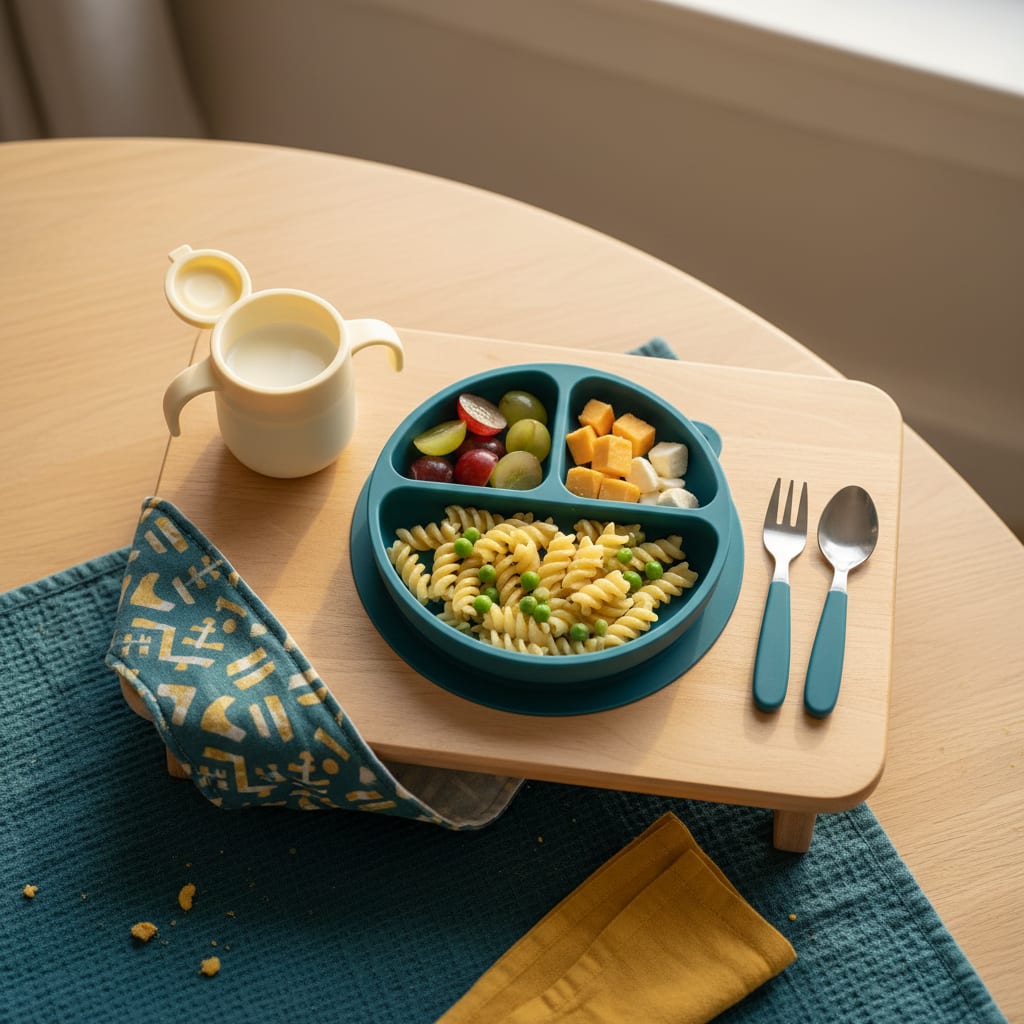
A toddler lunch is three small things on a plate: one protein, one carb, one fruit or vegetable — served in portions far smaller than you’d guess, with no negotiating attached. That’s the whole formula, and once you’re running it, lunch takes five minutes and stops being a decision. A toddler-sized serving is roughly a quarter of what an adult eats: about a tablespoon of each food per year of age is the classic starting point, with seconds available if they ask. Below are 20 plates built on that formula, sorted by how much effort they take, plus the portion guide and the part nobody warns you about — what to do when they eat two bites and leave.
The three-part plate
- Protein: cheese, yogurt, beans, eggs, shredded chicken, turkey, hummus, nut or seed butter (thinly spread, never a spoonful).
- Carb: pasta, rice, toast fingers, crackers, tortilla, potato, oatmeal.
- Fruit or veg: whatever is soft and cut safely — berries quartered, grapes quartered lengthwise, cooked carrots, avocado, banana, steamed broccoli.
Put all three out at once, in small amounts, on a divided plate. A suction-base dish like the Bumkins silicone grip dish is the single most useful piece of gear at this age, purely because it doesn’t become a frisbee. Serve family style where you can — a small bowl of each item that they help themselves from — and the meal shifts from something done to them to something they’re doing.
10 no-cook toddler plates (5 minutes flat)
- Cheese cubes + whole-grain crackers + quartered grapes.
- Greek yogurt + soft granola + blueberries, stirred so it isn’t a texture ambush.
- Hummus + warm pita strips + cucumber coins.
- Turkey roll-ups + soft cheese sticks + apple slices (thin, peeled if they’re new to apples).
- Cottage cheese + peach or pear chunks + toast fingers.
- Bean and cheese quesadilla wedges, cold + avocado slices.
- Hard-boiled egg, quartered + buttered toast strips + steamed carrot coins.
- Thin nut-butter toast + banana coins + a small yogurt.
- Deli chicken strips + rice crackers + halved raspberries.
- Cream cheese pinwheels (tortilla, cream cheese, thin ham, rolled and sliced) + snap peas, sliced open.
6 warm plates in under 15 minutes
- Buttered noodles + peas + shredded chicken — the butter noodles base handles every mood.
- Scrambled eggs + toast + strawberries. Breakfast for lunch wins constantly.
- Mini pasta with marinara + a spoon of ricotta stirred in for softness and protein.
- Baked sweet potato, split and mashed with butter + black beans + shredded cheese.
- Grilled cheese fingers + tomato soup in a small cup for dunking.
- Rice bowl: warm rice, soft cooked vegetables, a little soy or teriyaki, cubed tofu or chicken.
4 plates from last night’s dinner
- Chopped leftover roast chicken + roasted vegetables, reheated soft.
- Chili, thinned slightly, with a dollop of sour cream to cool it down.
- Taco filling, deconstructed: beef, beans, cheese and rice in separate mounds, no shell.
- Meatballs quartered + pasta + whatever vegetable was on the table.
The leftovers route is where the real time lives. Cooking one extra portion at dinner is free; cooking a separate toddler lunch at noon is not.
Portions, honestly
| Component | Starting portion for 1–3 years |
|---|---|
| Protein | 1–2 tablespoons |
| Carb | 2–4 tablespoons (about a quarter slice of bread, or 1/4 cup pasta) |
| Fruit or vegetable | 1–2 tablespoons of each |
| Milk or water | About 4 oz with the meal |
Serve small and offer more. A big plate reads as a demand; a small plate that gets refilled reads as a win. Appetites at this age swing wildly day to day and week to week — a toddler who eats a full lunch Monday and three raisins Tuesday is behaving completely normally.
When they refuse (they will)
The division of labor that makes mealtimes survivable: you decide what is offered, when, and where. They decide whether to eat and how much. That’s it. It sounds passive and it’s the opposite — it takes all the pressure out of the room, which is what actually gets food eaten over the following months.
In practice:
- Always include one accepted food on the plate, next to the new thing. New foods often need many neutral exposures before they’re eaten, and a plate of nothing familiar just ends the meal.
- Don’t offer a replacement meal. Lunch is lunch; the next scheduled snack is close enough.
- Keep it to 20–30 minutes and end it without commentary. Long meals don’t produce more eating, only more conflict.
- Watch the timing more than the menu. A toddler who won’t eat lunch at 12:30 is often simply overtired — lunch has drifted into the front edge of nap. Pushing lunch 20 minutes earlier fixes more refusals than any recipe does. If the whole day’s timing feels off, Betteroo’s 18-month sleep schedule is a useful sanity check on where meals and naps should sit, and their free sleep quiz will tell you in a few minutes whether the schedule is the problem.
If you’re still in the earlier stage where lunch happens one-handed, our cooking dinner with a baby guide is the companion to this one — and when they hit preschool, our school lunch ideas for picky eaters list picks the formula back up in lunchbox form.
FAQ
What should a 1-year-old eat for lunch?
The same three-part plate as everyone else, cut small and soft: one protein (cheese, yogurt, egg, beans), one carb (pasta, toast fingers, rice), one fruit or vegetable. Around a tablespoon of each is a normal starting serving. Skip honey until after 12 months, keep whole grapes, whole nuts and hard raw vegetables off the plate, and cut round foods lengthwise.
How much should a toddler eat at lunch?
Far less than most adults expect — roughly a quarter of an adult portion, or about a tablespoon of each food per year of age as a starting point. Appetite swings enormously between days. Judge it over a week, not a meal.
What are good toddler lunches for daycare?
Cold, sturdy, and hand-friendly: cheese cubes with crackers and fruit, pinwheels, hummus with pita and cucumber, pasta salad, yogurt with berries. Send it in a divided container with a cold pack, cut everything to safe sizes, and label the container clearly with your child’s name.
My toddler won’t eat lunch at all. What now?
Check the clock before the menu — lunch colliding with the start of nap is the most common cause of a total refusal. After that, look at snacks: a substantial mid-morning snack or a bottle of milk within an hour or two of lunch removes the appetite entirely. Keep offering the plate, don’t offer a substitute, and let them leave the table without a fight.
Do toddlers need a hot lunch?
No. A cold plate with a protein, a carb and a fruit or vegetable is nutritionally identical to a warm one. Hot lunches are worth it when they’re leftovers you’re not cooking twice — otherwise the no-cook plates in this list are the better use of the 20 minutes.
✳ More From the Kitchen
Lunchbox & Kids
Feeding a Crowd
Freezer & Meal Prep