Restless Sleep and Low Iron in Toddlers: Foods That Help
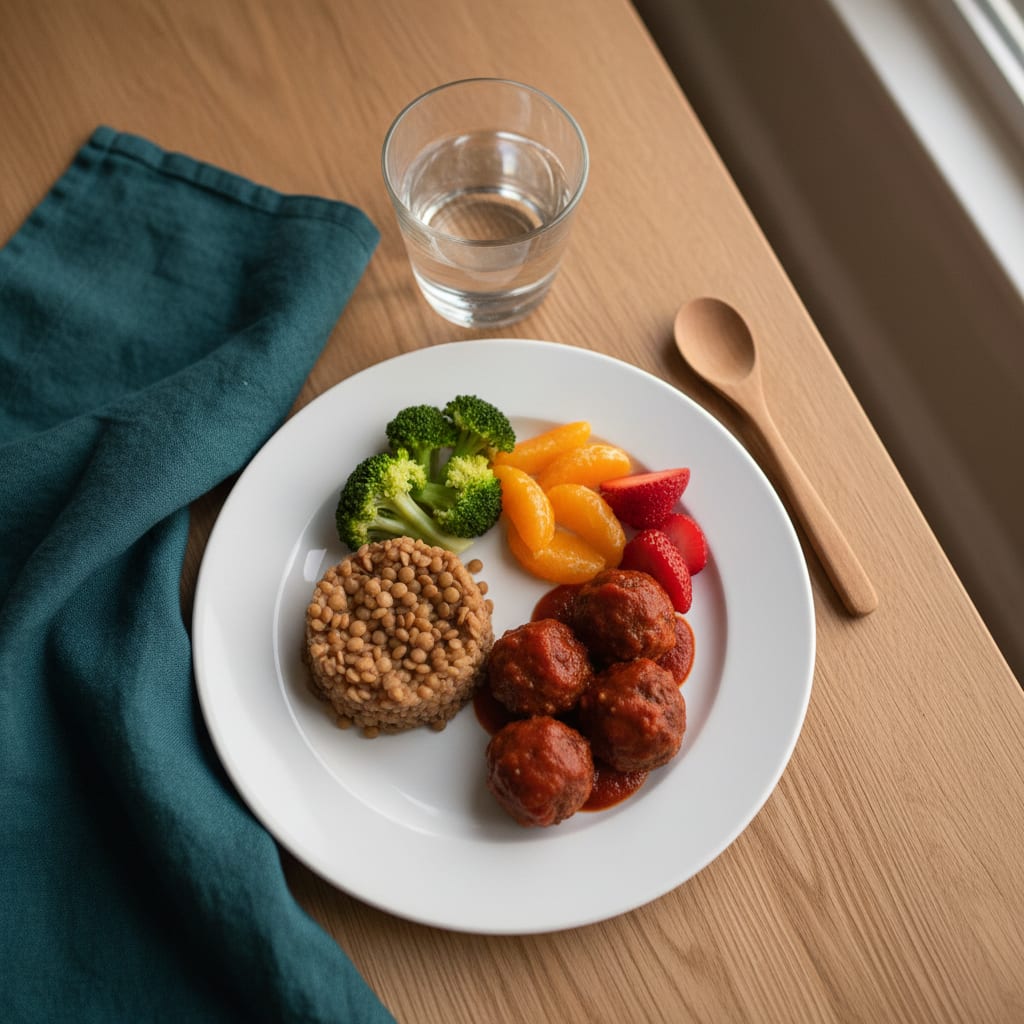
Low iron can be one reason a toddler sleeps restlessly, and it is worth asking about when the tossing comes with other signs: pale skin, tiredness, crankiness, a big milk habit or a diet light on meat and beans. The American Academy of Pediatrics lists restless legs that interfere with sleep among the signs of more severe iron-deficiency anemia. Only a blood test shows whether iron is low, and the pediatrician decides on testing and treatment. What a parent can do at home is cook: iron-rich foods every day, a vitamin C food alongside, and milk kept to mealtimes.
Plenty of toddlers sleep like a windmill and are perfectly well, so movement on its own is not a reason to worry. This page is about recognizing the pattern that is worth a question at the next visit, and about the food side, which helps either way.
When restless sleep is worth asking about
The AAP’s parent site, HealthyChildren, lists the common symptoms of iron deficiency and anemia in kids:
- pale, yellowish or ashy skin, and faded cheeks, lips, nail beds and eyelids
- low or irritable mood
- mild muscle weakness
- feeling tired or needing naps more often
- craving or chewing things that are not food, such as ice, dirt or paper (called pica)
Under the signs of more severe anemia, the same page includes “restless leg syndrome that interferes with healthy sleep.” Bring it up with the pediatrician if your toddler’s nights are restless and any of those daytime signs fit, or if the restlessness is new, nightly and lasting weeks.
There is research behind the question as well. Pediatric sleep specialists have described a condition called restless sleep disorder, with large body movements and repositioning all night and daytime sleepiness or behavior problems the next day. Writing for the American Academy of Sleep Medicine, Dr. Lourdes DelRosso notes that “children with RSD have been found to have low ferritin levels” (ferritin is the body’s iron store). Be careful with that finding for a toddler, though: the studies were done in children aged 6 to 18. Younger children were left out because restlessness is harder to sort out at that age, not because it cannot happen.
The same article lists other things that make sleep restless and need ruling out, including eczema, asthma and obstructive sleep apnea. Itching, coughing and loud snoring are each a reason to see the doctor by themselves, iron or not.
What the doctor may check
You don’t need to work out the cause at home, and you shouldn’t try to treat it at home. HealthyChildren says babies and toddlers should be screened for iron deficiency “starting at about 9 to 12 months for babies that mostly consume breast milk and 15 to 18 months for babies who mostly consume infant formula.” The CDC’s infant and toddler iron page says that at around 12 months, your child’s doctor or nurse “will likely test to see if your baby has anemia.”
If your toddler has had that check, mention the restless nights anyway. A good description helps: how often, how long it has been going on, whether there is snoring, and what a typical day of eating and drinking looks like. If iron does turn out to be low, the doctor chooses the treatment and the follow-up. Please don’t start an iron supplement on a hunch. The food changes below are safe whatever the result.
Iron-rich foods toddlers will actually eat
The CDC splits iron foods into two kinds. Heme iron, which the body absorbs more easily, comes from red meat, poultry, seafood and eggs. Non-heme iron, which is absorbed less well, comes from iron-fortified cereals, tofu, beans and lentils, and dark green leafy vegetables. HealthyChildren’s list adds dark-meat turkey, chickpeas, quinoa, and dried fruit such as apricots.
The aim is a little iron at several meals, not one heroic iron dinner. A day might look like this:
| Meal | Iron food | Vitamin C partner |
|---|---|---|
| Breakfast | Iron-fortified oatmeal, with soft chopped dried apricot stirred in | A few strawberries, quartered |
| Breakfast, busy day | Scrambled egg and a handful of Cheerios | Orange segments |
| Lunch | Mashed chickpeas or hummus on soft toast | Cherry tomatoes, quartered |
| Snack | Soft tofu cubes, or a few iron-fortified cereal pieces | Blueberries or papaya |
| Dinner | Beef or dark-meat turkey meatballs | Tomato sauce |
| Dinner, meat-free | Lentil soup or bean and rice bowl | Soft-cooked red pepper or broccoli |
Check the cereal box rather than assuming: an iron-fortified cereal lists iron in its ingredients or its Nutrition Facts panel. Cheerios lists iron among its added minerals (checked October 2026). Cut everything soft and small, and serve one food your toddler already likes next to the new one.
Our toddler lunch ideas work the same way, with more plates built on that pattern.
Pair iron with vitamin C
This is the cheapest trick on the page. The CDC says “pairing non-heme iron sources with foods high in vitamin C can help your baby absorb needed iron,” and it names the partners: citrus fruits such as oranges, broccoli and cabbage, berries, papaya, tomatoes and sweet potatoes. That matters most for the plant foods — beans, lentils, tofu and fortified cereal — which absorb less well on their own.
So put the orange slices on the same plate as the bean quesadilla, and the berries in the same bowl as the cereal.
Where milk fits in
Milk is a common reason a toddler’s iron intake runs low. HealthyChildren’s advice is to limit a child over one to no more than 24 ounces of milk a day, because “milk is low in iron and can make children feel full, which can decrease the amount of other iron-rich foods they eat.”
We’ve covered that half in detail: our guide to the toddler who drinks too much milk and won’t eat dinner has a cup-by-cup audit and the order to cut back in. If the cups are adding up past 24 ounces, start there. It is often the one change that helps both the appetite and the iron on the plate.
For a light dinner night, an iron-friendly bedtime snack for toddlers at the table, such as fortified cereal with a few berries, is a better end to the day than a cup of milk in bed.
If iron is fine and the nights are still rough
A normal blood test is useful news. It rules out one cause, and the usual suspects are left: bedtime timing, naps, and the habits a toddler uses to fall back asleep. Betteroo’s step-by-step plan for toddler night waking works through those in order, and it lists the medical signs to rule out first, restless sleep among them.

FAQ
Can low iron cause restless sleep in toddlers?
It can be one cause. HealthyChildren lists restless legs that interfere with sleep among the signs of more severe iron-deficiency anemia, and research in older children links restless sleep to low iron stores. Restless sleep has other causes too, so ask the pediatrician rather than guessing.
How do I know if my toddler is low in iron?
Only a blood test can tell. Pale skin, tiredness, irritability, needing more naps and chewing non-food items are signs worth mentioning to the pediatrician. HealthyChildren recommends routine screening in the first 9 to 18 months, depending on how a baby was fed.
What foods are high in iron for toddlers?
Red meat, poultry such as dark-meat turkey, fish and eggs provide heme iron, the kind the body absorbs most easily. Beans, lentils, chickpeas, tofu, iron-fortified cereals and dark leafy greens provide the rest. Serve the plant sources with a vitamin C food.
Should I give my toddler an iron supplement for restless sleep?
Not without the pediatrician. Whether a child needs iron, and how much, depends on a blood test. Iron supplements are a medical decision. Iron-rich food is the safe step you can take at home.
Can too much milk lower a toddler’s iron?
It can. Milk is low in iron, and large amounts fill a toddler up so they eat fewer iron-rich foods. HealthyChildren advises no more than 24 ounces of milk a day after the first birthday.
✳ More From the Kitchen
Lunchbox & Kids
Lunchbox & Kids

Kitchen How-Tos