New Puppy Waking the Baby at Night: What to Fix First
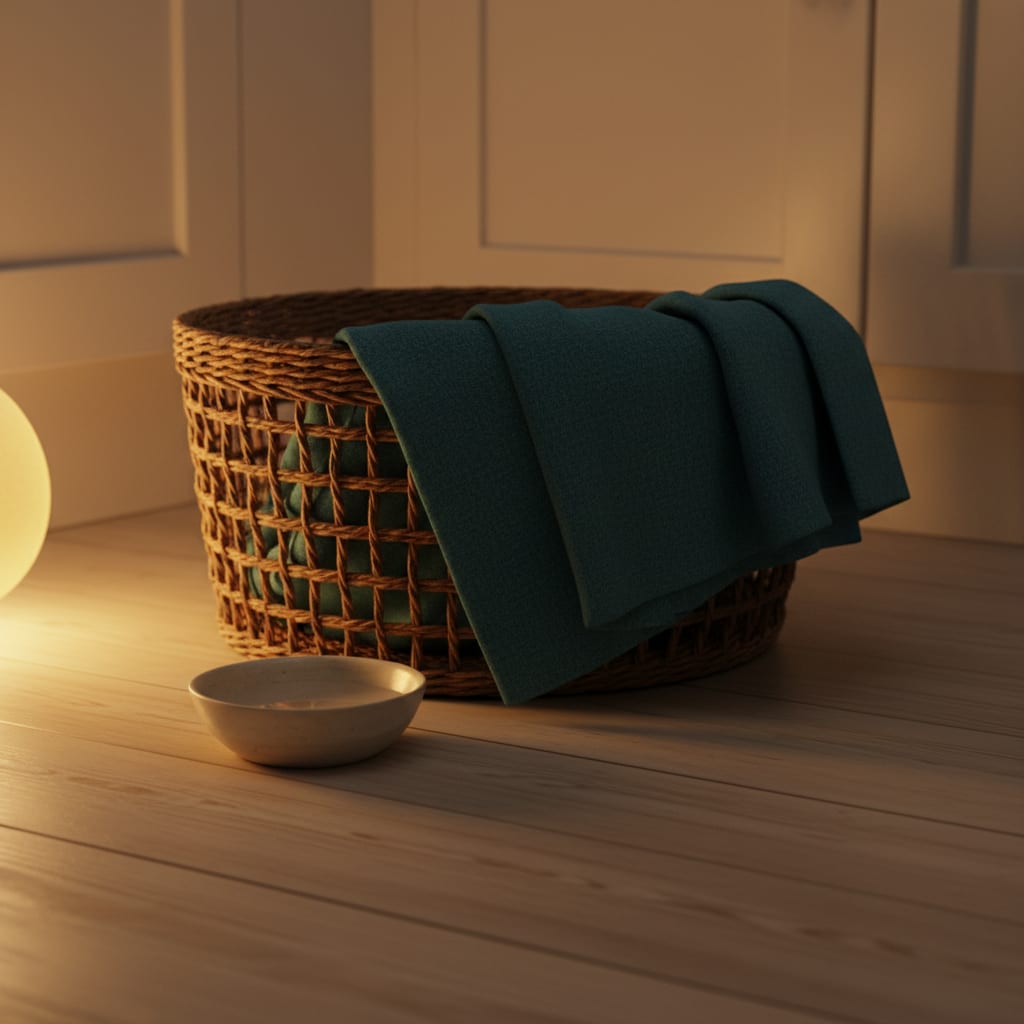
If a new puppy has landed in a house that already has a baby, protect the baby’s sleep first and solve the puppy’s needs at the dinner hour instead of at 3 a.m. The puppy’s night is genuinely fixable from the kitchen — when the last meal happens, when the water bowl comes up, and where the crate sits are the three levers that decide whether you are up once or four times. The baby’s night is not fixable that quickly. So you spend the evening on the dog, and you spend the night on the child.
That sounds cold about the puppy. It is not: a crying puppy is asking for something specific and usually food-related, and it is the one of the two you can reason about with a schedule.
Why the puppy wakes, in the order you can fix it
Almost every 3 a.m. puppy wake is one of three things, and the first two are yours to move.
- It needs to go out. The American Kennel Club’s potty-training guidance gives the month-plus-one rule: take the puppy’s age in months, add one, and that is the maximum number of hours it should comfortably hold it — a three-month-old puppy is a four-hour dog. If you go to bed at eleven, a four-hour dog is a 3 a.m. dog. That is arithmetic, not misbehaviour.
- It ate or drank too late. AKC’s rule is short and specific: after a meal, wait “only between 5 and 30 minutes” before taking a puppy out, and treat a drink of water exactly like a meal. They also recommend avoiding feeding within two hours of bedtime.
- It is lonely. This one you cannot schedule away, and it is the one that wakes the baby, because it is a sustained cry rather than a single whine.
Move dinner, and you move the night
Here is the part that belongs on a food blog. Puppies eat three to four meals a day while they are growing, which means you have a scheduling variable most people never think to use.
Pull the last puppy meal three hours before your bedtime, not one. On an 11 p.m. bedtime that is dinner at 8, which for most families means feeding the dog just after the family eats rather than just before everyone goes up. Then lift the water bowl about an hour before lights-out — not all evening, which is unkind and unnecessary, just the last hour — and take the puppy out for a final trip as the actual last thing you do. AKC is explicit that this final trip is the one that matters, because a puppy holds it longer asleep than awake.
Do that and a four-hour dog often becomes a five-hour dog, which moves the wake from 3 a.m. to 4 a.m. It sounds like a small win. It is not: 4 a.m. is close enough to a baby’s early feed that one adult can handle both trips in one getting-up.
Aligning the two schedules is the whole game, and it is the same move our late dinner and a short bedtime routine post makes for a family whose evening meal has drifted — you shift the food, and the sleep follows it.
Where the crate goes
Put the crate in your bedroom for the first two or three weeks, even if the long-term plan is the kitchen. AKC’s reasoning is practical: keeping the crate in or near your bedroom lets you hear a whimper before it becomes a bark, and a whimper you answer in ten seconds does not wake a baby down the hall. A bark does.
A puppy crated in the kitchen on night one will cry, and it will cry louder because nobody comes. That is the version that costs you the baby’s night, and then the next day, and then your patience with the dog — which is how good families end up resenting a ten-week-old animal for doing exactly what ten-week-old animals do.
If the crate genuinely has to live in the kitchen, put a baby monitor next to it and treat white noise as a two-way tool: something steady between the puppy and the baby’s room helps both. Betteroo’s rundown of steady background sound in a nursery covers what actually masks a household noise and what just adds to it.
Split the night properly
Two sets of night needs in one house is not twice the work. It is worse than twice, because fragmented sleep is worse than short sleep. The fix is to stop sharing both jobs.
Give each adult a whole shift, not half of each wake-up. One person owns 10 p.m. to 3 a.m. for both the dog and the child; the other owns 3 a.m. to 8 a.m. for both. Swap nightly. Each of you gets one genuinely unbroken five-hour block, which is worth more than seven broken hours and is the single biggest thing you can do for the adults in this house.
Keep the 3 a.m. trip boring. No lights beyond what you need, no talking, no play, straight out and straight back. A puppy that gets a fun 3 a.m. will book one every night.
Do not let the shift person also own breakfast. This is where a food blog can help more than any sleep advice: if one of you was up at 3, that person should not be the one making breakfast at 6:30. Have something in the freezer that a half-asleep adult can heat one-handed — the make-ahead breakfasts for rushed mornings we keep on hand exist for exactly this kind of fortnight, and a batch of them made the weekend before a puppy arrives is the best preparation nobody tells you to do.
What actually improves, and when
Most puppies gain about an hour of holding time per month of age, so the maths moves in your favour quickly. AKC’s chief veterinarian puts the broad milestone at around six months: “If training begins early, a 6-month-old puppy is usually able to be depended on most of the time to eliminate outside.” Between eight weeks and about four months is the hard stretch, and it is finite in a way that a baby’s sleep is not.

One honest caveat before the FAQ: if the puppy is still waking hourly after a fortnight of a consistent schedule, or cannot hold it at all, that is a vet conversation rather than a training one. AKC names urinary tract infection as a common cause of stalled house-training.
FAQ
Will a new puppy wake my baby every night?
For the first few weeks, probably some nights. The two things that shorten it most are moving the puppy’s last meal three hours before your bedtime and putting the crate in your room so you can answer a whimper before it becomes a bark.
Should I stop giving my puppy water at night?
Lift the bowl about an hour before lights-out, not all evening. AKC treats a drink of water like a meal for potty-timing purposes, so the last hour is where it matters.
How long can a puppy hold it overnight?
Age in months plus one, in hours — a three-month-old puppy is about four hours. Puppies hold it a little longer asleep than awake, which is why the last trip before bed is worth doing properly.
Whose sleep comes first, the baby’s or the puppy’s?
The baby’s, because the puppy’s needs can be moved at the dinner hour and the baby’s cannot. Fix the dog’s schedule in the evening and you spend fewer nights choosing.
Where should a puppy sleep when there is a baby in the house?
In a crate in your bedroom for the first two or three weeks, then move it. Starting in the kitchen means the puppy cries louder and longer, which is the version that wakes the baby.
How do we both get any sleep?
Take whole shifts rather than splitting each wake-up. One adult covers both the dog and the baby until 3 a.m., the other covers both after — so each of you gets one unbroken block instead of two broken ones.
✳ More From the Kitchen
Lunchbox & Kids
Freezer & Meal Prep

Freezer & Meal Prep