The Short Bedtime Routine: What to Cut on Late Nights
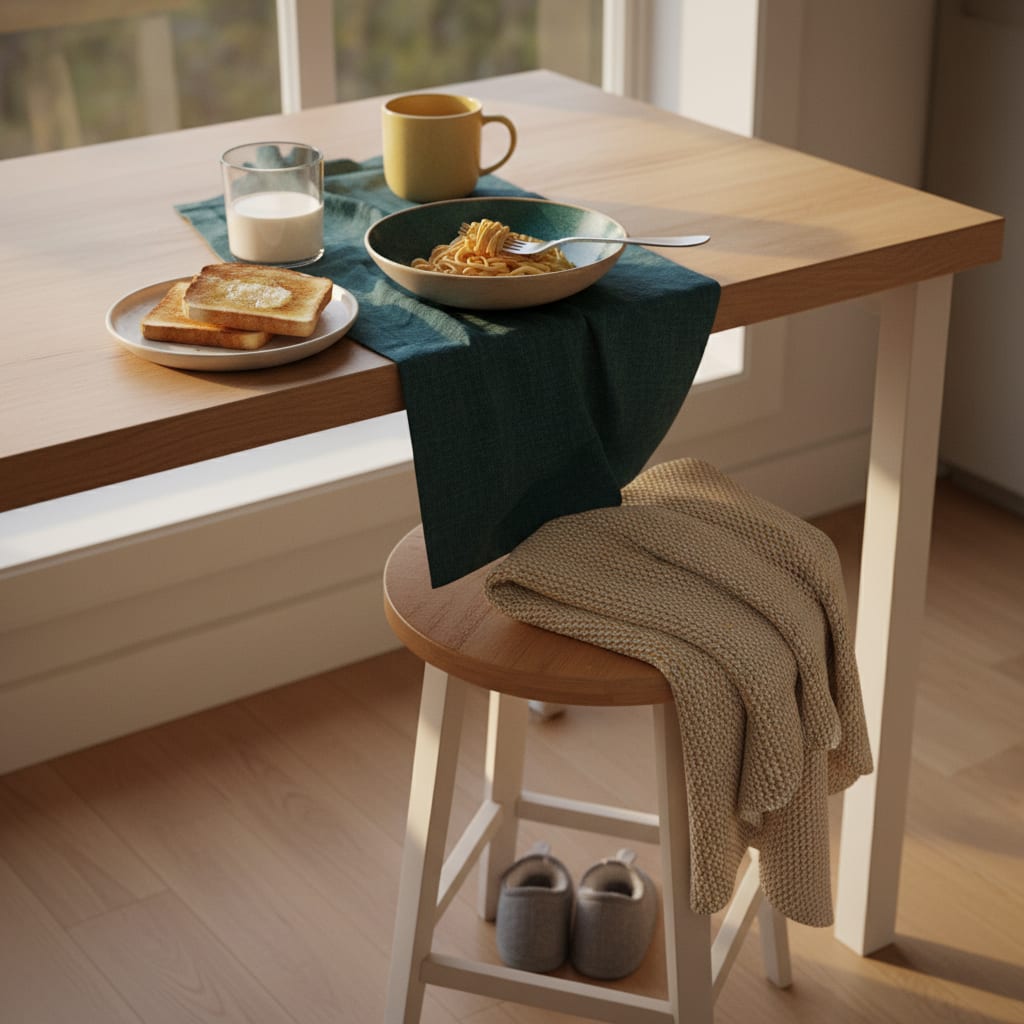
When you’re out of time, cut the bath, the tidy-up and the long story — and keep the order and the final step exactly as they always are. A bedtime routine works because it’s a predictable sequence, not because it’s long. Children read the sequence as the signal, so a six-minute version that runs in the usual order lands almost as well as the thirty-minute one. What breaks bedtime is changing the shape of it: a new last step, a skipped cue, or a parent visibly rushing.
Nine nights out of ten the reason we’re short on time is dinner. So this post is in two halves — what to cut tonight, and how to stop being here again on Thursday.
Why the sequence matters more than the length
Small children can’t tell the time. What they can do is recognise a chain of events, and the chain is what tells the body that sleep is coming — the lights going down, the same three or four steps, the same person, the same last thing.
Shorten a step and the chain holds. Remove the last step and it doesn’t, because the last step is the one carrying the signal. If bedtime normally ends with two songs in a dark room and tonight it ends with a hurried “goodnight, go to sleep,” you’ve cut the only part that was doing the work.
The other reason to protect bedtime is arithmetic. The American Academy of Sleep Medicine’s consensus recommendations, endorsed by the AAP, put children aged 1 to 2 at 11 to 14 hours per 24 hours including naps, 3- to 5-year-olds at 10 to 13, and 6- to 12-year-olds at 9 to 12. A 7 a.m. school-run wake-up sets a hard end to the night, so every minute bedtime slips comes out of the total.
The three versions of the same routine
| Full — about 30 min | Short — about 12 min | Emergency — about 6 min |
|---|---|---|
| Bath | Skip. Warm flannel on face and hands | Skip |
| Pyjamas, laid out earlier | Pyjamas | Pyjamas |
| Teeth, unhurried | Teeth | Teeth — non-negotiable |
| Tidy the bedroom together | Skip | Skip |
| Two or three books | One short, familiar book | Skip the book, keep the words |
| Drink of water, toilet | Both, but offered, not negotiated | Both, offered once |
| Songs and cuddle in the dark | Songs and cuddle in the dark | Songs and cuddle in the dark |
| Lights out | Lights out | Lights out |
The right-hand column still ends the same way it always does. That’s the point.
A few notes on the cuts. The bath is the biggest single saving and the easiest to lose — nightly bathing isn’t a hygiene requirement for most children, and a warm flannel does the same “we’re winding down” job in ninety seconds. The tidy-up is the second, and it’s the one most likely to turn into a fight, which costs more minutes than the tidying saves. Books are the last thing to cut, and if you cut them, replace them with the same amount of talking in the dark rather than with silence.
What you should not cut: teeth, the dark room, and the final ritual. And don’t cut the pre-emptive drink and toilet trip — skipping those buys three minutes and spends twenty.
The overtired trap
There’s a version of this where shortening bedtime backfires: the child who is already past the point of settling. Overtiredness looks like a second wind — giddy, wired, bouncing off the walls — and it makes falling asleep harder rather than easier, which is exactly the opposite of what tired parents expect at 8:45. Betteroo’s guide to the overtired baby walks through the signs and how to unwind it.
The practical read: if you’re regularly arriving at bedtime with a wired child, the answer isn’t a faster routine. It’s an earlier dinner.
Fixing it upstream: dinner is the real problem
Bedtime rarely runs late because of bedtime. It runs late because dinner started at 6:40, or because it was three separate meals, or because it turned into a negotiation over four bites of broccoli.
Four things that buy back the most time in our house:
- Decide at breakfast, not at six. The twenty minutes lost to standing in front of an open fridge is the single biggest leak in the evening. Even a note on the counter counts.
- Keep three genuinely fast dinners in rotation. Not “quick” in the recipe-blog sense — actually on the table in twenty minutes. Our 15-minute pasta dinners exist for precisely these nights, and they are what we cook when the afternoon has already gone.
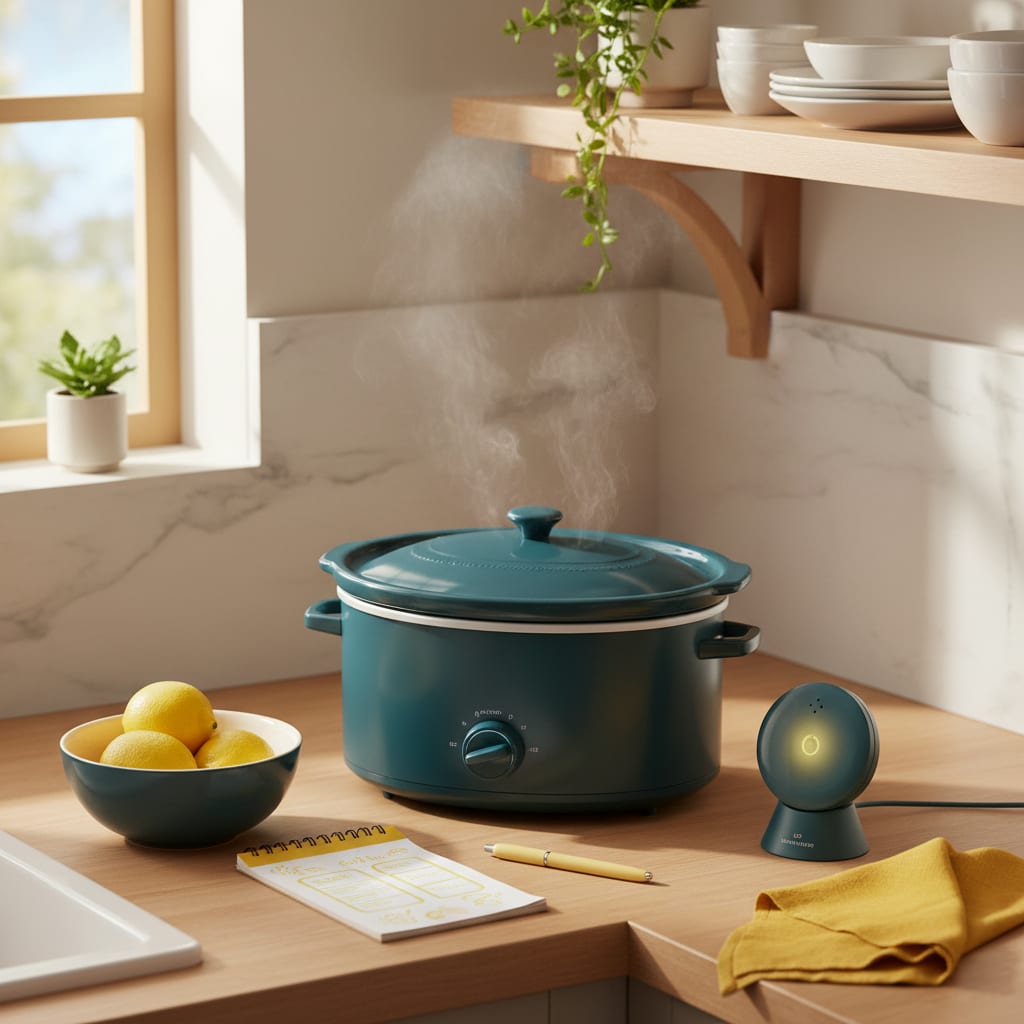
- Move the work to the morning. A dump-and-go crockpot dinner started at 8 a.m. means walking in at 5:45 to a finished meal, which is worth roughly half an hour of evening.
- Stop negotiating at the table. Serve it, offer it, don’t bargain. The last-three-bites argument costs more bedtime than the cooking did.
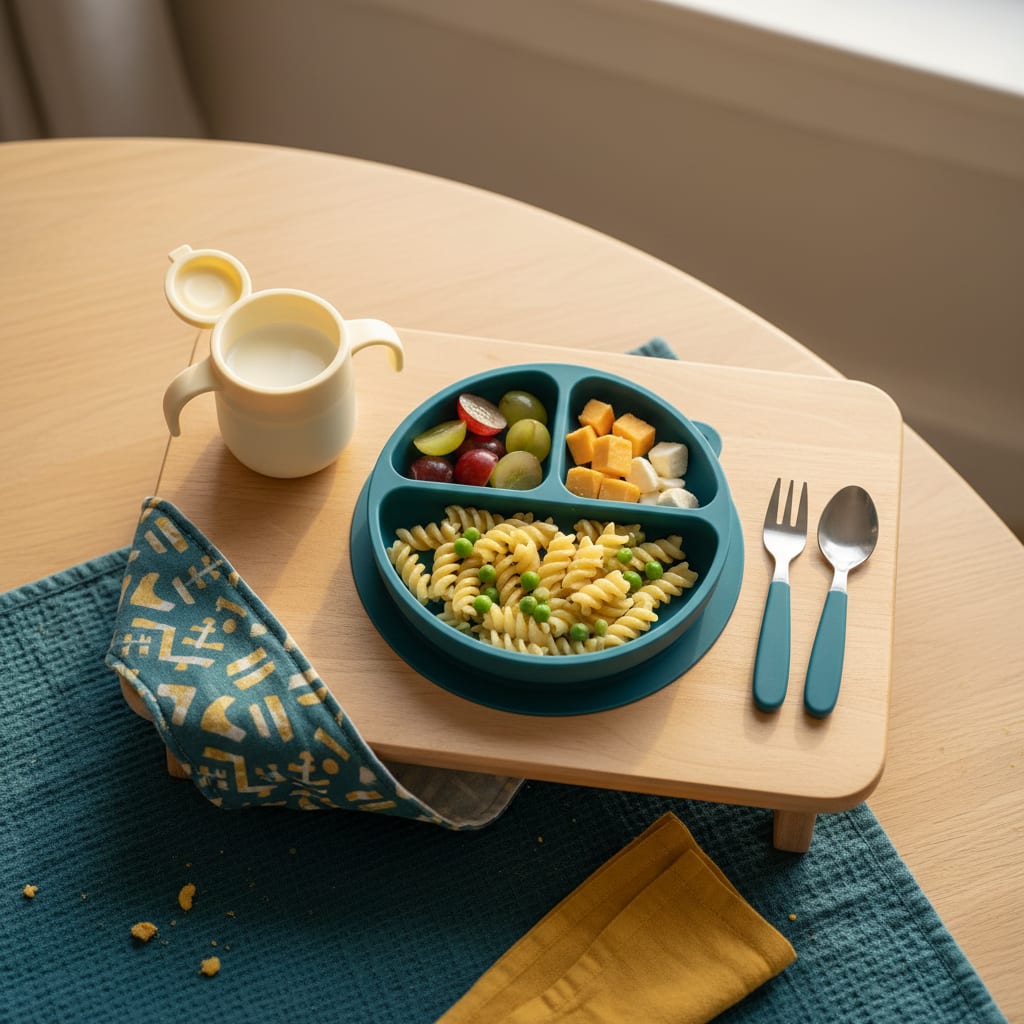
One meal shape helps more than any other on these nights: something everyone eats without discussion, served early enough that there’s a gap between the last bite and pyjamas. If your toddler is the bottleneck, Betteroo has a useful set of toddler dinner ideas built around exactly that — plates that get eaten rather than argued about.

What about the bedtime snack?
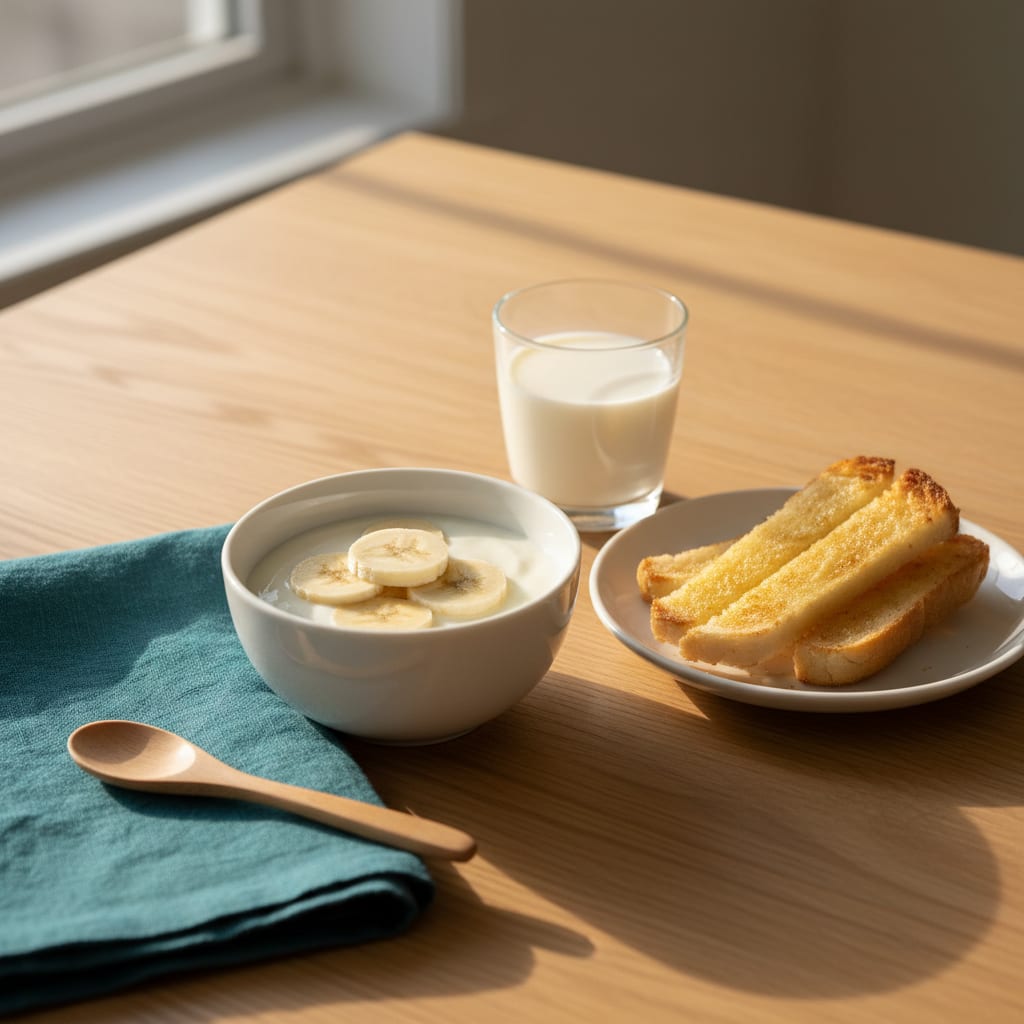
If dinner was early or barely touched, a small snack is sensible and it does not undo bedtime. Keep it dull and keep it fast: a banana, plain yogurt, a slice of buttered toast, a cup of milk. It happens before teeth, at the table, in under five minutes.
What turns a snack into a second bedtime is letting it become a second dinner, or letting it become the thing that’s negotiated for after lights-out. Offer it once, at a fixed point in the sequence, and it stays part of the routine instead of a lever.
There’s a version of the whole evening where you’re also holding a baby through it, and everything above gets harder. Our one-handed dinners piece is the honest version of that season, when cooking happens around a carrier nap and bedtime is whatever fits.
FAQ
How short can a bedtime routine be?
About five or six minutes, as long as it runs in the usual order and ends with the usual last step. Consistency of sequence matters far more than duration — a short, predictable routine beats a long, improvised one.
Is it OK to skip the bath at bedtime?
Yes. For most children a daily bath isn’t a hygiene necessity, and a warm flannel on face and hands gives the same wind-down cue in a fraction of the time. Keep the bath for nights you have the margin, or move it to the morning.
Should you cut the bedtime story?
It should be the last thing you cut, and if you do cut it, replace it — a couple of minutes of quiet talking in the dark keeps the signal intact. Cutting the story and going straight to lights-out changes the shape of the routine, which is what children notice.
What time should dinner be if bedtime is 7:30?
Aim to be sitting down by about 5:45 to 6:00. That leaves time to eat without rushing, a gap before the routine starts, and slack for the night one child refuses everything.
Does a late dinner cause bedtime problems?
Indirectly, yes — a late dinner compresses the wind-down, and a compressed wind-down tends to produce a wired child rather than a sleepy one. The meal itself matters less than the timing and the amount of arguing attached to it.
Can a bedtime snack replace dinner?
No, and it shouldn’t be allowed to. Keep it small, plain and fixed in the sequence before teeth. A snack that grows into a second meal moves bedtime later and teaches that dinner is optional.
✳ More From the Kitchen
Lunchbox & Kids
Lunchbox & Kids
Lunchbox & Kids