How to Reheat Salmon Without Drying It Out
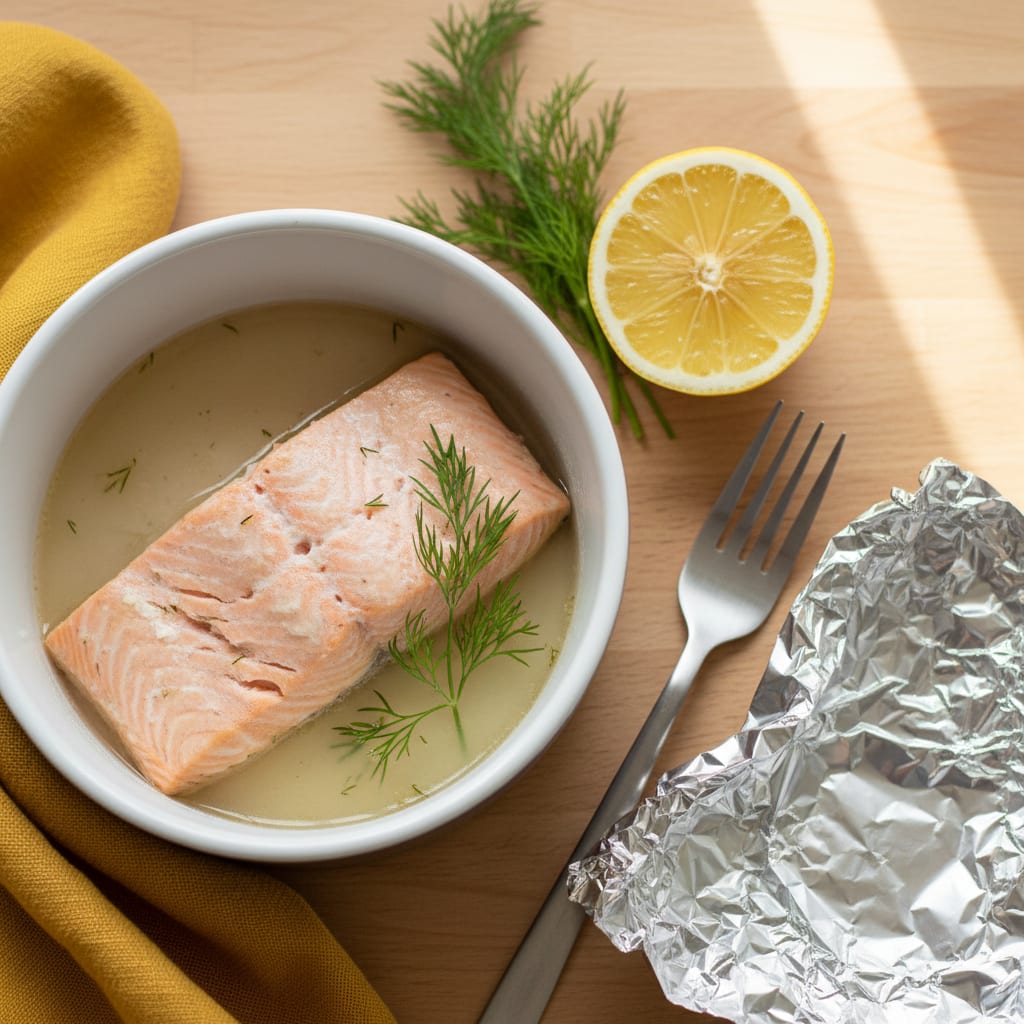
To reheat salmon without drying it out, go low and keep it covered. Put the fillet in a baking dish, add a tablespoon or two of water or broth, cover tightly with foil and heat it in a 275°F oven until the thickest part reaches 165°F, which is the temperature food-safety educators give for reheating leftovers. As a starting point, allow about 15 to 20 minutes for a single fillet from the fridge. Expect it to come out firmer and flakier than it was on the first night. That texture change is the honest cost of reheating fish properly, and the gentler methods below keep it small.
The times on this page are our starting points, not figures from a published source. Fillet thickness, skin on or off and how cold your fridge runs all change them, so finish by temperature.
145°F or 165°F? The number that trips people up
Most reheating advice for salmon says to heat it to 145°F. That number is real, but it answers a different question. The FDA’s seafood page says that “most seafood should be cooked to an internal temperature of 145°F”. It is the temperature for cooking raw fish.
Reheating leftovers is a separate rule. University of Illinois Extension’s leftovers guidance says to reheat leftover food to a minimum of 165°F, “the safe temperature needed to kill harmful bacteria that may be present.” That applies to cooked salmon from the fridge too.
Fish that has already been cooked once and is taken to 165°F will be more done than it was. It turns more opaque, the flakes separate more and the edges can dry. Nothing on this page pretends otherwise. The methods below are about keeping that change small, and one option skips reheating altogether.
How to reheat salmon, by method
| Method | Heat | Rough time (one fillet, from the fridge) | Result | Best for |
|---|---|---|---|---|
| Oven, covered | 275°F, splash of water, foil | 15–20 min | Most even, stays moist | Whole fillets, two or more |
| Skillet with a lid | Low heat, 1–2 tbsp water | 6–10 min, turned once | Moist, quick | One or two fillets |
| Flaked into a hot dish | Simmering sauce, soup or rice | 2–4 min, stirred in | Texture hidden in the dish | Leftover pieces |
| Microwave | 50% power, covered | 30-second bursts | Can go rubbery at the edges | One plate in a hurry |
| Air fryer | 300°F | 5–8 min | Crisp skin, drier flesh | Skin-on fillets |
| Cold, not reheated | None | None | Exactly as cooked | Salads, bowls, sandwiches |
All the times are ours. Every heated method finishes at 165°F in the thickest part.
In the oven
Heat the oven to 275°F. Set the salmon in a small baking dish, skin side down, add a tablespoon or two of water or broth, and cover the dish tightly with foil. The low heat and trapped steam warm the middle before the outside dries. Check the thickest part with an instant-read thermometer at about 15 minutes. A pat of butter or a spoonful of the original sauce on top before it goes in helps too.
In a skillet
Use a heavy pan, such as a Lodge cast iron skillet, over low heat. Add a tablespoon of water or broth, lay the fillet in skin side down, cover with a lid and let it steam gently, turning once. If you want the skin crisp, finish it skin side down for the last minute with the lid off and a little oil. Keep the heat low: a hot pan tightens the outside of the fish before the middle is warm.
Flaked into a hot dish
This is the kindest way to use leftover salmon, because the dish carries the heat and hides any change in texture. Break the salmon into large flakes, then fold it into something already simmering: a creamy pasta sauce, a pot of soup or chowder, fried rice, or scrambled eggs. Stir gently and keep it at a simmer until everything, salmon included, is steaming hot. Any of our 15-minute pasta dinners with a cream or butter sauce will take a flaked fillet.
In the microwave or the air fryer
Microwave: put the salmon on a plate with a teaspoon of water, cover it, and use 50% power in 30-second bursts. Full power overheats the thin tail end while the thick middle is still cold. Expect rubbery edges if you push it.
Air fryer: worth it only for skin-on fillets when crisp skin matters. Use 300°F, skin side up, and check early. The flesh dries faster here than in the covered oven.
Or eat it cold
Cooked salmon does not have to be reheated at all. If it went into the fridge within two hours of cooking and is still inside the 3 to 4 day window Illinois Extension gives for leftovers, you can flake it straight onto a salad, into a grain bowl or into a sandwich with mayonnaise, lemon and herbs. Many people prefer it that way, because it keeps the texture it had on the first night.
That is a choice, not a shortcut around the rule. Reheated salmon goes to 165°F. Cold salmon stays cold, from fridge to plate, and does not sit out. If anyone at the table is pregnant, elderly or has a weakened immune system, reheating to 165°F is the more cautious option.
Food safety for leftover salmon
The rules are the same as for any cooked leftover. Illinois Extension says to refrigerate leftover food within two hours of serving, use it within 3 to 4 days, or freeze it and use it within 3 to 4 months, and reheat it to at least 165°F. The FDA’s seafood page sets a tighter limit outdoors: cooked seafood should not sit out for more than 2 hours, or more than 1 hour when it is above 90°F.
NC State’s Safe Plates program, in its leftovers advice, adds a rule that suits fish well: reheat leftovers only once. Warm only the piece you will eat.
Cooking for a crowd and want fewer leftovers next time? Our salmon per person guide gives the amount to buy for each guest. For everything else in the fridge, our leftovers reheating chart covers the common dishes.
FAQ
What is the best way to reheat salmon?
Covered in a 275°F oven with a splash of water or broth until the thickest part reaches 165°F, roughly 15 to 20 minutes for one fillet from the fridge. A covered skillet over low heat is the quicker option.
What temperature should reheated salmon reach?
165°F, the reheating figure for leftovers from Illinois Extension. The 145°F you see elsewhere is the FDA’s cooking temperature for raw seafood, not the reheating rule.
Can you eat leftover salmon cold?
Yes, if it was refrigerated within two hours of cooking and is within 3 to 4 days. Keep it cold until you eat it. If someone eating is pregnant or at higher risk, reheating it to 165°F is the cautious choice.
How do you reheat frozen cooked salmon?
Thaw it in the fridge overnight, then reheat it covered in a low oven as above. Illinois Extension’s guidance is to use frozen leftovers within 3 to 4 months.
Can you reheat salmon twice?
NC State’s Safe Plates advice is to reheat leftovers only once. Reheat just the portion you plan to eat and keep the rest in the fridge.
✳ More From the Kitchen
Lunchbox & Kids
Feeding a Crowd
Easy Dinners