How Long to Boil Chicken Thighs (Bone-In or Boneless)
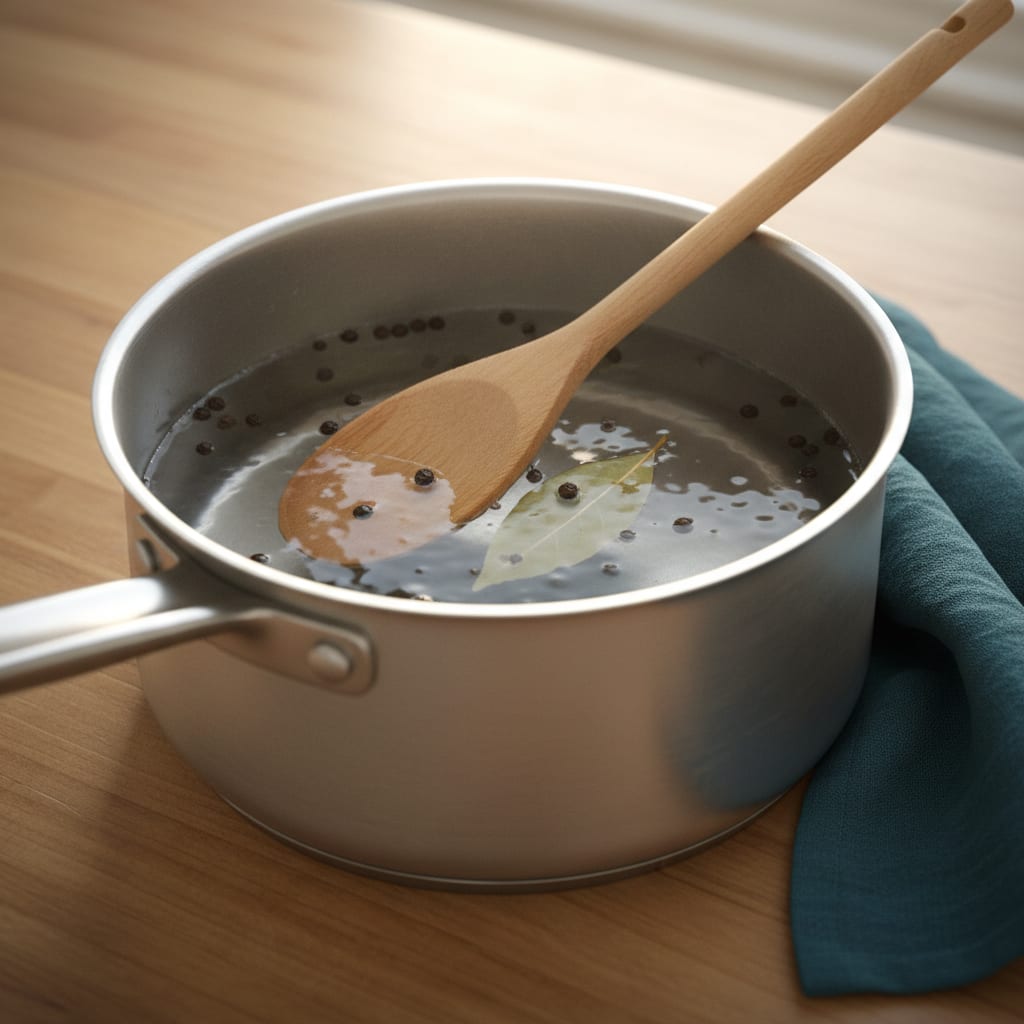
Plan on 12 to 15 minutes for boneless, skinless chicken thighs and 25 to 30 minutes for bone-in thighs, in water held at a bare simmer rather than a hard boil. Add roughly half again for thighs going in frozen. The clock gets you close; the thermometer decides. Poultry is safe at an internal temperature of 165°F — the University of Nebraska’s safe cooking chart lists 165°F for all poultry, including parts — and thighs are the one chicken cut that keeps getting better for a few minutes past it.
That last point is the whole reason this is an easier job than boiling chicken breast. Dark meat has more connective tissue and more fat, so it forgives you.
Boiling times for chicken thighs
| Cut | Time at a bare simmer |
|---|---|
| Boneless, skinless thighs | 12–15 minutes |
| Boneless thighs, cut into 1-inch pieces | 8–10 minutes |
| Bone-in, skin-on thighs | 25–30 minutes |
| Bone-in thighs, from frozen | 35–45 minutes |
| Boneless thighs, from frozen | 18–22 minutes |
| Thighs for shredding (deliberately past done) | 30–40 minutes, bone-in |
Start timing once the water is back to a lazy simmer after the chicken goes in — cold meat drops the temperature of the pan for a minute or two, and that minute is invisible on your timer.
Why a bare simmer beats a rolling boil
A hard boil does three things to chicken, none of them good. It knocks the meat about so the outside shreds while the middle is still catching up, it makes the broth cloudy, and it squeezes moisture out of the muscle faster than the collagen has time to soften. You want the surface of the water barely shivering — the occasional bubble, not a churn.
Turn the heat down as soon as the water reaches a boil, and leave the lid ajar. A tight lid will tip a simmer back into a boil while you are not looking.
How to tell they are done
Colour will not tell you. The University of Nebraska is blunt about it: using colour is not a good way to decide whether meat, poultry or fish has been cooked to a safe temperature, and a thigh can look pink at the bone and be perfectly safe. Minnesota Extension’s chart gives the same figure for chicken parts — 165°F.
Take the temperature in the thickest part of the thigh, away from the bone, and check more than one piece — supermarket thighs vary enormously in size within the same pack. An instant-read thermometer is the only tool that answers this question properly, and it is the same one worth owning for boiled chicken breast, where overshooting actually costs you something.
The thing to know about thighs: 165°F is the safety floor, not the target. Breast meat is dry and stringy at 175°F. A thigh at 175–185°F is softer, juicier and pulls apart in strands, because that extra heat is what melts the connective tissue. So if the thermometer says 168°F and the meat still feels tight when you prod it, give it five more minutes. You are not going to ruin it.
The method, start to finish
- Do not rinse the chicken. The University of Maine’s guidance in its own poultry recipes is to wash your hands, counter and utensils after touching raw poultry and not to rinse it — rinsing sprays whatever is on the meat around your sink.
- Put the thighs in cold or barely warm water, in a single layer, with an inch or two of water over the top. Crowding is the most common reason one piece comes out underdone.
- Add flavour to the water now, not later: a halved onion, a couple of smashed garlic cloves, a bay leaf, a big pinch of salt, a few peppercorns. Water this size only gets one chance to season the meat.
- Bring it to a boil, then drop it to a simmer immediately and start the clock.
- Check the temperature at the early end of the range, then let it run on if you want shreddable meat.
- Rest them for five minutes before cutting or shredding, or the juice ends up on the board.
Keep the broth — it is half the point
Boiling chicken thighs makes something that boiling chicken breast does not: a genuinely good, slightly gelatinous broth, because bone-in dark meat gives up collagen. Strain it, let it cool, and lift the fat off the top when it has set in the fridge.
That broth is the base for a soup, the cooking liquid for one-pot chicken and rice, or the thing that stops shredded chicken from drying out in the fridge — store the meat with a few spoonfuls of its own liquid and it stays soft for days.
What to do with the meat
Shredded thigh meat is the most useful cooked protein in our fridge, and it slots straight into most of what we make from a rotisserie chicken: quesadillas, wraps, soup, a rice bowl, pasta with a jar of sauce. Two packs of thighs boiled on a Sunday is three weeknight dinners that start at halfway.
For portions, dark meat runs a little richer than breast and people eat slightly less of it — the numbers are in our meat buying chart.
Storing and reheating
Get the meat and the broth into the fridge promptly. Minnesota Extension puts the temperature danger zone at 41 to 135°F, with perishable food held there for two hours or more to be discarded, and a hot pot of chicken sitting on the hob cools slowly. Decant into shallow containers so it chills fast.
Maine’s guidance on cooked chicken is to use leftovers within 4 days and reheat to 165°F, and that frozen cooked chicken is best used within 3 to 4 months. Freeze it in its broth in flat bags and it thaws in a bowl of water in twenty minutes.
Frequently asked questions
How long do you boil boneless chicken thighs? 12 to 15 minutes at a bare simmer, or 8 to 10 minutes if they are cut into 1-inch pieces. Confirm 165°F with a thermometer.
How long do you boil bone-in chicken thighs? 25 to 30 minutes at a simmer. Go on to 35 or 40 minutes if you want meat that pulls off the bone in strands.
Can you boil chicken thighs from frozen? Yes — add roughly half again to the time, and check the temperature in more than one piece. They will not season as deeply as thawed thighs.
Can you overcook chicken thighs? Eventually, but you have far more room than with breast meat. Dark meat is at its best somewhere past the safety minimum, which is why shredding recipes cook thighs longer on purpose.
Why is my boiled chicken tough? Almost always a hard boil rather than a simmer. Turn the heat down, leave the lid ajar, and give it a few more minutes rather than a few more degrees.
Do you salt the water? Yes. Salt it as you would pasta water. It is the only opportunity the meat has to take on seasoning from the outside in.
✳ More From the Kitchen
Lunchbox & Kids
Freezer & Meal Prep
Kitchen How-Tos