How Long to Boil Shrimp (Fresh, Frozen, Any Size)
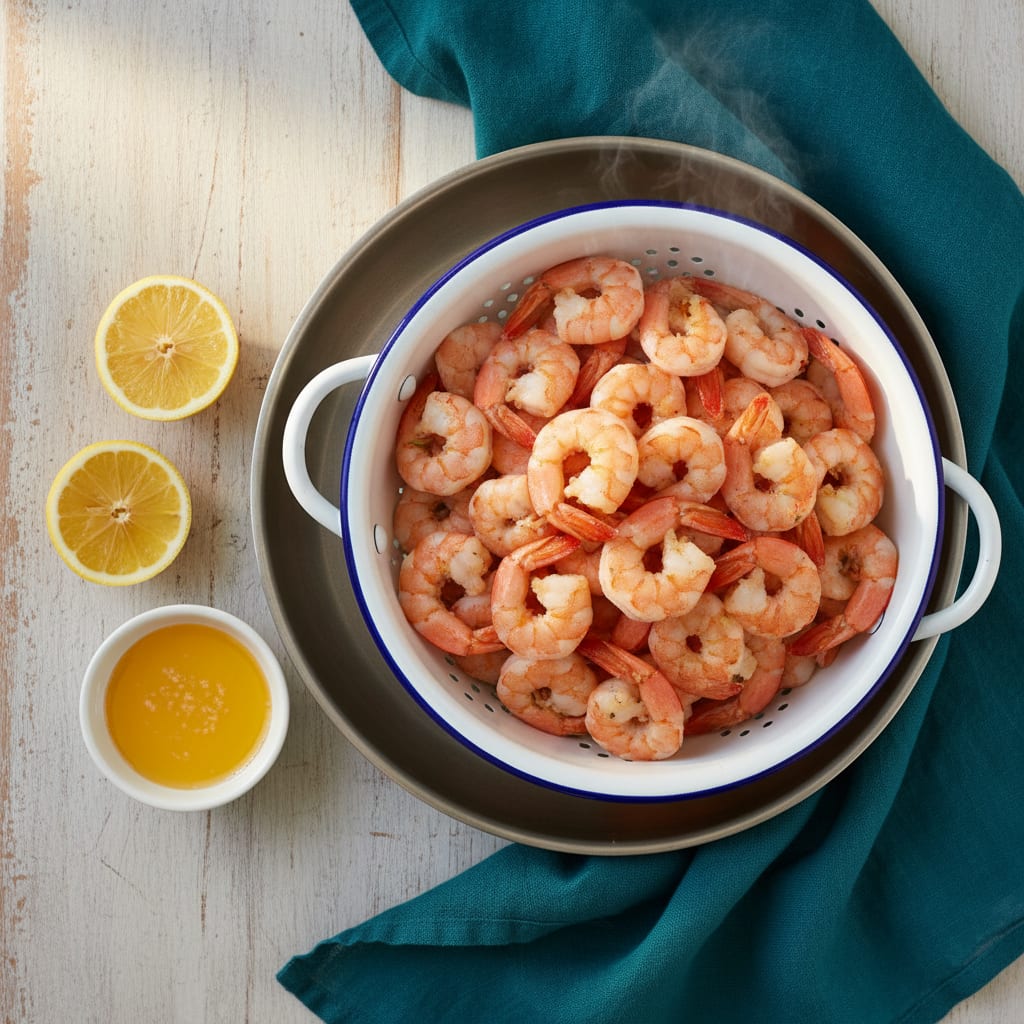
Boil large shell-on shrimp for about 2 minutes, until they turn bright pink and opaque all the way through. Small shrimp need a minute or less; jumbo need a minute or so more; frozen shrimp dropped straight into the pan need roughly a minute longer than thawed. N.C. Cooperative Extension’s own shrimp guide puts it at “just 2 minutes, until they are bright pink and cooked through”, and that is genuinely the whole timing story.
The clock is the smaller half of this job. Shrimp go from perfect to rubbery in under a minute, so what actually saves them is knowing the look of done and having somewhere cold to put them.
Boiling times by size
Shrimp are sold by count per pound — the “31/40” on the counter card means 31 to 40 shrimp make a pound. Bigger number, smaller shrimp, shorter time. These are the points at which I start fishing one out to look at it, not deadlines:
| Size (count per lb) | Time in barely-boiling water |
|---|---|
| Small, 51/60 | 1 minute |
| Medium, 41/50 | 1–2 minutes |
| Large, 31/40 | about 2 minutes |
| Extra-large, 26/30 | 2–3 minutes |
| Jumbo, 21/25 | 3 minutes |
| Colossal, U/15 | 3–4 minutes |
Peeled shrimp cook a shade faster than shell-on at the same count, because the shell insulates. Start checking at the low end of the range either way.
What “done” actually looks like
Three signs, and you want all three:
- Colour. Grey and translucent becomes pink and opaque. Illinois Extension’s cooking guidance says it plainly: raw shrimp should turn pink, and lobster should turn bright red.
- The curl. A cooked shrimp relaxes into a loose C. A tight O means it has gone too far and the texture is already springy.
- The centre. Cut one of the fattest ones in half. If there is a line of grey jelly down the middle, give the pan another twenty seconds.
Shrimp are too thin to take a thermometer reading reliably, which is why this is one of the few things in the kitchen where colour beats a probe — unlike boiled chicken breast, where the number is the only thing that settles the argument.
The method
- Bring a big pan of water to the boil and salt it hard. Shrimp are in the water for two minutes and take on almost nothing in that time unless the water is properly seasoned. A halved lemon and a bay leaf are worth adding; a heap of Old Bay is traditional.
- Drop the heat to a bare simmer before the shrimp go in. A rolling boil knocks them around and tightens the flesh. You want the water shivering, not churning.
- Add them all at once so they cook at the same rate, and start the timer.
- Get them out early. Lift them the moment the last grey patch goes — they carry on cooking on the way to the plate.
- Shock them if they are not being eaten hot. A bowl of water and ice stops the cooking dead. This is the step the extension guide names, and it is the difference between shrimp cocktail and shrimp erasers.
Cooking them from frozen
Most “fresh” shrimp at the counter were frozen at sea and thawed for display, so frozen bags are not a downgrade. You can boil them straight from the freezer: add about a minute to the times above and expect the water to take a moment to come back up.
The one thing worth doing is a quick rinse under cold water first, to knock off the ice glaze that would otherwise water down your seasoned pan. If you have twenty minutes, sit the bag in a bowl of cold water instead — thawed shrimp cook more evenly and are much easier to judge.
For freezing shrimp yourself, the National Center for Home Food Preservation recommends freezing them raw with the heads off and the shells still on for the best storage life and quality, and gives a recommended freezer shelf life of 3 to 6 months. Cooked shrimp freeze too, but they have already spent their two minutes, so they thaw into whatever texture you gave them.
Shell on or shell off
Shell on gives you better flavour and a wider margin for error — the shell buys you a few seconds of insulation and keeps the shrimp juicier. It is what the extension guide recommends. The trade-off is that everyone at the table has to peel.
Shell off is the right call for kids, for anything going into pasta or rice, and for a buffet where nobody wants a bowl of shells. Peel and devein before cooking, and take a few seconds off the clock.
Tails on or off is purely about presentation. Tails on for cocktail and skewers, off for anything eaten with a fork.
Boiling a big batch for a party
Two things go wrong at scale, and both are fixable:
- The water drops off the boil. Two pounds of cold shrimp in a modest pan takes the temperature down so far that the first shrimp in are overcooked before the last ones are done. Use the biggest pan you own and cook in batches of no more than a pound.
- There is nowhere to put them. Have the ice bath ready before the shrimp go in, not after. A big bowl of water and ice on the counter, and a tray lined with a clean towel to drain them onto.
Boiled shrimp are one of the few party foods that are actively better made ahead, because they are meant to be cold. Cook them in the morning, chill them, and keep them on ice on the table — no keeping-warm problem at all, which puts them in a different class from the dishes in our keeping food warm for a party guide.
How much to buy
For planning quantities, our meat and protein chart puts peeled shrimp at about 1/3 lb per adult as part of a spread, and double that when shrimp are the whole meal. Buying shell-on? Add roughly a third to the weight to cover the shells.
Count sizes make the sums easy at the counter: at 31/40, a pound is somewhere around 35 shrimp, so a pound feeds four people six to eight shrimp each with a starch alongside.
Frequently asked questions
How long do you boil shrimp? About 2 minutes for large shrimp, 1 to 2 for medium, and 3 or so for jumbo. They are done when they are bright pink and opaque with no grey line through the middle.
How long do you boil frozen shrimp? Roughly a minute longer than thawed shrimp, straight from the bag. Rinse the ice glaze off first so it does not dilute the seasoned water.
Should the water be boiling hard? No. Bring it to a full boil, then drop it to a bare simmer before the shrimp go in. A hard boil toughens them and knocks the tails apart.
Why are my shrimp rubbery? They were in the water too long, almost always by less than a minute. Pull them the second the grey goes, and shock them in ice water if they are not going straight to the table.
Can you boil shrimp in the shell? Yes, and it is the better version — more flavour, more forgiveness on timing. Peel after cooking, or let everyone peel their own.
Can you re-boil shrimp that are underdone? Yes, but do it in ten-second bursts. Underdone is a quick fix; overdone is permanent. The same logic runs through everything on our seafood quantity guide — buy well, cook briefly, stop early.
✳ More From the Kitchen
Feeding a Crowd
Freezer & Meal Prep
Feeding a Crowd