How Long to Boil Green Beans (Fresh or Frozen)
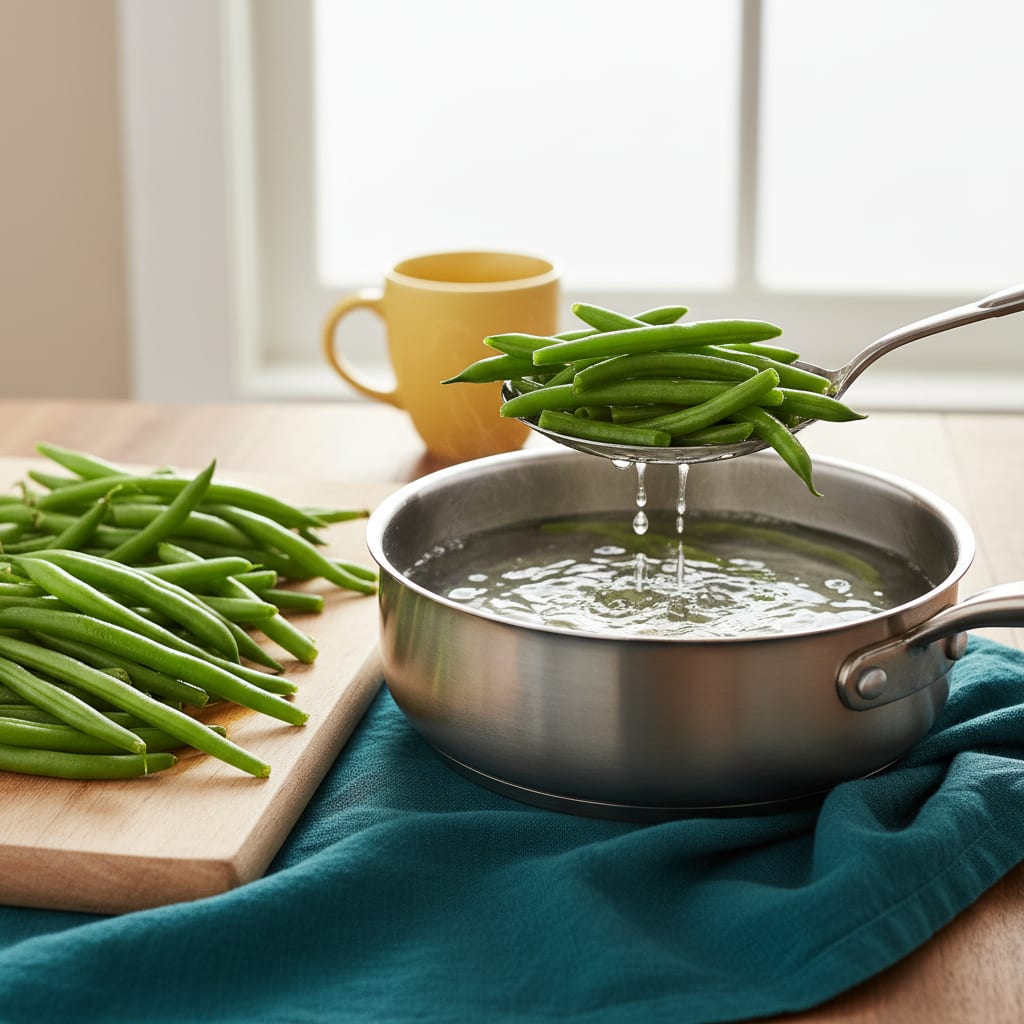
Boil fresh green beans for 5 to 10 minutes if you want them tender-crisp, and up to 20 minutes if you want them soft and Southern-style. Frozen beans have already been blanched, so they need only a few minutes. Canned beans need warming, not cooking. Purdue Extension’s guidance is to cook beans in boiling salted water for 10 to 15 minutes, “closer to 10” for tender-crisp and up to 20 for soft; the University of Maine’s bean bulletin says to boil them “up to ten minutes”.
Those two respectable sources disagree by ten minutes, and that gap is the actual answer to this question. Read on for why, because it decides how long your beans need.
Boiling times
| Beans | Time in boiling water |
|---|---|
| Thin, young beans (haricots verts), tender-crisp | 5–6 minutes |
| Standard fresh beans, tender-crisp | 8–10 minutes |
| Standard fresh beans, soft | 15–20 minutes |
| Older, thicker, end-of-season beans | 12 minutes and up |
| Cut into 1-inch pieces | 1–2 minutes less than whole |
| Frozen, straight from the bag | 3–5 minutes |
| Canned, drained | 2–3 minutes, just to heat through |
Start timing when the beans hit water that is already at a rolling boil, and taste one a couple of minutes before the earliest time in the range, because a thin bean can beat the chart. A bean is the easiest vegetable in the kitchen to test: pull one out, run it under the cold tap for a second, and eat it.
Why the timings differ so much
Three variables, none of them the clock:
Thickness and age. A pencil-thin bean picked young is a different vegetable from a thick, bulging one at the end of the season, and it can be twice as fast. Maine’s bulletin makes the point about preparation as well: if you want sweet, crisp beans, cut them as little as possible, and save the French-cut for older, tougher beans.
Which texture you are aiming at. Tender-crisp — squeaky, bright, still with some snap — is the modern restaurant version. Soft beans, cooked until they slump, are the version that goes with a Sunday roast or gets simmered with bacon. Neither is wrong. They are just fifteen minutes apart.
How full the pan is. A pound of cold beans dropped into a small pan of water takes it off the boil for a minute or more, and that minute is invisible on your timer. Use plenty of water and give them room.
The method
- Trim the stem ends. Snap or snip off the tough end where the bean was attached. The wispy tail end is edible and does not need removing.
- Bring a wide pan of well-salted water to a rolling boil. Beans take salt from the water far better than from the plate.
- Add them all at once and leave the lid off. A covered pan turns green vegetables dull.
- Test early and often. From four minutes onwards, one bean out of the pan every minute or two.
- Drain and either serve immediately or shock them in a bowl of cold water. Beans held hot in their own steam keep cooking; two minutes on the counter can take a tender-crisp bean past the point you cooked it to.
Maine’s guidance is worth keeping in mind whichever texture you want: cook beans as little as possible, using the smallest amount of water possible — the nutrients that leave the bean end up in the water you pour away.
Frozen and canned
Frozen beans are already part-cooked. Commercially and at home, beans are blanched before freezing to stop the enzymes that ruin colour and flavour — the National Center for Home Food Preservation specifies a 3-minute water blanch for green, snap or wax beans before they go into the freezer. That is most of a cook already, which is why three to five minutes from frozen is plenty and why frozen beans will never hit true tender-crisp. Do not thaw them first — they go limp before they reach the pan.
Canned beans are fully cooked in the can. Drain, rinse and warm them through for two or three minutes. Anything longer is just softening them further.
Blanching for the freezer or a salad
Two different jobs, two different times:
- For freezing: three minutes in boiling water, then straight into ice water, then drained and packed with half an inch of headspace. That is the NCHFP method above, and the blanch is not optional — unblanched frozen beans lose colour and flavour in the freezer.
- For a cold salad or a crudité platter: Purdue’s guidance is two minutes in boiling water, then plunged into cold water. They come out bright green, snappy and cold, which is the version that works on a picnic plate.
How to keep them bright green
Green beans go olive for the same reason boiled broccoli does, and the fixes are the same three:
- Leave the lid off. Trapped acids in the steam are what dull the colour.
- Use lots of water, so the pan does not lose heat when the beans go in.
- Stop the cooking on purpose, with cold water or by tipping them onto a wide tray rather than leaving them heaped in the colander.
A squeeze of lemon or a splash of vinegar belongs at the table, not in the pan — acid in the cooking water is what turns them army-green fastest of all.
Getting them eaten
Beans are one of the easier vegetables to sell to children, and the tender-crisp version does most of the work. What helps in this house:
- Whole beans, not cut. They are finger food, and finger food gets picked up.
- Butter and salt while hot, or a spoonful of the pan water and a knob of butter shaken together into a glossy coat.
- Cold, with a dip, straight from the fridge the next day — the two-minute blanched version above.
- Cut small into something else, which is the trick behind half our picky-eater lunch ideas.
They also sit happily alongside anything else in the pan rotation, which is why they so often land next to boiled baby potatoes on a weeknight — one pan, one drain, two vegetables.
Frequently asked questions
How long do you boil fresh green beans? 5 to 10 minutes for tender-crisp, and up to 20 minutes for soft. Thin young beans are done in about 5 to 6; thick end-of-season beans need the longer end.
How long do you boil frozen green beans? 3 to 5 minutes straight from frozen. They were blanched before freezing, so they need much less time than fresh.
Do you cover the pan? No. A lid dulls the colour and makes it easy to overshoot the texture you were aiming for.
How do you know when green beans are done? Taste one. Tender-crisp means it bends without snapping and still squeaks slightly; soft means it slumps when you hold it by one end.
Should you salt the water? Yes, generously. It is the only chance the bean gets to take on seasoning from the inside.
Why did my green beans go grey? Too long in the pan, a lid on, or acid added to the cooking water. Cook them shorter, uncovered, and add the lemon at the table.
✳ More From the Kitchen
Lunchbox & Kids
Feeding a Crowd
Freezer & Meal Prep