Can You Freeze Tomatoes? Yes — and the Skins Slip Off
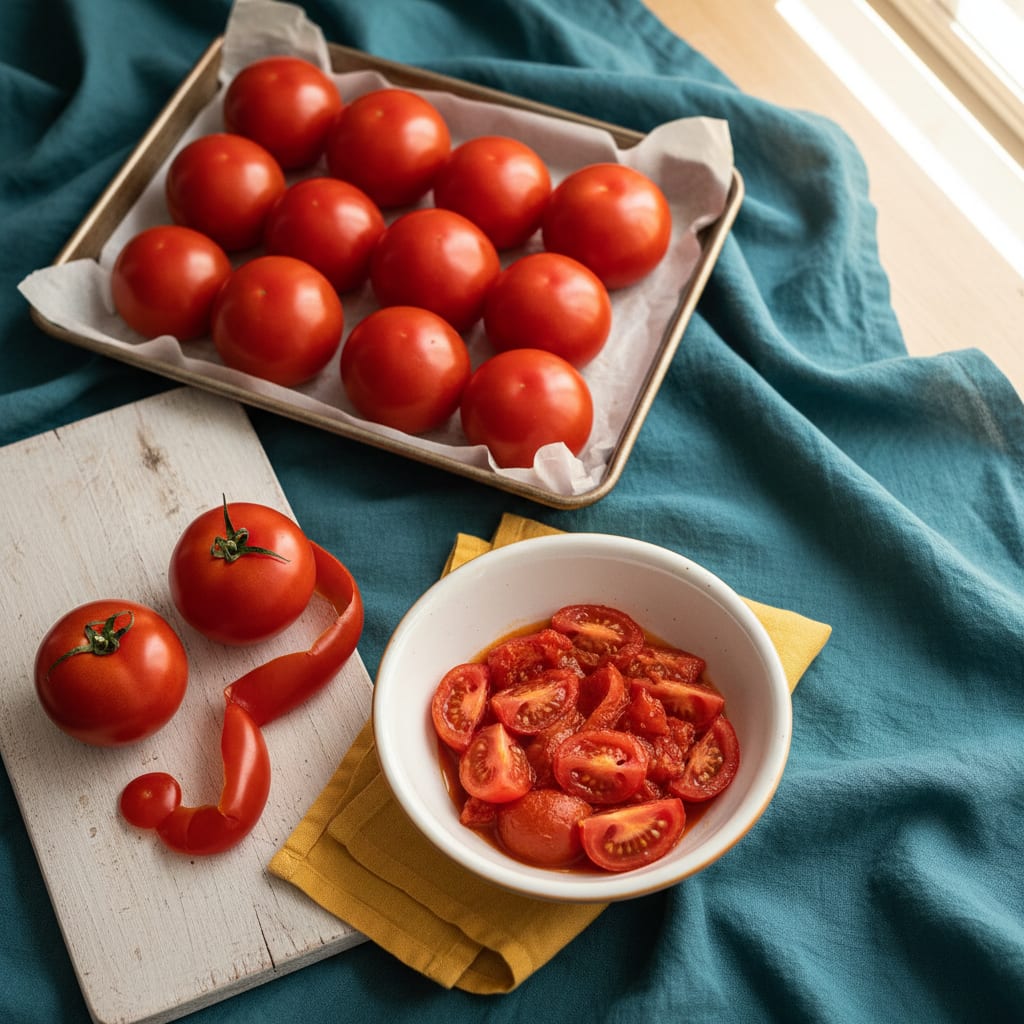
Yes, you can freeze tomatoes, and they need less work than almost anything else in the freezer — no blanching, no peeling if you don’t want to, and no sugar. The trade is texture. The National Center for Home Food Preservation states the limit outright: “Use only for cooking or seasoning as tomatoes will not be solid when thawed.” A frozen tomato is destined for a pan, never a salad.
If you’ve got a glut in August — a neighbour’s surplus, a farm-stand box, a plant that all ripened at once — this is where it should go.
What freezing does to a tomato
A ripe tomato is mostly water held inside cell walls. Ice crystals puncture those walls, so when it thaws the water runs out and the flesh collapses. You end up with something between a purée and a pulp.
That’s a fatal problem for a sandwich and completely irrelevant for a sauce, a chilli, a soup or a braise — all of which are trying to break the tomato down anyway. Freezing has effectively done the first twenty minutes of cooking for you.
The useful side effect is the skins. Frozen and then warmed for a few seconds under running water, tomato skins split and slide off in one piece. It’s easier than the boiling-water method, and it’s the reason a lot of home cooks freeze first and peel later.
The lazy whole-tomato method
Wash the tomatoes, dry them, cut out the core if the stem end is tough, and put them whole on a tray in a single layer. Freeze until hard — a couple of hours — then tip them into a bag and press the air out. That’s the entire method.
They come out like billiard balls. To use them, run one under warm water for five or ten seconds and the skin slips away in your hand; drop the peeled tomato straight into the pot. Or skip the peeling entirely if it’s headed for a blender or a long-simmered sauce.
Two things worth knowing about this version. It’s the one that stores the most air around the fruit, so double-bag if the freezer is busy. And NCHFP’s own published instruction takes the skins off before freezing — dip in boiling water for 30 seconds to loosen them, core and peel, then “freeze whole or in pieces” with an inch of headspace. Both routes end in the same place, which is a tomato you’re going to cook. Peel first if you want the bag to be ready to use; peel later if you want the fastest possible route from counter to freezer.
Purposeful packs: stewed and juiced
If you have time on the day, cooking the tomatoes down before they go in gives you a better-tasting product and takes up much less freezer space.
For stewed tomatoes, NCHFP says to “remove stem ends, peel and quarter ripe tomatoes. Cover and cook until tender (10 to 20 minutes),” then cool the pan in cold water, pack with headspace, seal and freeze. That’s a ready-made base — half an hour of work in August that becomes ten minutes of dinner in January.
For juice, the instruction is to “wash, sort and trim firm, vine-ripened tomatoes. Cut in quarters or eighths. Simmer 5 to 10 minutes,” then press through a sieve, optionally season with a teaspoon of salt per quart, and freeze with headspace.
In both cases leave real headspace — liquid expands hard, and a container filled to the brim will push its lid off in the freezer. And cool everything completely before it goes in, so you’re not warming the rest of the shelf.
Cooking with frozen tomatoes
Add them frozen. Almost always.
Whole frozen tomatoes go straight into a pot of chilli, a bolognese or a soup, where they collapse in a few minutes. Frozen stewed tomatoes go into a hot pan with a splash of oil. Frozen juice thaws in the fridge overnight or gets simmered from solid.
Expect a slightly thinner result than tinned tomatoes give you, because nothing has been reduced. Two fixes: simmer the sauce ten minutes longer with the lid off, or start it with a spoonful of tomato purée. Season at the end — the flavour concentrates as the water cooks away, and salting early overshoots.
They also make an easy base for a weeknight pan sauce over rice or pasta, in the same slot as our one-pot chicken and rice, and they pair naturally with the frozen onions you should already have in there.
What not to expect
No amount of careful freezing gives you a firm tomato. It won’t slice, it won’t sit on a burger, it won’t hold up in a salad, and a thawed one on a plate is unpleasant to look at.
Cherry tomatoes are the partial exception — small enough that they hold something like their shape while still frozen — but they slump the moment they warm through, so they’re for roasting from frozen rather than for a bowl.
For how tomatoes rank against the rest of what you’ve got stored, our freezer storage chart has the comparison, and the same collapse-on-thaw problem shows up for very different reasons in our freezing potatoes post.
FAQ
Do you have to blanch tomatoes before freezing?
No. Blanching exists to stop enzyme activity in vegetables that will otherwise deteriorate, and tomatoes are acidic enough not to need it. NCHFP’s method uses a 30-second boiling-water dip, but its purpose is loosening the skins for peeling, not blanching.
How long do frozen tomatoes last?
Stored continuously at 0°F they’re safe indefinitely. For quality, plan on using them within the year — well before next summer’s crop, which is a convenient way to keep the rotation honest.
Can you freeze tomatoes whole with the skin on?
Yes, and it’s the fastest method. Freeze them on a tray, then bag them. The skins split and slide off under warm water when you’re ready to cook.
Why are my frozen tomatoes mushy?
Because that’s what freezing does to them — ice crystals rupture the cell walls and the flesh can’t hold its shape. It isn’t a mistake in your method, and it’s why the guidance limits them to cooking and seasoning.
Can you freeze tomato sauce and passata the same way?
Yes, and cooked sauce freezes better than raw fruit does, since it’s already been reduced. Cool it completely, leave headspace for expansion, and freeze it flat in bags so it stacks and thaws quickly.
✳ More From the Kitchen
Lunchbox & Kids
Easy Dinners
Freezer & Meal Prep