How Long to Boil Corn on the Cob (Fresh or Frozen)
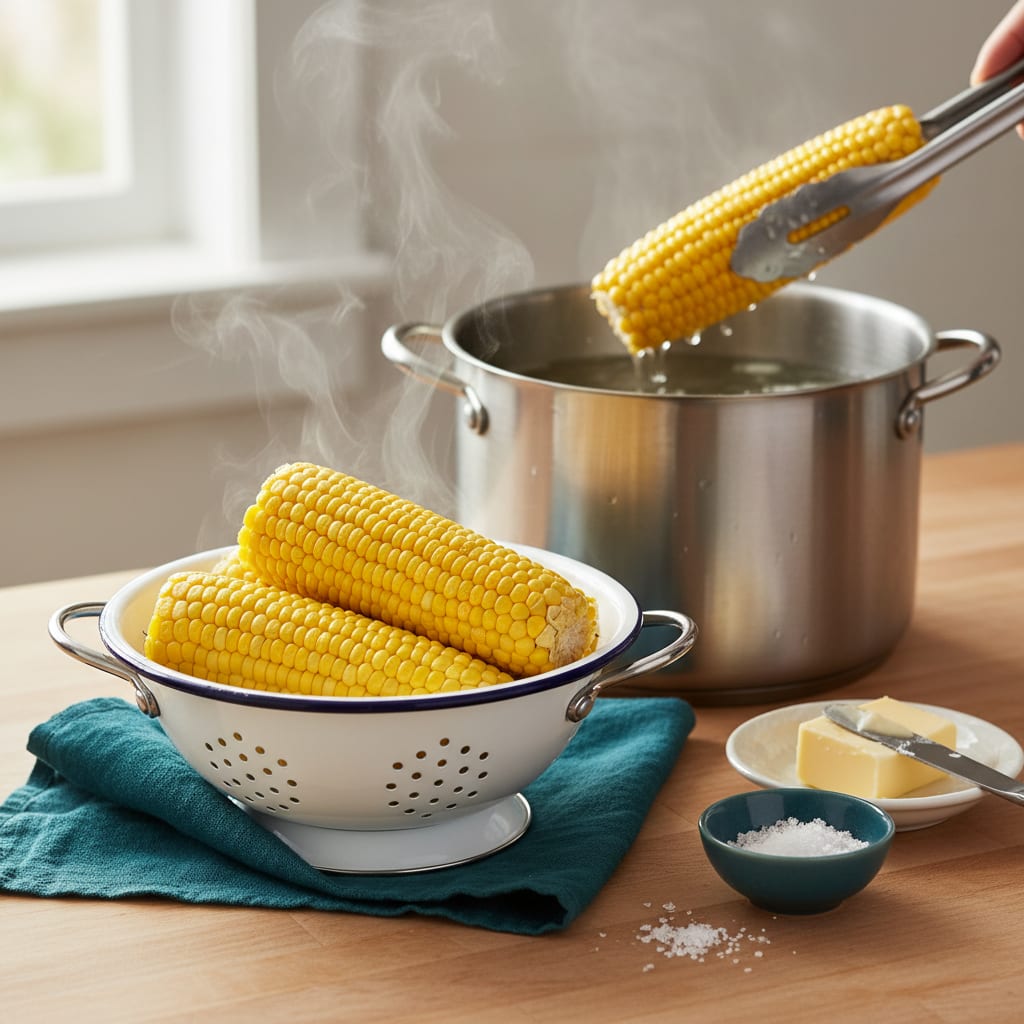
Boil fresh shucked corn for 4 to 6 minutes and frozen ears for 5 to 8 minutes, starting the timer when the water returns to a boil. Peak-season sweet corn is closer to 4 minutes; end-of-summer or grocery-store corn that’s been sitting a week wants 6. Corn is already edible raw — you are warming it and setting the starch, not cooking it through — so the failure mode is always overcooking, never undercooking. Below is the full timing chart, the two doneness cues that beat any timer, and how to boil 24 ears for a cookout without a giant pot.
The timing chart
| What you’re boiling | Time after water returns to a boil |
|---|---|
| Fresh shucked ears, just-picked | 4 minutes |
| Fresh shucked ears, grocery store | 5–6 minutes |
| Fresh ears left in the husk | 8–10 minutes |
| Frozen whole ears, from frozen | 5–8 minutes |
| Frozen half ears, from frozen | 4–6 minutes |
| Fresh half ears or cobettes | 3–4 minutes |
| Reheating already-cooked ears | 1–2 minutes |
Two rules make the chart work:
- Time from the return to a boil, not from when the corn goes in. Cold ears drop the water temperature; if you start the timer at the drop, you’ll pull corn that’s still cool at the core.
- Don’t salt the water. Salt firms the kernel skins and makes them chewy. Sugar is a myth too — a splash of milk or a spoon of butter in the water does more for flavor than either.
The two doneness cues that beat a timer
Corn ages fast, and a week-old ear behaves differently than one bought that morning. So check, don’t just count:
- Color. Raw kernels are pale and matte. Cooked kernels turn a deeper, glossy yellow and plump visibly. When the whole ear has gone from chalky to shiny, it’s done.
- The thumbnail test. Press a kernel with a thumbnail. It should give and release a little juice with light pressure. If it’s still firm, give it 60 more seconds; if it squirts and collapses, you’ve gone past it.
Overcooked corn is unmistakable — the kernels shrink, wrinkle slightly, and turn tough and starchy instead of juicy. There’s no coming back from it, which is why the low end of every range is the right place to start.
The big-batch method for a cookout
Boiling 24 ears in one pot doesn’t work — you can’t keep the water hot, and the last ears in are wildly overcooked by the time the first come out. Two better approaches:
The cooler method (up to 30 ears, hands-off). Shuck the corn and pack it into a clean, hard-sided cooler. Pour boiling water over until every ear is submerged, close the lid, and wait 30 minutes. The insulation holds the water hot enough to cook the corn through, and it will stay serving-hot for close to two hours. This is the single best trick we know for feeding a crowd corn, and it’s a cousin of the towel-and-cooler holds in our keep-food-warm guide.
Batches of six with a hold. Boil six ears at a time for 4 to 5 minutes, then move them straight into a slow cooker set to Warm with a splash of water and a few pats of butter in the bottom. Corn holds beautifully this way for an hour without going tough.
For a smaller number — one to four ears — skip the pot entirely. Our microwave corn method cooks corn in its own husk in about 4 minutes and produces the cleanest shucking you’ll ever do.
Frozen corn on the cob, specifically
Frozen ears go into the water frozen. Thawing first makes them watery and mushy, and it doesn’t save meaningful time. Bring water to a rolling boil, add the ears, wait for the return boil, then time 5 to 8 minutes depending on ear size.
Frozen corn is picked and blanched at peak ripeness, so it’s genuinely good — often better than a February grocery-store fresh ear that traveled 2,000 miles. Its one weakness is texture, which is why the short end of the range matters even more here.
How much corn to buy
One ear per person as a side, two per person if it’s a corn-and-burgers cookout and the corn is doing real work on the plate. Buy two or three spares per dozen for the inevitable ear with a bad tip. Corn scales the way the rest of our crowd math does — the same per-person logic behind our potato buying charts.
Cut kernels off leftover cobs the same night. Two ears yield roughly a cup of kernels, which go straight into a salad, a quesadilla, or a pot of chili the next day.
What to do with it once it’s boiled
- Butter and salt, applied while the ear is hot enough to melt it. Roll the whole ear across a stick of butter on a plate — faster and less wasteful than buttering with a knife.
- Mexican street corn style: mayo, crumbled cotija or feta, chili powder, lime.
- Herb butter: softened butter mashed with chopped chives, parsley, and a pinch of garlic powder, made a day ahead.
- Straight into a topping bowl for a hot dog bar — cut kernels are one of the toppings kids reach for first.
FAQ
How long do you boil corn on the cob?
Four to six minutes for fresh shucked ears, timed from when the water returns to a boil. Just-picked farm corn needs only 4 minutes; grocery-store corn that’s a few days old wants 5 to 6. Corn in the husk takes 8 to 10 minutes.
How long do you boil frozen corn on the cob?
Five to eight minutes from frozen — do not thaw first. Add the ears to boiling water, wait for the water to come back to a boil, then start timing. Half ears and cobettes need only 4 to 6 minutes.
Should you put salt in the water when boiling corn?
No. Salt in the boiling water toughens the kernel skins. Salt the corn after it comes out, when butter helps it stick. A splash of milk or a spoonful of butter in the water is a better addition if you want to add anything at all.
Can you overcook corn on the cob?
Easily, and it’s the most common mistake. Past about 8 minutes, kernels shrink, wrinkle, and turn starchy and tough. Start at the low end of the time range and use the thumbnail test — a kernel should give and release juice under light pressure.
How do you cook corn on the cob for a crowd?
Pack shucked ears into a clean cooler, cover with boiling water, and close the lid for 30 minutes. It cooks up to 30 ears at once with no pot juggling and holds them hot for about two hours — by far the easiest method for a cookout.
✳ More From the Kitchen
Lunchbox & Kids
Freezer & Meal Prep
Easy Dinners