Yes, you can freeze gravy. Turkey, chicken and beef gravy made from drippings and broth freeze well: cool it, get it into the freezer within a day or two, and use it within about a month for the best texture. It will usually look split or watery when it thaws. That is normal, and bringing it to a full boil while you whisk brings it back. Cream, milk and sausage gravies are the ones that may curdle, so freeze the base and add the dairy when you reheat.
How long gravy keeps, fridge and freezer
Gravy is one of the shortest-lived things on the holiday table. The sources we loaded agree on the fridge and differ a little on the freezer:
| Source | Fridge | Freezer |
|---|---|---|
| Illinois Extension Thanksgiving leftovers chart | 1 to 2 days | 2 to 3 months |
| Cornell Cooperative Extension holiday chart | 1 to 2 days | 2 to 3 months |
| Illinois Extension turkey FAQ | Use within 1 month |
We go with the shortest on both: freeze leftover gravy by the day after the meal, and use it within a month. The longer figures are not a safety limit. Illinois Extension’s freezer storage page says food kept at 0°F “will always be safe as long as it hasn’t thawed.” The clock is about flavor and texture, and gravy loses both faster than the turkey it came with.
Which gravies freeze well, and which don’t
Not all gravy behaves the same way in the freezer. What it is thickened with, and whether it has dairy in it, decides how it comes back.
| Gravy | Freezes? | What to expect |
|---|---|---|
| Turkey or chicken gravy, flour roux | Yes | May look curdled or watery after thawing; boil and whisk |
| Beef or pan gravy, flour roux | Yes | Same as turkey gravy |
| Gravy thickened with cornstarch | Yes, less reliably | More likely to weep; boil and whisk, or thicken fresh |
| Giblet gravy | Yes | Same as turkey gravy; stir the giblets back through |
| Cream, milk or sausage gravy | Freeze the base, not the finished gravy | Milk gravies may curdle |
| Plain drippings or stock | Yes, very well | No thickener to break |
Here is where those notes come from:
- Flour gravy. Ohio State University Extension’s guide to freezing cooked foods says that when flour is used, you should “thoroughly combine flour and fat”, which is exactly what a roux does. It adds that these sauces “might appear curdled when thawed but will usually recombine when stirred.”
- Cornstarch gravy. The same Ohio State page says “cornstarch might be less successful.” NC State Extension’s freezing tips go a step further for both thickeners: sauces and gravies thickened with flour or cornstarch “may separate and break down when frozen.”
- Milk and cream gravy. Oregon State University Extension’s list of foods that do not freeze well puts milk sauces and gravies on it, with the note “May curdle.”
America’s Test Kitchen tested both thickeners, and “once defrosted, both batches wept.” Expect thawed gravy to look worse than it is.
How to freeze gravy
- Cool it quickly. Get leftovers into the fridge or freezer within two hours of serving, per Illinois Extension’s leftovers guidance. A big pot cools faster if you pour it into a few smaller containers.
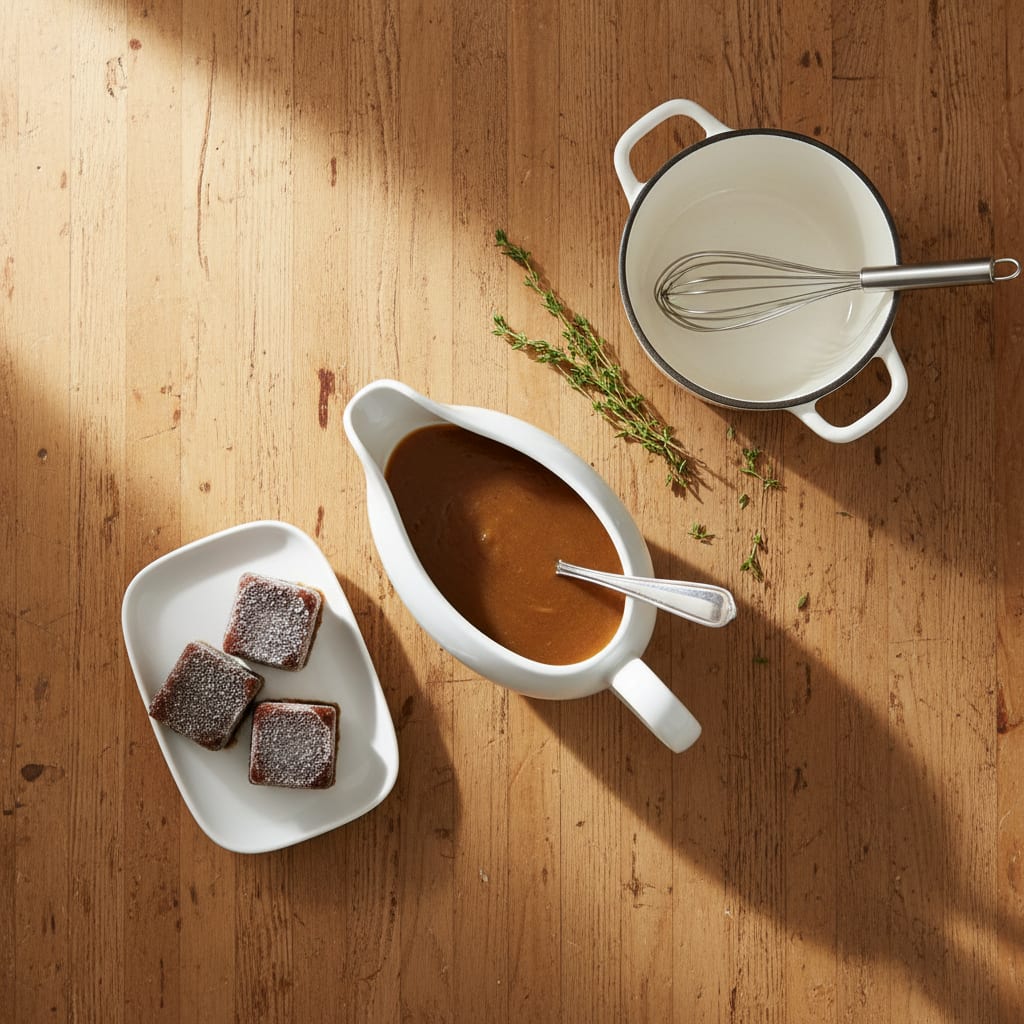
- Portion it small. Most families reheat gravy a cup or two at a time. Souper Cubes 1-cup silicone trays freeze it in neat blocks you can pop out and bag. An ice cube tray does the same job for single servings.
- Pack it flat, with the air out. A Ziploc gallon freezer bag laid flat on a tray freezes into a thin slab that thaws fast. Illinois Extension’s turkey FAQ explains why the air matters: circulating air causes freezer burn, “white dried-out patches on the surface of food that make it tough and tasteless.”
- Label it. “Turkey gravy, Nov 27, use by Dec 27.” If it’s a cream gravy base, write “add milk” on it too.
Freezing cream or sausage gravy
The fix is to freeze the part that freezes. Make the roux with the browned sausage or drippings, add the broth if your recipe uses any, and freeze that. Thaw it, heat it, then whisk in the milk or cream and simmer until thick. You get fresh-tasting cream gravy, and nothing in the freezer has a chance to curdle.
How to thaw and reheat frozen gravy
Thaw it in the fridge overnight, or drop the frozen block straight into a small saucepan over low heat and let it melt, stirring. A flat, sealed bag also thaws quickly in a bowl of cold water; change the water every 30 minutes.
Then bring it to a boil. Two good reasons for this:
- Safety. NC State’s Safe Plates program, in its Thanksgiving leftovers advice, says gravies and sauces “should be brought to a rolling boil when reheated”, because their higher moisture content makes them “a potential hotspot for bacterial growth.” Every leftover should reach at least 165°F; for gravy, a rolling boil is the easy way to be sure.
- Texture. America’s Test Kitchen found that if they “brought the gravies to a full boil and then whisked them vigorously”, both the flour and cornstarch gravies “were returned to their normal thick, emulsified consistency.”
If the gravy is still thin or lumpy
- Too thin: simmer it a few minutes longer. If it still won’t thicken, whisk a teaspoon of cornstarch into a tablespoon of cold water and stir it in while the gravy bubbles.
- Too thick: gravy keeps thickening as it cools (Illinois Extension’s turkey FAQ says to make it “a little on the thin side” for that reason). Whisk in a splash of broth.
- Lumpy: whisk hard, or pour it through a sieve. The same FAQ suggests straining gravy “through a sieve to get rid of the lumps.”
Reheat only what you’ll eat. Leftover reheated gravy is best thrown out, not frozen again.
The rest of the Thanksgiving leftovers
Our guide to freezing cooked turkey has the freezer times for the rest of the table, and turkey frozen in a little gravy stays moister than dry slices. How to reheat a cooked turkey uses that gravy to keep the meat from drying out. For mashed potatoes, see can you freeze mashed potatoes. If you’re still deciding what to keep in the fridge, our Thanksgiving leftovers chart has every dish’s fridge window. Check the middle of anything you reheat with an instant-read thermometer.
FAQ
How long does gravy last in the fridge?
One to two days, according to both Illinois Extension and Cornell Cooperative Extension. That’s shorter than the turkey, so freeze any gravy you won’t use by the day after the meal.
Can you freeze gravy made with cornstarch?
Yes, but it’s more likely to weep or turn watery than flour gravy. Ohio State Extension says cornstarch “might be less successful.” Boil it and whisk hard when you reheat, or thicken it again with a little fresh cornstarch slurry.
Can you freeze sausage gravy?
It’s better to freeze the sausage and roux base and add the milk when you reheat, because milk gravies may curdle when frozen. A finished sausage gravy can be frozen, but expect a grainier texture.
Why does gravy separate after freezing?
The starch that thickens it breaks down as it freezes and thaws, so the liquid weeps out. America’s Test Kitchen found both flour and cornstarch gravies did this, and that a full boil and a vigorous whisk brought both back together.