Can You Freeze Tortillas? Yes — Separate Them First
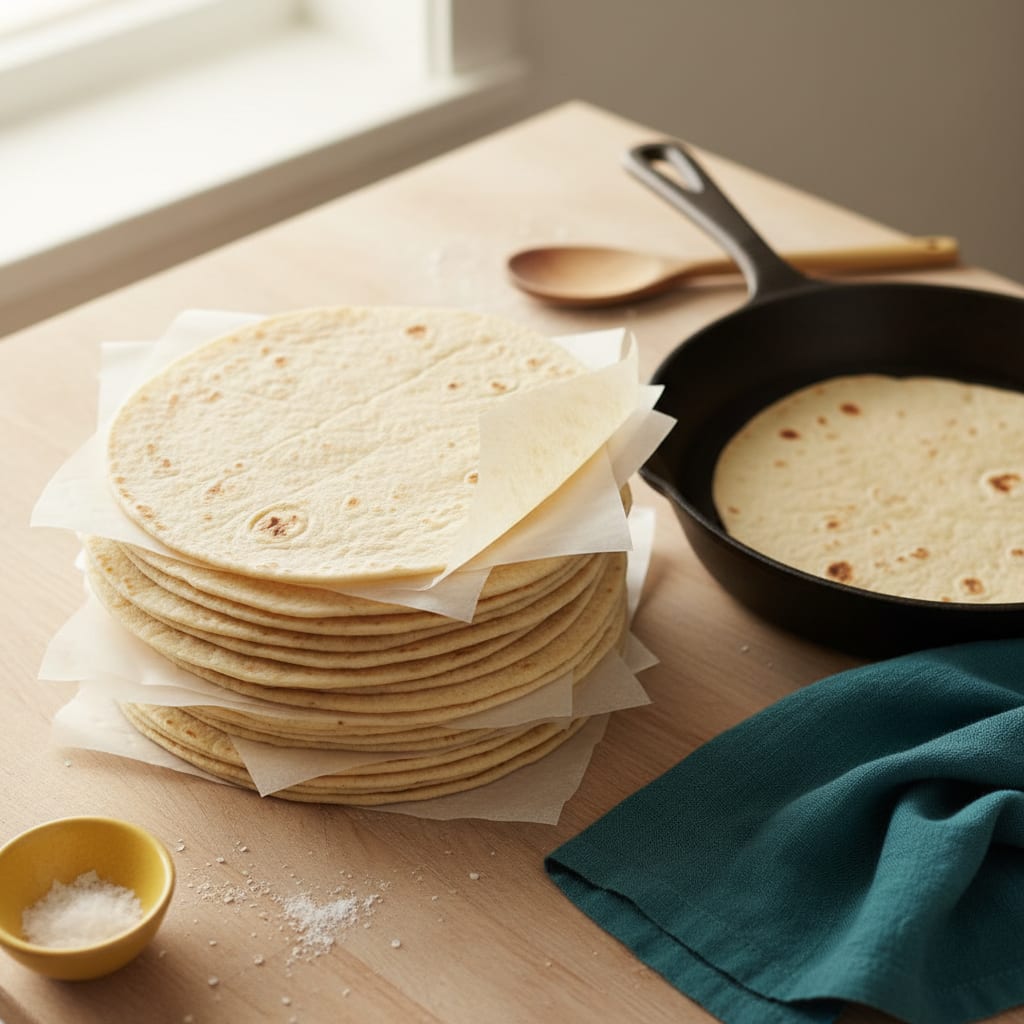
Yes, you can freeze tortillas, and they come out better than nearly anything else in this series — the only real problem is getting two out of a frozen stack of twenty. Solve that with a sheet of parchment between every few tortillas before they go in, and a frozen pack becomes as easy to use as a fresh one. Reheat straight from frozen in a dry pan; no thawing step required.
After a run of posts about foods that come out of the freezer worse than they went in, this is the easy one.
Why tortillas freeze so well
Two reasons. They’re thin, so they freeze through in minutes and there’s no slow-freezing zone in the middle where big ice crystals form. And they’re low-moisture and mostly starch — there’s no delicate cell structure to rupture, the way there is in a tomato or a watermelon.
What does go wrong is staling, which is a separate process from freezer burn. Bread products go dry and firm as their starch recrystallises, and that happens fastest at fridge temperature — which is why the fridge is the worst place to keep tortillas and the freezer is one of the best. Freezing effectively pauses it.
The other failure is drying out, and that’s an oxygen and air-contact problem. Keep them wrapped tightly and press the air out, and a frozen tortilla reheats close to new.
Separate them before they go in
This is the whole job, and it takes about a minute.
- Parchment between every tortilla if you cook one or two at a time. Cut squares slightly larger than the tortilla, stack them alternating, wrap the whole stack in foil or slide it into a freezer bag, press the air out and freeze flat. You lift one off the top with your fingers.
- Parchment every four or six if you cook for a family and always use a handful. Less fiddly, same effect at family scale.
- Split the pack in halves or thirds and freeze each in its own bag. Crude but effective — you thaw a portion rather than the whole thing.
If you’re already committed and you’ve frozen a solid twenty-pack with nothing between them, don’t try to prise them apart cold; you’ll tear them. Leave the stack on the counter for fifteen to twenty minutes and the outer few will peel off cleanly.
Freeze them flat and keep them flat. A tortilla frozen with a fold in it keeps that fold, and it will crack there when you try to roll it.
Corn versus flour
They behave differently enough to be worth separating.
Flour tortillas are the more forgiving of the two. Fat in the dough keeps them pliable, and they come out of the freezer soft enough to roll after thirty seconds in a warm pan. These are the ones to keep on hand for freezer breakfast burritos and for a fast sheet pan quesadilla.
Corn tortillas are drier and more brittle, and they crack if you try to fold them before they’re properly hot. They need steam rather than dry heat: a damp tea towel and thirty seconds in the microwave, or a covered pan with a splash of water. Handled that way they’re genuinely excellent frozen, and they’re the reason a taco night can happen without a shop.
Neither should be thawed on the counter for hours. Condensation makes them sticky and they clump.
Reheating straight from the freezer
Three methods, all fast:
- Dry skillet. Medium-high, thirty to forty-five seconds a side. The best result by a wide margin — you get the toasted spots as well as the softening. Stack them in a clean tea towel as they come off so they steam each other soft.
- Microwave with a damp towel. Wrap four or five in a damp tea towel or a couple of damp paper towels and give them thirty to sixty seconds. Best for volume, and the only reliable way to keep corn tortillas from cracking.
- Oven, wrapped in foil. A stack in foil at 350°F for about fifteen minutes. This is the taco bar method — it heats two dozen at once and keeps them warm in the foil while people serve themselves.
Whichever you use, keep them covered after heating. An uncovered warm tortilla goes stiff in about four minutes.
How long they keep
FoodSafety.gov is clear that anything held continuously at 0°F is safe indefinitely and that freezer timings are “for quality only.” For quality on bread products, MU Extension’s freezing guide puts baked bread and rolls at three months, and a flour tortilla belongs squarely in that group.
Three months is a realistic target if the pack is well sealed. Past that they start tasting flat and dry rather than unsafe. Uncooked “raw” tortillas — the refrigerated kind you griddle yourself — sit closer to unbaked dough and are better used inside a month.
For how tortillas rank against everything else on the shelf, our storage chart by dish lines them up.
FAQ
Do you need to thaw tortillas before using them?
No. Reheat them straight from frozen in a dry pan, a damp towel in the microwave, or foil in the oven. Counter-thawing makes them damp and sticky, which is worse than the frozen state.
How do you keep frozen tortillas from sticking together?
Put a square of parchment or wax paper between them — every one if you use them singly, every four to six for family cooking — then wrap the stack tightly and freeze it flat.
How long can you freeze tortillas?
They stay safe indefinitely at 0°F. For quality, three months is a sensible ceiling; MU Extension gives baked breads and rolls three months and tortillas behave the same way.
Can you freeze corn tortillas?
Yes, and they hold up well, but reheat them with steam rather than dry heat — a damp towel in the microwave or a covered pan. Dry heat straight from frozen makes them brittle and they crack when folded.
Can you refreeze tortillas after thawing them?
You can safely if they stayed cold, but each cycle dries them a little more. Freezing them in usable portions in the first place avoids the question entirely.
✳ More From the Kitchen
Lunchbox & Kids
Lunchbox & Kids
Easy Dinners