Teething and a Growth Spurt in the Same Week
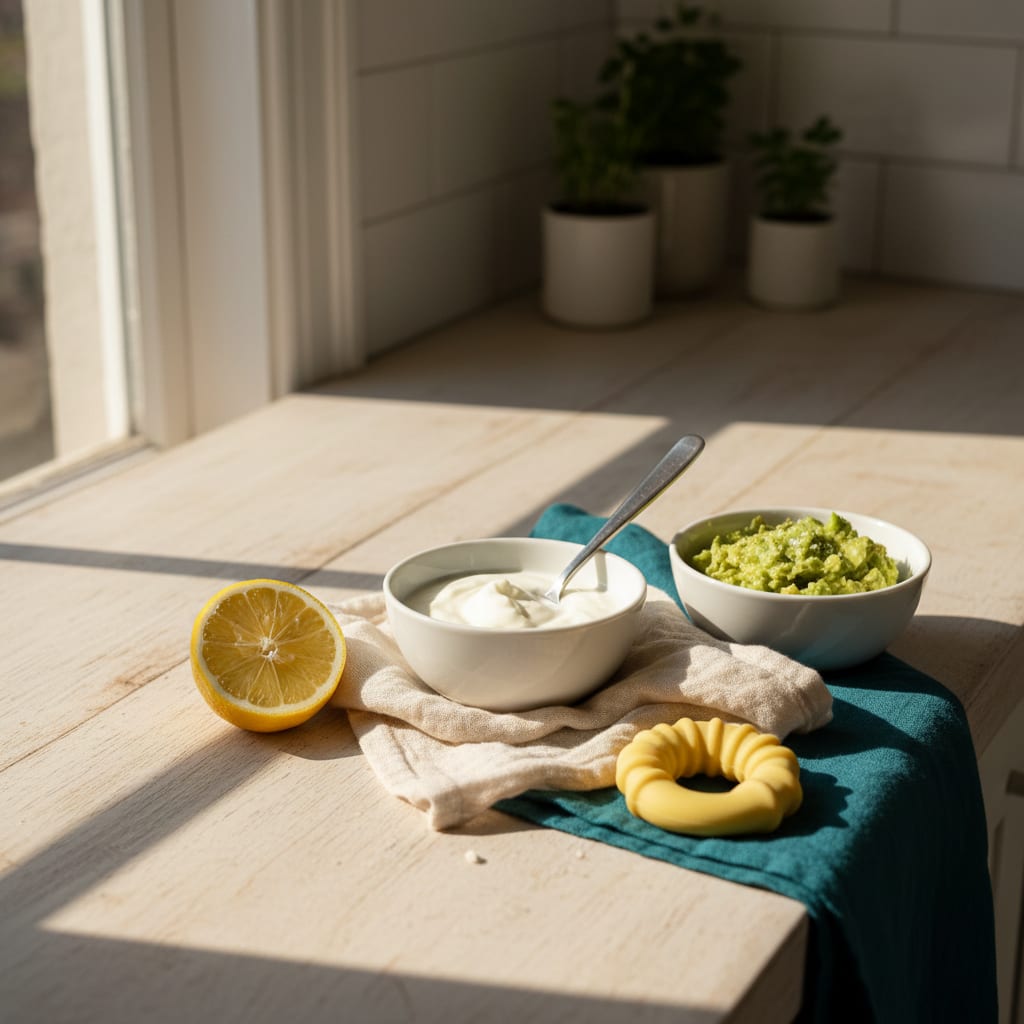
When a tooth and a growth spurt land in the same week, you get a child who is hungrier than usual and refusing food anyway. That contradiction is the whole problem, and it is why the week feels so much worse than either thing on its own. The fix is not more meals or a new routine — it is changing the texture and temperature of what you’re already offering, keeping milk feeds generous, and waiting it out. Usually it’s three or four days.
Knowing that the two are stacked is most of the relief. Neither one is a sign that anything you were doing has stopped working.
Two things pulling in opposite directions
A growth spurt raises demand. Appetite jumps, feeds bunch up, and a child who had been picking at dinner for weeks suddenly clears the plate and asks for more.
Teething does the reverse. The American Dental Association’s teething guidance lists what’s normal, and two entries on that list are the ones that matter here: “loss of appetite” and “trouble sleeping,” alongside fussiness, irritability and extra drool. First teeth “typically start to come through between 6 and 12 months, although the exact timing can vary.”
So the body is asking for more calories at exactly the moment the mouth has become an unpleasant place to put things. Chewing hurts. A spoon pressing on a swollen gum hurts. Solids get pushed away, and then the hunger the spurt created shows up as a 2am waking instead.
That’s the difference between this week and the one we wrote about in growth spurt feeding. There the answer was simple — add volume, keep the times. Here you can’t add volume through the usual door, because the usual door is sore.
Which one is which
It’s worth being able to tell them apart, because they resolve differently.
Points to teething: drooling far more than usual, a rash around the mouth from the drool, chewing on everything within reach, a hand permanently in the mouth, one cheek redder than the other, and refusing solids while still taking milk or a bottle happily. Betteroo’s write-up on why a new tooth wrecks the night is a good reality check on how long the disruption usually runs.
Points to a growth spurt: wanting more of everything rather than less, feeding more often rather than refusing, waking hungry and settling immediately after a feed, and — the one parents notice last — sleeping longer at some points in the day, not just less at night. Betteroo covers that second pattern in its piece on sleep during growth spurts.
Points to neither: a real fever. HealthyChildren notes that teething may cause “a slight rise in temperature (but not over 101 degrees Fahrenheit or 38.3 degrees Celsius),” and that anything higher than that “is probably not from teething.” Same for diarrhoea, a runny nose or a cough. If those are in the picture, this is an illness week and the plan is different.
Food that goes down when gums hurt
Cold and soft. That is the entire principle, and everything below is a version of it.
- Cold yoghurt or kefir, straight from the fridge, in bigger portions than usual. Cold is mildly numbing and it takes no chewing.
- Fruit purée, chilled — apple, pear, banana, or avocado mashed with a little lemon. Avocado is the most calorie-dense thing in this list, which matters when total intake is down.
- Chilled soup, blended smooth. A creamy tomato or butternut soup served cool rather than hot is a proper meal that requires nothing of the gums.
- Smoothies with full-fat yoghurt or milk, which quietly carry more calories than the same food eaten separately.
- Soft scrambled eggs, cooled, cut small.
- Well-cooked pasta with butter, served warm rather than hot.
- A cold damp washcloth to chew before a meal. HealthyChildren suggests twisting up a damp washcloth and putting it in the freezer for exactly this; a few minutes of that before the plate arrives often buys you the meal.
What to stop offering for a few days: crunchy toast fingers, raw vegetable sticks, crusty bread, anything that needs real chewing, and anything acidic like citrus or tomato sauce that stings an open gum. The list you already use for a fussy stretch — our toddler lunch plates — is a good raiding ground, because most of it is already soft.
Cold, yes. Frozen solid, no.
This is the one safety line worth being firm about, because “give them something frozen to chew” is such common advice.
HealthyChildren’s guidance is explicit: “don’t let your baby chew directly on anything that’s frozen solid, since hard objects might hurt tender gums.” Frozen teething rings get too hard and can do more harm than good. Refrigerator-cold is the target, not freezer-cold.
Three more from the same guidance, all worth knowing before someone offers them to you:
- No numbing gels. Topical anaesthetics are dangerous for babies — benzocaine and lidocaine treatments are both specifically advised against.
- No homeopathic teething tablets, which provide no benefit and have in some cases contained harmful ingredients.
- No teething necklaces — amber, wood, marble or silicone — which pose serious choking and strangulation risks and don’t relieve pain.
A clean finger rubbed firmly on the gum, a cool spoon, a proper rubber teether (like Sophie la girafe’s So’pure circle teether) and a cold drink cover nearly everything, and none of them carry a risk.

Getting through the nights without rebuilding anything
The strong temptation in a week like this is to change the routine — later bedtime, extra feed, new nap. Don’t. In four days the tooth will be through and the appetite will settle, and you’ll be left holding a routine built for a week that no longer exists.
What does help, on the food side: front-load the day. A larger, softer breakfast and a real late-afternoon meal do more for a hungry night than anything added at bedtime, and a big late dinner tends to make bedtime worse. Offer a cold, calorie-dense snack around 4pm — yoghurt, smoothie, avocado — while the gums are at their least angry, and treat that as the meal that counts.
Keep milk feeds generous and don’t police them this week. When solids are being refused, milk is doing the work, and that’s fine for a few days.
And cook nothing that needs you. This is a week for reheating, not for standing at a stove one-handed — our notes on cooking dinner with a baby apply doubly when the baby wants to be held.
FAQ
Can teething really make a baby stop eating?
Loss of appetite is on the ADA’s list of normal teething symptoms, along with trouble sleeping and irritability. It’s usually short-lived and specific to solids — most babies keep taking milk or a bottle happily through it.
How can I tell teething from a growth spurt?
Direction of appetite is the fastest tell. A growth spurt makes a child want more; teething makes them refuse food while still drooling, chewing on everything and taking milk. When both are happening you’ll see both, which is why the week feels contradictory.
Should I give frozen food to soothe sore gums?
Cold, yes; frozen solid, no. HealthyChildren warns against letting a baby chew directly on anything frozen hard, since it can hurt tender gums. Chilled yoghurt, a cool damp washcloth from the freezer for a few minutes, or fridge-cold purée are the safer versions.
Is it okay if they eat much less for a few days?
A few days of reduced solids while milk intake stays normal is a common pattern and generally settles on its own. A fever over 101°F, diarrhoea, refusing liquids as well, or a stretch that runs beyond a few days is a reason to call your pediatrician — none of those are teething.
Should I change the bedtime routine to cope?
Better not to. Both a tooth and a spurt are short. Adding a feed or shifting bedtime to solve a four-day problem tends to leave you unpicking a new habit later — hold the routine and change the food instead.
✳ More From the Kitchen
Lunchbox & Kids

Lunchbox & Kids