Cream Cheese Pasta: 5 Ingredients, 20 Minutes
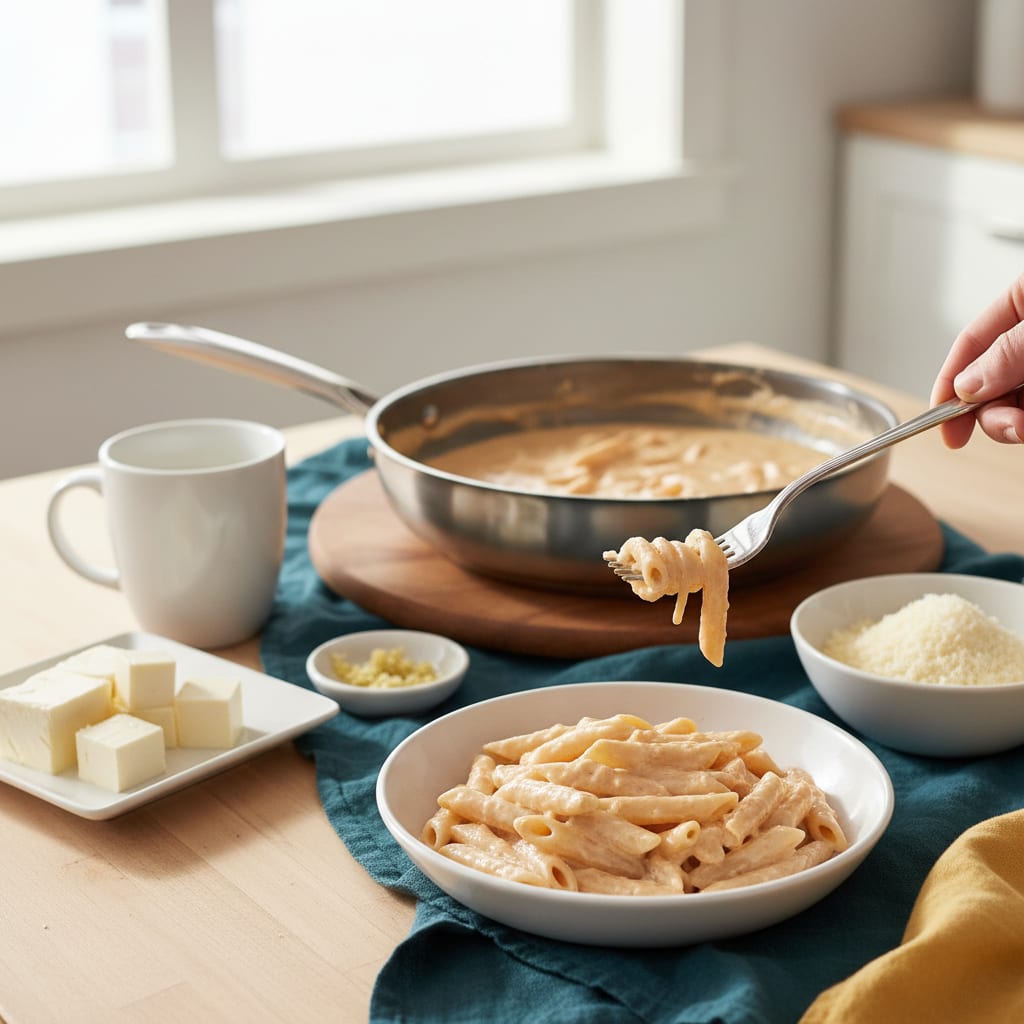
Cream cheese pasta is one block of cream cheese melted into hot pasta water and parmesan, tossed with a pound of pasta — creamy in about 20 minutes, with no cream, no roux, and no risk of curdling. The whole thing rests on one ratio: 8 ounces of cream cheese to 1 pound of dry pasta, loosened with roughly a cup of starchy pasta water. Add crushed tomatoes and it becomes a pink sauce; leave them out and it’s a garlicky alfredo-adjacent sauce that kids eat without negotiation. Here’s the method, then the variations.
What you need
- 1 lb dried pasta — penne, rigatoni or shells hold the sauce best
- 8 oz cream cheese, full-fat block (not the tub, not whipped), cut into cubes and left on the counter while the water boils
- 2–3 cloves garlic, minced
- 1 cup grated parmesan
- 2 tbsp butter or olive oil
- Plus infrastructure: salt, pepper, and about 1 cup of reserved pasta water
Full-fat block cream cheese matters more than any other choice here. Whipped and tub-style versions carry extra water and stabilizers, and they thin out into something closer to soup than sauce.
The method
- Boil the pasta in well-salted water. Before you drain it, scoop out a full cup of the water — set it somewhere you won’t forget it.
- Soften the garlic in butter over medium-low heat in a wide skillet, about a minute, until it smells sweet and hasn’t browned.
- Add the cream cheese cubes and half a cup of pasta water. Whisk over low heat until it becomes a smooth, pourable sauce. It will look broken and lumpy for about 30 seconds. Keep whisking; it comes together.
- Kill the heat, then add the parmesan in handfuls, whisking between each. Off the heat is the whole trick — cheese added to a boiling sauce goes grainy.
- Add the drained pasta and toss for a full minute, splashing in more pasta water until the sauce coats every piece and slides rather than clumps. Salt and a lot of black pepper to finish.
Serve immediately. This sauce is at its best in the first five minutes and tightens noticeably as it sits.
Why it splits (and how to fix it)
Three things break this sauce, and all three are heat or water problems:
- The pan was too hot. Cream cheese and parmesan both seize above a gentle simmer. Drop the heat, add a splash of pasta water, and whisk hard — it usually recovers completely.
- You used cold cream cheese straight from the fridge. Cubed and left out for the ten minutes the water takes to boil, it melts evenly instead of in stubborn lumps.
- You used plain tap water instead of pasta water. Starch is what holds the fat and the water together. Without it the sauce separates into greasy pools within a minute or two.
If it’s tight and gluey instead of split, that’s the opposite problem and the same fix: more pasta water, a spoonful at a time, off the heat.
Six ways to make it dinner
| Add-in | When to add it | Notes |
|---|---|---|
| Crushed tomatoes (14 oz can) | With the cream cheese | Makes the pink “rosa” version; add a pinch of sugar if the tomatoes are sharp |
| Italian sausage, crumbled | Brown it first, sauce in the same pan | The most filling version by a wide margin |
| Frozen peas | Last 2 minutes of the pasta water | No extra pan, and a green thing on the plate |
| Shredded rotisserie chicken | Stir in at the end, off the heat | Turns leftovers into a second dinner |
| Spinach | Wilt into the sauce before the pasta | A large handful cooks down to almost nothing |
| Bacon or pancetta | Crisp first, crumble over the top | Keep it on top so it stays crunchy |
The sausage and tomato version is the one worth knowing by heart — it’s a legitimate company dinner made from a can, a block, and a box.
Scaling and leftovers
The ratio scales linearly: for 2 pounds of pasta, use 16 ounces of cream cheese and about 2 cups of pasta water, and use your widest pan so the sauce isn’t fighting for surface area. Beyond that, cook in two batches — a huge volume of pasta cools the sauce too fast to emulsify.
Leftovers refrigerate for three days and reheat best in a skillet with a splash of milk or water over low heat, stirred constantly. The microwave works but gives you a rubbery edge and a cold middle. This one doesn’t freeze well; dairy-heavy sauces separate on thaw.
If you’re building a weeknight pasta rotation, this slots in next to our 15-minute pasta dinners as the creamy option, with lemon butter pasta as the bright one and plain butter noodles as the fallback for the kid who has decided sauce is the enemy this month.
FAQ
How much cream cheese do I need per pound of pasta?
One 8-ounce block per pound of dry pasta, thinned with about a cup of reserved pasta water. That gives a sauce that coats without being heavy. For a richer version use 12 ounces, and add more pasta water to keep it pourable.
Can I use tub or whipped cream cheese?
You can, but the sauce will be thinner and slightly softer in flavor. Tub and whipped styles contain more water and added stabilizers. If it’s what you have, hold back some of the pasta water and add it only if the sauce needs loosening.
Why is my cream cheese pasta grainy?
Almost always heat. Parmesan added to a sauce hotter than a bare simmer turns grainy on contact. Take the pan fully off the burner before the cheese goes in, and whisk in a little pasta water to bring it back.
Can I make cream cheese pasta ahead of time?
It’s best fresh, but you can make the sauce up to two days ahead and refrigerate it, then reheat gently with a splash of milk while the pasta boils. Don’t combine them until you’re serving — pasta sitting in this sauce absorbs it and goes stodgy.
Is cream cheese pasta good for picky eaters?
It’s one of the most reliably eaten pastas we make. It’s mild, pale, and creamy without the sharpness of an aged-cheese sauce, and the add-ins stay optional — serve the plain version to whoever needs it and stir sausage or spinach into the adult portions in the bowl.
✳ More From the Kitchen
Lunchbox & Kids

Easy Dinners
Lunchbox & Kids