How to Reheat Meal Prep Without Ruining It
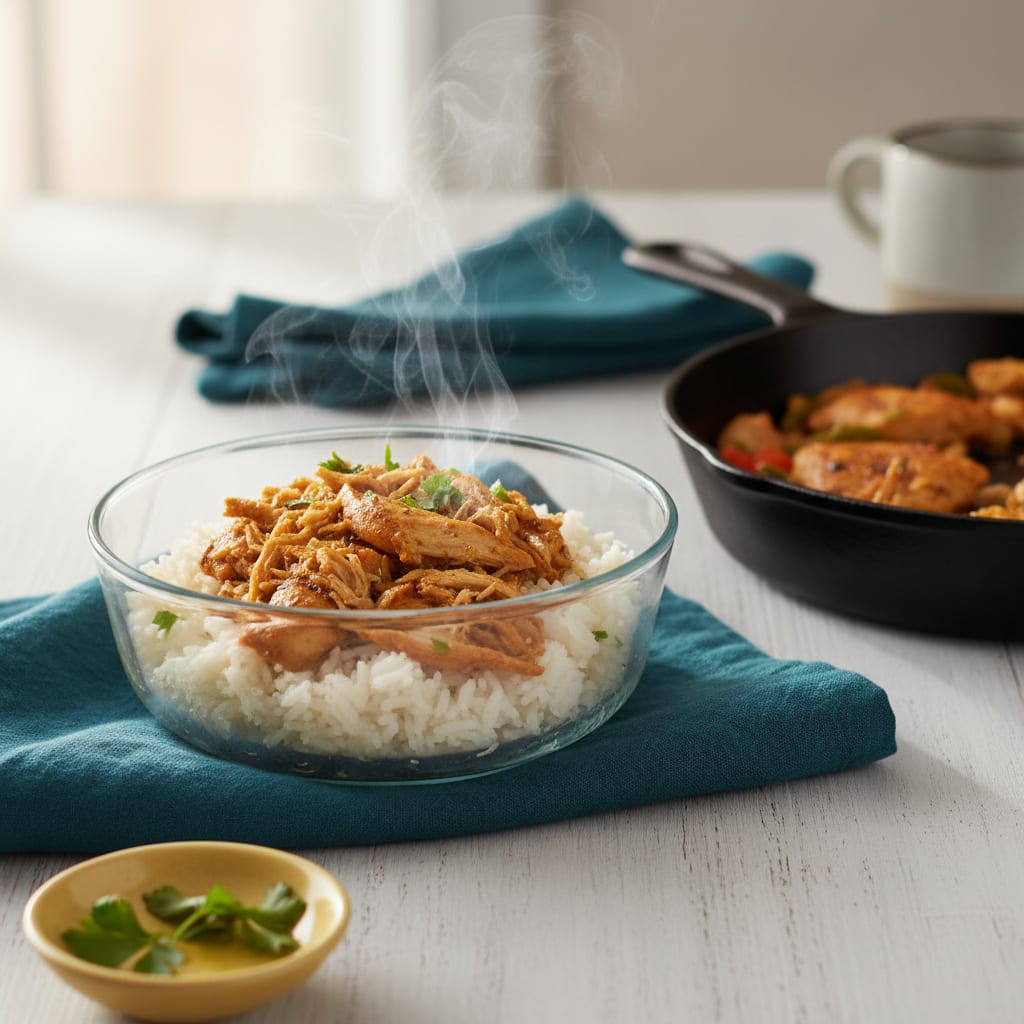
Reheat any leftover to 165°F, and choose the method by what’s in the container. FoodSafety.gov puts leftovers at a safe minimum internal temperature of 165°F (74°C) regardless of what they are — so that number is fixed. Everything else is texture. Saucy food goes in the microwave with a splash of liquid and a lid. Anything crisp goes in a skillet, oven or air fryer. Rice and pasta need added moisture. Chicken breast needs low and slow, or it turns to rope. Get the method right and Wednesday’s lunch tastes like Sunday’s dinner.
The reason meal prep gets abandoned is almost never the prepping. It’s the reheating, done one way for everything, ruining half of it.
The one number you can’t negotiate
165°F is a food-safety floor, not a texture recommendation. It applies to every leftover — soup, casserole, rice, chicken, the burrito from the freezer. Reheating to “warm enough” is the actual risk in meal prep, because food that has been cooked, chilled, portioned, handled and chilled again has had more chances to pick up bacteria than food that went straight from pan to plate.
Two practical consequences:
- Stir at least once mid-reheat. Microwaves heat unevenly, and the cold spot in the middle of a container of chili is exactly where the thermometer needs to land.
- Let it stand a minute after heating. Heat keeps moving through dense food after the microwave stops, and that carryover is part of getting the center up to temperature.
If you own an instant-read thermometer for the grill, that’s the same tool. Use it for the first few weeks until you learn what your microwave actually does.
Reheating chart by food
Times assume one single-serving portion, refrigerated, not frozen. Add roughly half again for a portion straight from the freezer, and always verify with a thermometer rather than a timer.
| Food | Best method | Roughly how long | The trick |
|---|---|---|---|
| Soup, chili, stew | Microwave or saucepan | 2–3 min, stir twice | Cover; splashing means it’s boiling at the edge only |
| Rice | Microwave, covered | 1.5–2 min | Add a tablespoon of water first — steam is what revives it |
| Pasta with sauce | Microwave, covered | 2 min | Splash of water; sauce thickens in the fridge |
| Plain pasta | Boiling water, 30 seconds | 30 sec | Dunk in a sieve, then dress |
| Chicken breast, sliced | Skillet with a lid, low | 3–4 min | Add a spoon of broth and cover; dry heat wrecks it |
| Shredded chicken | Microwave, covered | 1–2 min | Mix with its juices before storing |
| Ground beef, taco meat | Skillet, medium | 3–4 min | Reheats better than almost anything |
| Roasted vegetables | Oven or air fryer, 400°F | 5–8 min | Microwaving turns them to mush |
| Casserole, single portion | Microwave at 50% power | 4–5 min | Half power stops the edges drying out |
| Casserole, whole dish | Oven, 350°F, covered | 25–40 min | Foil on; uncover for the last 10 |
| Breakfast burrito | Microwave, then skillet | 90 sec + 2 min | The skillet is what brings the tortilla back |
| Pizza | Skillet with a lid, medium-low | 4–5 min | Crisp base, melted top, no rubber |
| Fried or breaded anything | Air fryer or oven, 375°F | 5–8 min | Never the microwave |
| Scrambled eggs | Microwave at 50% power | 45–60 sec | Stop while they still look slightly wet |
| Mashed potatoes | Microwave, covered | 2 min | Stir in a splash of milk or a knob of butter |
Why the microwave gets blamed unfairly
Most microwave disasters are moisture problems, not power problems. Refrigerated food has lost water to evaporation and to starch retrogradation — the reason day-old rice goes hard and day-old pasta goes gluey. Add the water back and cover the container, and the microwave becomes a small steam oven, which is exactly what most leftovers want.
The habits that fix nine reheats out of ten:
- Add a tablespoon of liquid to anything starchy.
- Cover it with a lid set ajar or a damp paper towel. Trapped steam heats the top, which is otherwise the coldest part.
- Arrange food in a ring, thicker pieces at the outside, a well in the middle. Microwave energy hits the edges hardest.
- Use 50% power for longer on dense or egg-based food. It costs you two extra minutes and saves the texture entirely.
When to skip the microwave completely
Anything whose appeal is crispness. A microwave heats water, and water turns crisp things soft — that’s not a technique failure, it’s physics.
Skillet with a lid, over medium-low, is the single most underrated reheating method in a home kitchen: it browns the bottom while the trapped steam warms the top. It’s how to rescue pizza, quesadillas, and the freezer breakfast burritos whose whole point is a tortilla that isn’t limp.
The oven or air fryer at 375–400°F handles roasted vegetables, breaded chicken, potatoes and anything with a coating. It takes eight minutes instead of two, so start it before you sit down rather than after.
Thawing, if it came from the freezer
Frozen portions can go straight into a covered microwave on defrost, into a saucepan for soup, or into a covered oven dish — but if you’re planning ahead, the fridge is better. Move tomorrow’s container down to the fridge tonight and it reheats evenly, in half the time, with far less of the overcooked-edge problem.
Never thaw on the counter. The outside of the container reaches room temperature long before the middle thaws, and that outer layer sits in the temperature range where bacteria multiply fastest. Cold water in a sealed bag, changed every 30 minutes, is the fast alternative.
Worth knowing what’s still good before you bother: our freezer storage chart has the by-dish windows, and if you’re just setting the system up, freezer meal prep for beginners is the place to start.
Four things that never reheat well
- Crisp salads and anything dressed — prep the components, dress at the table.
- Fried eggs and omelets — they go rubbery no matter the method. Scrambled survive; fried don’t.
- Cream sauces reheated hot and fast — they split. Low power, stirred, or don’t bother.
- Anything already reheated once. Reheat a portion once, and eat it or bin it. Repeated cycles are both a texture and a safety problem.
FAQ
What temperature should leftovers be reheated to?
165°F (74°C), measured in the center of the thickest part. FoodSafety.gov applies that figure to all leftovers, whatever they are. Stir partway through and check the middle rather than the edges, which will always read higher.
Can you reheat meal prep from frozen?
Yes. Use a covered container and a lower power setting, expect roughly 1.5 to 2 times the refrigerated time, and stir at least twice. Moving the portion to the fridge the night before gives a noticeably better result and is worth the small amount of planning.
How do you reheat chicken without drying it out?
Low heat, added moisture, and a lid. A spoonful of broth in a covered skillet over low heat, or 50% power in a covered microwave dish, both work. Slice the chicken before reheating so it comes up to temperature quickly rather than sitting in the heat.
Why does reheated rice go hard?
The starch recrystallizes as it cools, squeezing out water. Adding a tablespoon of water and covering the container reverses most of it, because the steam rehydrates the grains. Always chill cooked rice quickly and keep it no more than a few days.
Can you reheat the same portion twice?
Don’t. Reheat once, then eat it or throw it out. Each cool-down passes the food back through the temperature range where bacteria grow, and the texture is worse every round anyway.
✳ More From the Kitchen
Lunchbox & Kids
Kitchen How-Tos
Easy Dinners