How Long to Boil Pasta: Times by Shape and Al Dente
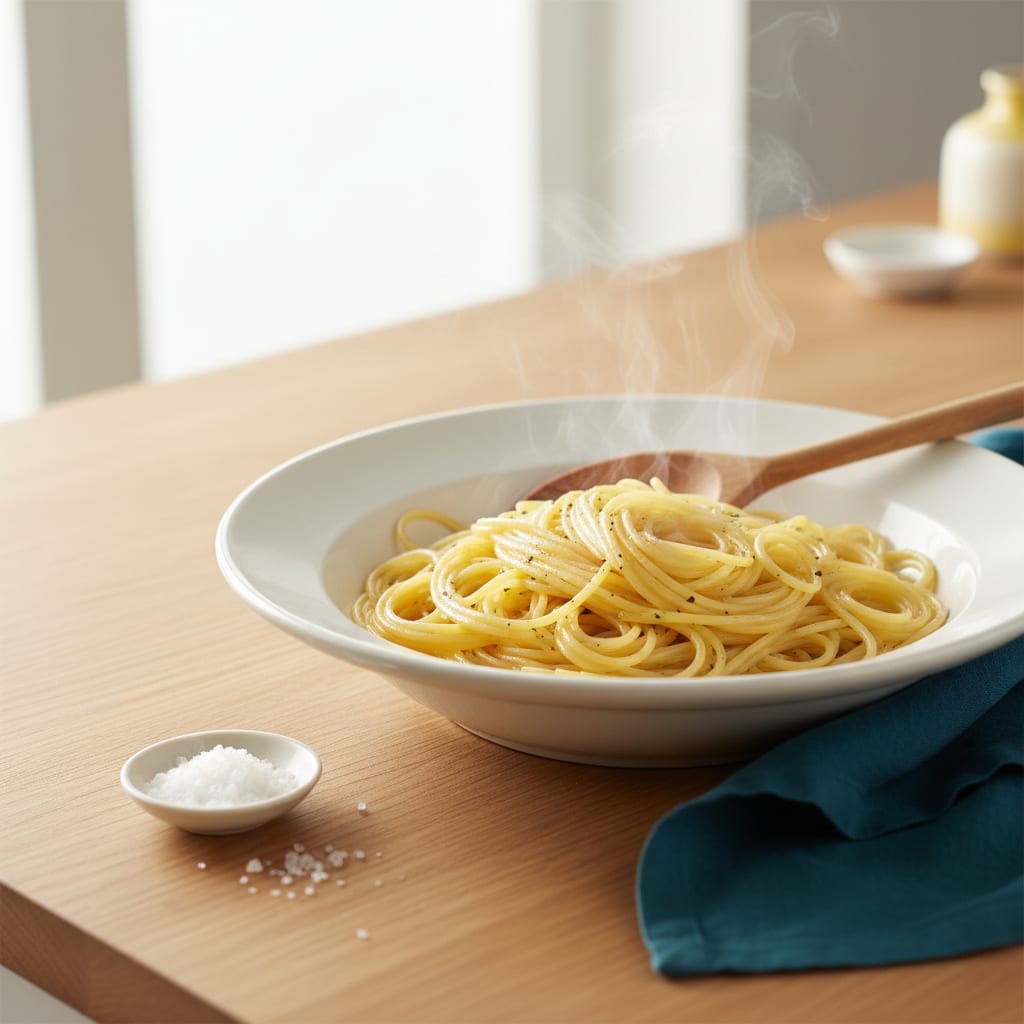
Boil spaghetti for 9 to 11 minutes, penne for 11 to 13, macaroni for 7 to 8 and orzo for 8 to 9 — timed from the moment the water comes back to a rolling boil after the pasta goes in, not from when you drop it. The only reliable finish test is tasting a piece, and the right moment to taste is about two minutes before you think you need to.
The single most common mistake is timing from the wrong moment. Adding a pound of cold, dry pasta drops a pot of water off the boil for a minute or more, and if the clock started when the box went in, dinner is under-done by exactly that much.
Boiling times by shape
| Shape | Al dente | For a baked dish |
|---|---|---|
| Angel hair / capellini | 3–4 min | 1–2 min |
| Spaghetti / linguine | 9–11 min | 3–4 min |
| Fettuccine | 10–12 min | 4 min |
| Elbow macaroni | 7–8 min | 3 min |
| Penne / ziti | 11–13 min | 4 min |
| Rotini / fusilli | 8–10 min | 3 min |
| Farfalle (bow ties) | 10–12 min | 4 min |
| Shells (medium) | 9–11 min | 3–4 min |
| Orzo | 8–9 min | 3 min |
| Egg noodles (wide) | 6–8 min | 2–3 min |
| Lasagna sheets | 8–10 min | Not needed, if the sauce is loose |
| Fresh pasta | 2–4 min | 1 min |
These are our kitchen times for standard dried semolina pasta in a properly big, properly salted pot. Treat them, and the box, as a starting point rather than an instruction — University of Wyoming Extension’s pasta guidance is blunt about it: “Don’t rely on the package to give you the correct cooking time (this is only a guideline).” Thicker extruded shapes from small producers routinely run three or four minutes past what a supermarket box of the same shape needs.
The “for a baked dish” column is the one that fixes mushy baked ziti. Wyoming Extension puts the rule at about a third of the suggested cooking time — the pasta should come out “just flexible but still quite firm,” because it finishes cooking in the sauce in the oven. Pasta boiled to al dente and then baked for forty minutes has been cooked twice.
Start the clock at the right moment
Four things happen in the right order or the timer means nothing.
- Full rolling boil before the pasta goes in. Wyoming Extension explains why this is not fussiness: when pasta hits water that has not reached boiling, “the starch dissolves and acts like glue, making the strands stick together.” Sticky spaghetti is usually an impatience problem, not a draining problem.
- Cover the pot until it returns to the boil, then take the lid off and leave it off.
- Start timing when the water returns to a boil. On a full pound in a six-quart pot that is 60 to 90 seconds after the pasta went in.
- Stir two or three times across the whole cook, not constantly.
Pot size and salt: the two settings that change the time
Use a pot that is too big rather than too small. Wyoming Extension’s floor is a six-quart pot for one pound of pasta — less water and a crowded pot make the strands clump and cook unevenly, which is how you get pasta that is chalky in one place and soft in another. A cramped pot also takes longer to recover its boil, which stretches the real cooking time past whatever the timer says.
Salt after the water boils, not before. This runs against what most of us were taught. Wyoming Extension gives two reasons: unsalted water reaches a boil faster, and salt dissolves faster in hot water, where undissolved crystals sitting in a cold stainless pot can pit the surface. The quantity is generous — 2 to 3 tablespoons of coarse or kosher salt per pound of pasta — and most of it goes down the drain. Pasta is bland and this is the only chance you get to season it from the inside.
Never add oil. It coats the strands and then the sauce slides off them later.
If you are working out how much dry pasta to put in the pot in the first place, that is a different question with its own arithmetic — our how much pasta per person chart handles portions from two people to twenty, and this page handles the clock once the pasta is in.
The al dente test, and the two minutes before it
Al dente is a texture, and Wyoming Extension is clear that “the only way to judge this is by tasting.” Not by throwing it at a wall, not by the timer, not by the colour.
Fish out one piece with a fork about two minutes before the low end of the range and bite it. You are looking for:
- Tender the whole way through, with resistance. It pushes back against your teeth and stops cleanly rather than squashing.
- No hard white core. A chalky centre means underdone; a thin pale line in a thick penne is fine and will vanish in the sauce.
- No mush at the edges. When the outside starts going slippery and the shape softens, you have already gone past it.
Then act immediately, because pasta keeps cooking after it leaves the heat. Wyoming Extension’s trick for stopping it is to pour a cup of cold water into the pot the moment it is right, which drops the temperature while you get to the colander.
And do not rinse it. Rinsing washes off the surface starch that makes sauce cling. Wyoming Extension makes two exceptions: wide lasagna noodles, which tear apart when they stick, and pasta for a cold salad, where the starch turns sticky once chilled.
Save a mug of the cooking water before you drain, too. Starchy, salty and hot, it is the thing that turns a tight sauce glossy — the move behind our lemon butter pasta and most of the 15-minute pasta dinners we cook on a weeknight.
Shapes and pastas that break the rules
- Whole wheat takes about the same time as its white equivalent but has a much shorter window between firm and falling apart. Taste a minute earlier.
- Gluten-free varies enormously by blend, goes from hard to gluey in under a minute, and benefits from the cold-water stop more than any other pasta. Start tasting three minutes early.
- Fresh egg pasta is done in 2 to 4 minutes and floats when it is close. It also seasons faster, so it needs the same salty water but less patience.
- Lasagna sheets can usually be skipped entirely if your sauce is loose and you add a splash of water to the dish — the sheets hydrate in the oven.
- Long shapes should never be snapped. Fan the ends into the water, hold for ten seconds, and they soften enough to push under.
If the pasta is going to sit before it is eaten, pull it a full two minutes early and read our how to keep pasta warm for a party notes — holding pasta hot is a slow continuation of cooking it.
FAQ
How long do you boil spaghetti?
Nine to eleven minutes from the moment the water returns to a boil, then taste. Thin spaghetti runs closer to eight, and thick artisan spaghetti can need thirteen.
Do you start timing pasta when it goes in or when it boils again?
When the water returns to a rolling boil. Timing through the gap after the pasta goes in is the most common reason it comes out underdone.
How much salt do you put in pasta water?
Two to three tablespoons of coarse or kosher salt per pound, added once the water is at a full boil. Almost all of it drains away.
Should you rinse pasta after boiling?
No, except for a cold pasta salad or wide lasagna noodles. Rinsing strips the surface starch that helps sauce cling to the noodles.
How do you know when pasta is al dente?
Bite one piece: it should be tender through with a little resistance and no hard white core.
How long do you boil pasta for a baked dish like ziti or lasagna?
About a third of the normal time, so roughly four minutes for penne and three for macaroni. It should still be quite firm, because it will keep cooking in the sauce in the oven.
✳ More From the Kitchen
Lunchbox & Kids
Feeding a Crowd
Kitchen How-Tos