Gassy Evening Baby: Burping, Feeds, and Dinner at 6
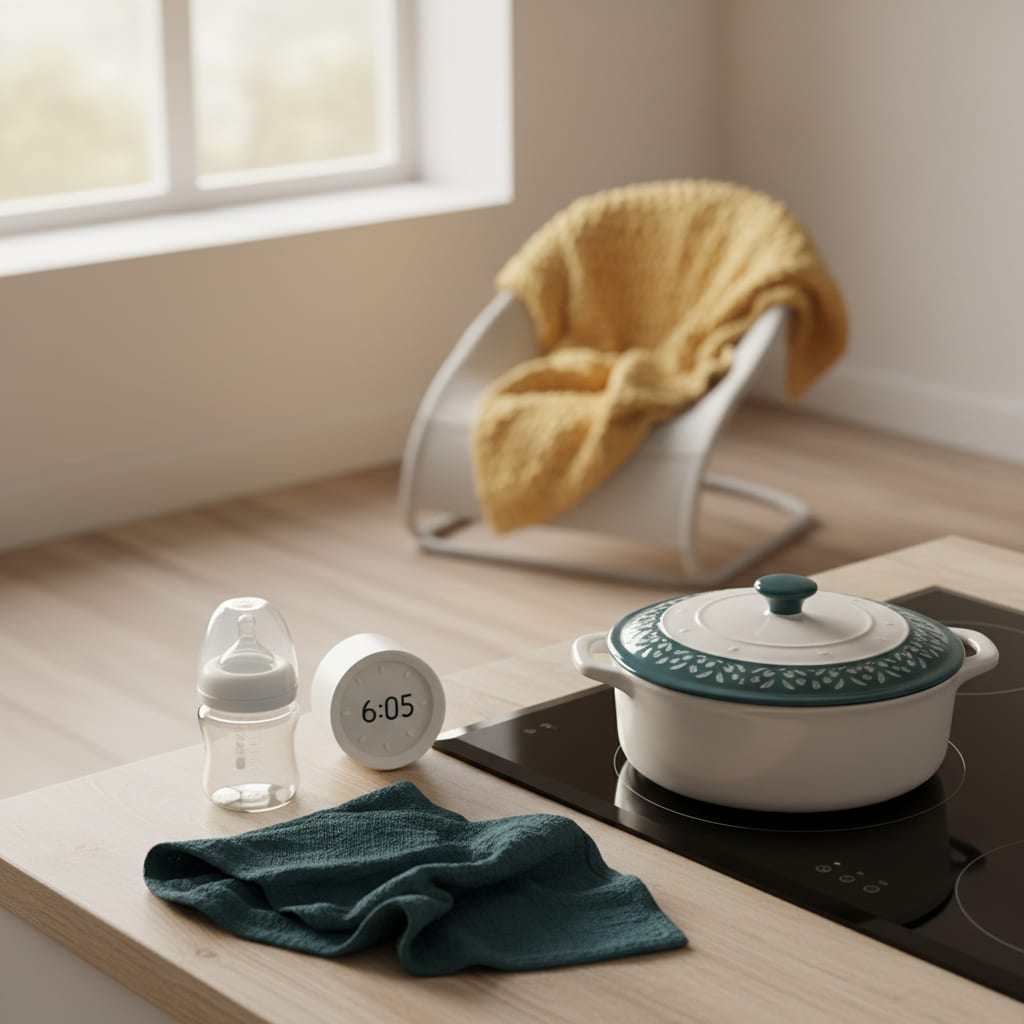
Evening gas is usually a combination of a fast, frantic feed, a swallow of air, and a baby who is already overtired — which is why it lands at 6 p.m. and not at 10 a.m. The fixes are unglamorous: slow the feed down, burp mid-feed instead of only at the end, move some tummy time to the afternoon, and get the last nap in before the meltdown rather than after it. And because that hour is also when dinner is supposed to happen, the second half of this post is about moving your cooking out of it entirely. That part is fully in our control, and it changes the evening more than anything else on the list.
Why the gassy hour is always the dinner hour
Three ordinary things stack up between about 5 and 7 p.m.:
The feed gets faster and less organized. Babies often cluster feed in the evening — short, frequent, urgent feeds rather than the calm ones from earlier in the day. A frantic latch or a hurried bottle means more swallowed air, and swallowed air has to come out one end or the other.
The baby is already at the end of their tolerance. Sleep pressure has been building all day. A baby who is overtired is less able to settle through a bubble of gas that they’d have burped past without complaint at breakfast. Betteroo’s guide to gas that flares up after dark walks through why the timing clusters this way and when it’s worth mentioning to a pediatrician.
The house gets loud. Older kids come home, the TV goes on, someone starts a pan. There’s nothing wrong with any of it, but it’s a lot of input for a nervous system that’s already full.
None of that means you’re doing anything wrong. It means the hour is stacked against you, and the most useful thing you can do is take one or two layers off the stack.
Feeding changes that actually reduce air
Pace the bottle. Hold the baby more upright, keep the bottle closer to horizontal so the nipple is only just full, and give a few seconds of pause every ounce or so. It turns a four-minute bottle into an eight-minute one and cuts the gulping considerably.
Check the flow rate. A nipple that’s too fast makes the baby chug and swallow air; one that’s too slow makes them work hard and swallow air. If your baby clicks, leaks at the corners of the mouth, or pulls off gasping, the flow is worth a second look.
Feed before the crying starts, not after. A baby who has been crying for ten minutes swallows air the whole time and then feeds frantically on top of it. Offering the evening feed slightly earlier than the point of desperation is one of the highest-return changes available.
Latch depth matters more than duration. For breastfeeding, a shallow latch pulls in air with every suck. If evening feeds feel different from morning feeds — pinchy, clicky, short — that’s worth flagging at your next appointment.
Burping that works when the usual burp doesn’t
Most of us burp at the end of a feed and call it done. For an evening-gassy baby, mid-feed is where the win is.
- Burp at the halfway point, not just the end — after the first breast, or at the two-to-three-ounce mark on a bottle.
- Change position rather than patting harder. Over-the-shoulder, seated-upright with a hand supporting the chin and jaw, and face-down across the forearm each open a different angle. If one doesn’t produce anything in a minute, switch instead of persisting. Betteroo has a rundown of burping holds with the mechanics of each.
- Upright for 10 to 15 minutes after the feed. Gravity does more than patting does. This is the part most of us skip because we’re trying to put the baby down and get to the stove.
- Bicycle legs and tummy time during the day. Both help move gas along, but do them well before a feed rather than after — a full stomach plus pressure is a spit-up situation.
If the crying is inconsolable for hours, the pattern is new, or there’s fever, blood in the stool, poor weight gain, or forceful vomiting, that’s a call to the pediatrician rather than a technique problem. Gas fixes are for a baby who is uncomfortable, not a baby who is unwell.
The nap underneath the meltdown
Here’s the part that surprised us with our third: a large share of what looked like evening gas was actually a late-afternoon nap that had drifted. When the last stretch of the day ran too long awake, the 6 p.m. crying got louder and the gas got harder to burp through — same baby, same bottle, different result.
Age-matched wake windows and a realistic bedtime do more for the evening than any burping technique — match the schedule to the baby’s actual age instead of fighting the symptom. The same logic runs through what we wrote about early morning feeds and whether they’re hunger or habit — the timing of the day shapes the feed far more than the feed shapes the day.
Now, dinner
You still have to eat, and the gassy hour is the worst possible hour to start cooking. Three things that make it survivable:
Move the prep to the morning. Chop, marinate, brown the meat, or assemble the whole thing during your baby’s best window — usually the first nap of the day. At 6 p.m. you’re reheating, not cooking. This is the core of our cooking dinner with a baby system, and it’s the single change worth making.
Cap active cooking at 15 minutes. A dinner that needs 40 minutes of standing attention is a dinner you will abandon. Sheet-pan meals, pasta with a five-ingredient sauce, and anything that goes into a slow cooker before lunch all clear the bar.
Wear the baby and cook one-handed — carefully. A carrier gives you the upright hold that helps with gas and two free hands. Stay out of splatter range and off the hot side of the stove: stirring at arm’s length is fine, draining pasta is not.
Eat earlier than feels normal. Family dinner at 5:15 with a baby who’s calm beats dinner at 7 with a baby who isn’t. Once solids start, that earlier slot becomes genuinely useful — see what changes at night once solids begin.
If you want a schedule read on the underlying pattern rather than another burping trick, a two-minute sleep quiz will tell you whether the day itself is set up to produce a 6 p.m. meltdown.
FAQ
Why is my baby so gassy in the evening?
Evening feeds are typically faster and more frequent, which means more swallowed air, and the baby is at their most overtired at the same moment. Both effects land in the same window, which is why 5 to 7 p.m. feels so much worse than the rest of the day.
Should I burp my baby during a feed or only after?
Both. For a baby who’s uncomfortable in the evenings, a mid-feed burp — after the first side, or at the two-to-three-ounce mark on a bottle — usually does more than the end-of-feed burp alone. Changing hold position works better than patting harder.
Does the witching hour mean my baby has colic?
Not necessarily. A fussy evening stretch is extremely common and usually eases over the early months. Colic describes a specific pattern of prolonged, inconsolable crying, and it’s worth a pediatrician conversation rather than a guess — especially if the crying is new, escalating, or paired with feeding or weight concerns.
How do I cook dinner during the witching hour?
Don’t. Do the prep during your baby’s best window earlier in the day and reserve 6 p.m. for reheating. If you must cook, keep active cooking under 15 minutes and pick a one-pan dish — and eat earlier than you think you should.
Will tummy time help with gas?
It can help move gas along, and it’s worth building into the day for other reasons too. Do it well before a feed rather than after, on a firm flat surface, always supervised and never when your baby is sleepy.
✳ More From the Kitchen

Lunchbox & Kids

Lunchbox & Kids

Kitchen How-Tos