Starting Solids and Baby Sleep: What Changes at Night
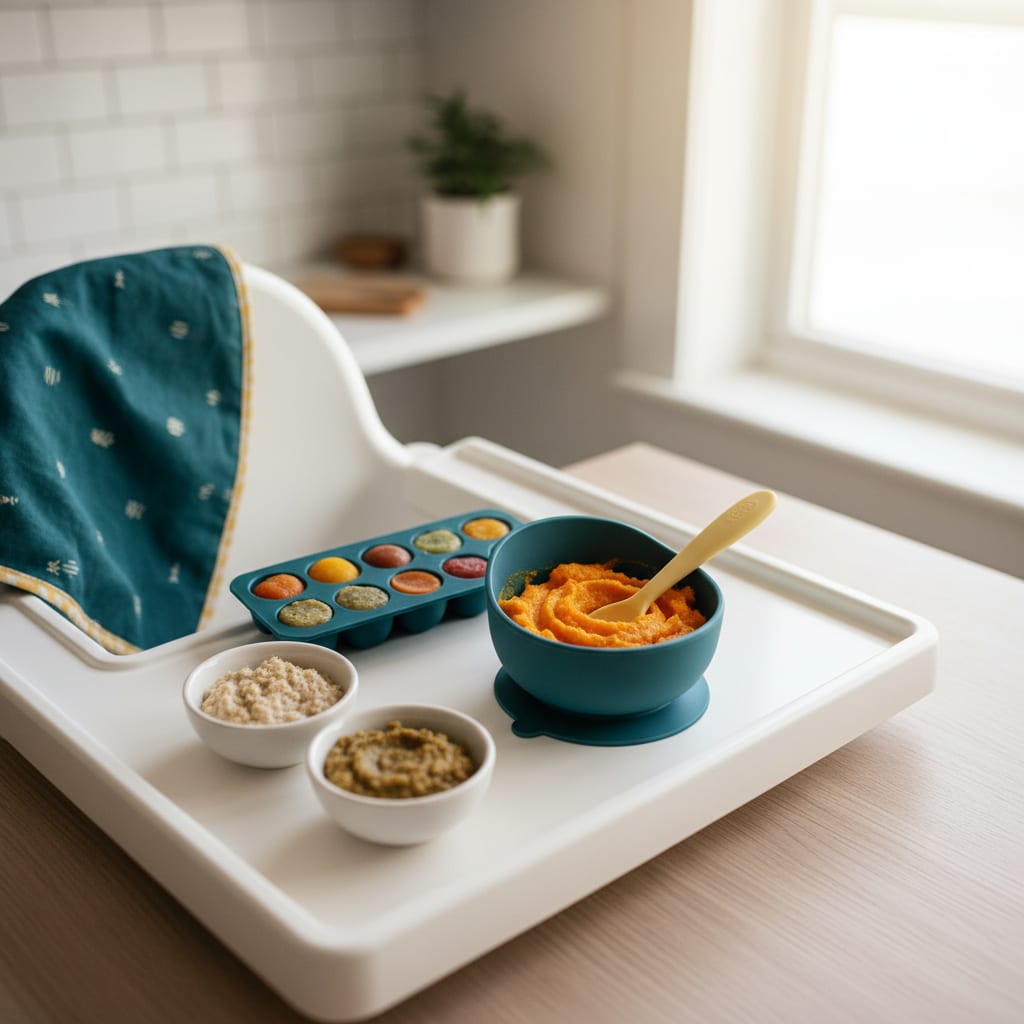
Starting solids does not, by itself, make babies sleep through the night — and the grandma-approved trick of loading a baby up before bed usually backfires. Night sleep around 6 months is driven far more by schedule, sleep skills, and development than by calories. What solids do change at night: a too-close dinner can mean gas and grumbles at 2 a.m., new foods can briefly unsettle digestion, and a well-timed, iron-friendly eating rhythm supports the sleep your baby was already capable of. Here’s the kitchen side and the sleep side, and how to run them together.
We’re a food blog, so weaning is our favorite baby stage — actual cooking is back on the menu. But we learned with all three of ours that the spoon and the crib are connected, and the connection isn’t the one the cereal myth promises.
The “feed them more, they’ll sleep” myth
The most persistent advice in baby-dom is that a full tummy — usually via cereal in a bottle or a big bedtime meal — buys you a full night. Two problems:
- Sleeping through the night is a developmental and schedule skill, not a fullness meter. Babies wake between sleep cycles regardless; what determines whether they resettle is how they fall asleep and whether their day’s sleep pressure is balanced — the whole argument of our state of baby sleep report.
- A stuffed baby often sleeps worse. A brand-new digestive system processing a big, late meal is a recipe for gas, discomfort, and — if dinner replaced a milk feed — an actually-hungry baby at 3 a.m., because milk is still where most of the calories live in the first year.
So take the pressure off the spoon. Solids in the early months are practice: textures, tastes, and the fine art of getting food near the mouth.
What starting solids really does to nights
- The first week or two can be bumpy. New foods mean a digestive system learning on the job — a few gassier, squirmier nights when you introduce something new is normal and passes.
- Timing matters more than volume. Dinner solids landing within about an hour of bedtime is the most common self-inflicted wound. Leave a buffer (more below).
- Iron quietly matters. Around 6 months, babies’ iron stores start needing backup, and iron-rich first foods — meat, beans, lentils, fortified oat cereal — support the growth and energy regulation that good sleep rides on. That’s a food-shopping fact, not a sleep hack.
- Milk is still the main event. Keep milk feeds on their usual rhythm and offer solids alongside, not instead — most sleep regressions blamed on weaning are really a milk feed that quietly went missing.
The weaning-week kitchen plan
The part we can genuinely help with — running the food side so it never trips the nights:
- Offer dinner solids 1.5–2 hours before bedtime. Baby eats with the family at 5:15, bath at 6:30, milk, bed. Digestion happens upright and awake, not flat in a dark crib.
- New foods at breakfast or lunch, not dinner. If something disagrees with them (or turns out to be an allergen), you find out at 1 p.m. — not at midnight. This is the single best rule we know for weaning without wrecking nights.
- Cook once for everyone. Unseasoned portions of the family meal — soft-roasted vegetables, shredded slow-cooker chicken, mashed beans, butter noodles chopped small — beat a separate baby-food production line. Salt your own plate at the table.
- Batch the purées and mashes. An ice-cube tray of mashed sweet potato, lentils, and oatmeal is a week of dinners; it’s the baby-scale version of our freezer-prep system, and it keeps 5 p.m. calm — which, as our cooking-dinner-with-a-baby playbook argues, is half of what protects the evening.
If nights fall apart when solids start, look at the schedule
Here’s the pattern we see constantly: solids start around 6 months, nights wobble, and parents start engineering dinner — more food, different food, earlier food. But 6 months is also peak schedule-change territory: naps consolidating, wake windows stretching, bedtime drifting. Nine times out of ten the fix lives there, not on the plate.
This is exactly what Betteroo got right for us: it builds a day-by-day sleep schedule personalized to your baby’s age and temperament, and keeps adjusting it through precisely these transition months — so when nights wobble mid-weaning, you can see whether it’s the lentils or the nap schedule (it’s usually the nap schedule). If you’re spoon-deep in the solids stage and nights just got worse, their quiz takes a few minutes and maps what your baby’s schedule should look like right now.

To be fair to the spoon: an app doesn’t feed the baby, and no schedule prevents the occasional broccoli-related 3 a.m. opinion. Solids and sleep each need their own plan — this post is the food half; a schedule tool like Betteroo is the sleep half.
FAQ
Does starting solids help a baby sleep through the night?
Not directly. Research and pediatric guidance broadly agree that night sleep at this age is driven by development and sleep habits, not calories from solids. A reasonable dinner at the right time supports sleep; a big bedtime meal usually disrupts it.
Should I feed my baby solids right before bed?
No — leave roughly 1.5 to 2 hours between dinner solids and bedtime so digestion happens before the crib. Keep the usual bedtime milk feed; milk remains the main source of calories through most of the first year.
Why is my baby waking more at night since starting solids?
Common culprits: dinner too close to bedtime, a new food causing gas, a milk feed that got displaced by solids, or — most often — a nap schedule that needed adjusting anyway around 6 months. Introduce new foods early in the day and check the schedule before blaming the menu.
What first foods are best for sleep?
There’s no magic sleep food, but iron-rich options — soft-cooked meat, lentils, beans, fortified oat cereal — support healthy growth, and gentle, familiar dinners (oatmeal, sweet potato, banana) are least likely to cause nighttime digestive drama. Save brand-new foods for breakfast.
✳ More From the Kitchen

Lunchbox & Kids
Easy Dinners
Freezer & Meal Prep