Early Family Dinner at 5pm: Eating Together With a Toddler
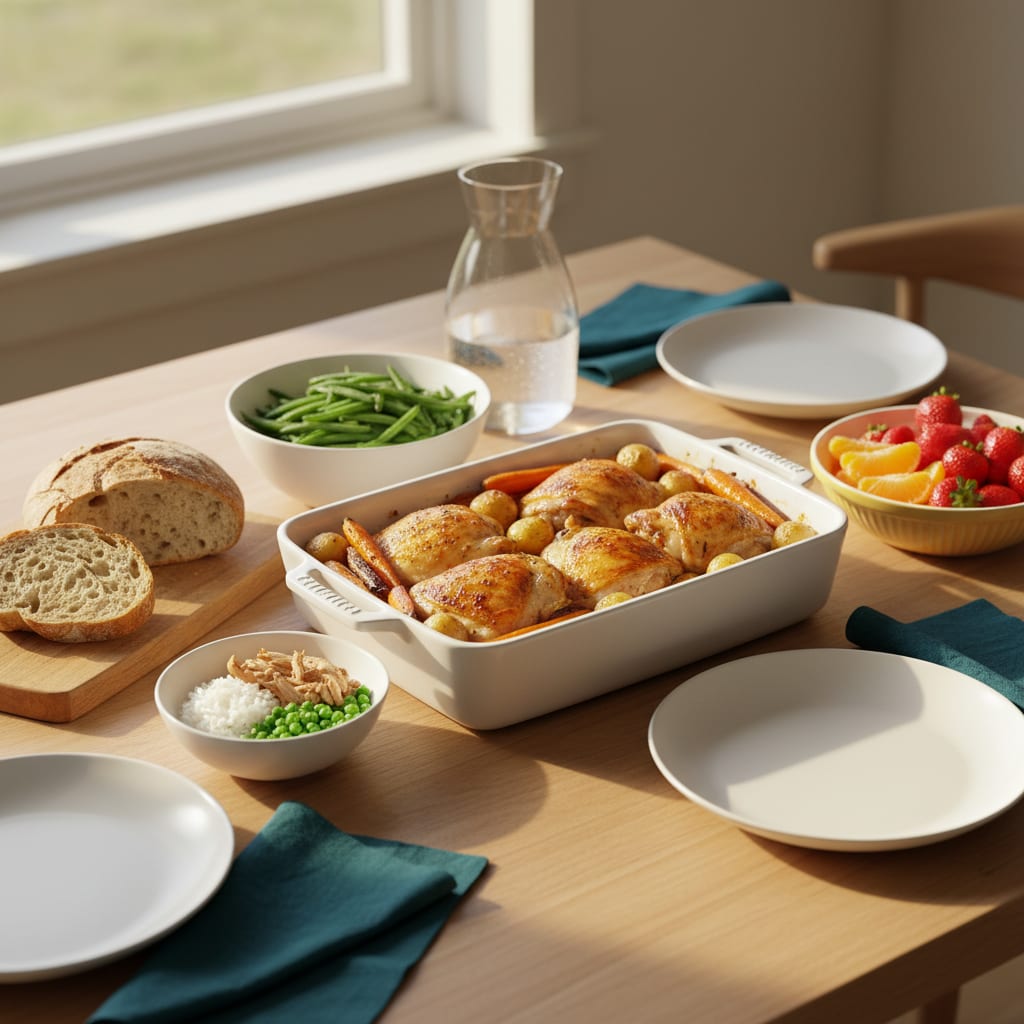
An early family dinner works when you set the time from bedtime, not from when the adults get hungry. For a toddler asleep by about 7:00 to 7:30, sit down between 5:00 and 5:30, cook in the morning or at nap time so 5:00 isn’t a cooking deadline, end the afternoon snack by about 3:30, and move the clock 15 minutes every few days rather than all at once. If one adult can’t be home by 5, the toddler still eats with whoever is there, and the late parent joins for fruit or dessert.
Our short bedtime routine is the rescue for the night dinner ran late. This post is the fix that stops it being every night: the meal itself moves.
Why 5pm suits a toddler better than 6:30
Toddlers get hungry early. Dr. Anne Fishel of The Family Dinner Project puts it plainly: “Toddlers tend to be hungry by late afternoon, when parents are just unwinding from their workdays and may not yet be ready to eat.” By 6:30 a hungry two-year-old has often gone past hungry to wired, and wired children don’t eat well and don’t settle well.
The Australian parenting service Karitane gives the same advice in its toddler feeding sheet: “Make your toddler’s evening meal early to avoid being over tired.” The same sheet says toddlers from 12 months should eat family meals, sitting down together at a table. Early and together sound like opposites until the whole family moves.
The sleep schedules point the same way. Betteroo’s sample days for three-year-olds put dinner at 5:30 for a child who still naps (asleep around 7:30 to 8:00) and at 5:15 for one who has dropped the nap (asleep around 6:45 to 7:15). A 6:30 family dinner doesn’t fit either day.
Work backward from bedtime
Start from the time your toddler is actually asleep, and count back. These are planning numbers from our own evenings, not a rule from any source: about 30 minutes at the table (Karitane suggests limiting toddler eating time to 30 minutes), a short gap, then a routine of about 30 minutes.
| Asleep by | Sit down to eat | Start the routine | Last afternoon snack ends |
|---|---|---|---|
| 6:30 | 4:45 | 5:45 | 3:00 |
| 7:00 | 5:00 | 6:15 | 3:15 |
| 7:30 | 5:30 | 6:45 | 3:45 |
| 8:00 | 6:00 | 7:15 | 4:15 |
The 6:30 row isn’t as rare as it looks. When a toddler goes from two naps to one, usually between 14 and 18 months, Betteroo suggests a temporarily earlier bedtime of about 6:00 to 6:30 while the single nap is still short. Use the top row for those weeks, then move back down as the nap gets longer.
The real problem: dinner at 5 means cooking at 4
Nobody objects to eating at 5. The trouble is cooking from 4:00 to 5:00 with a tired toddler hanging on your leg. So the fix is to move the cooking, not to cook faster.
- Cook in the morning. A crockpot started after breakfast is done by 5:00 without anyone touching it. Our dump-and-go crockpot meals are built for exactly this, and a 6-quart Crock-Pot with a warm setting is the size that feeds a family with lunch leftovers.
- Cook at nap time. Chop, brown the meat or assemble the tray during the afternoon nap, then the oven does the rest. A sheet pan that goes in at 4:30 needs no attention while it cooks.
- Plan a cold dinner once a week. The Family Dinner Project suggests a picnic-style dinner packed the night before or early in the morning, ready in the fridge. Think cold chicken, cheese, cut fruit, bread and dips.
- Give the toddler a job. Dr. Fishel describes her granddaughter cracking eggs and handing over dishes from a chair pulled up to the counter. Knives and flames are out at this age, but tearing lettuce or putting bread in a basket keeps a toddler busy instead of underfoot.
For the plate itself, the Family Dinner Project suggests separating a meal into small sections, even a muffin tin, so a toddler can see each food on its own. The same cooked dinner goes into the wells of a 12-cup muffin pan: chicken in one, rice in another, vegetables in a third, so nothing needs cooking twice.
When one parent gets home at 6:15
This is the reason most families eat late, and there’s no perfect answer. Here are the options that actually work.
- The toddler eats at 5 with whoever is home. One adult eating with the child is still a family meal. The other parent eats from the same pot later, which is where a crockpot on warm helps.
- The late parent joins for the last course. Fishel’s version is to treat the toddler’s dinner as an “appetizer” for the adults: everyone sits together for part of it, like the cheese and fruit. At 6:15 that can be fruit or yogurt with the toddler before the bath.
- Choose two or three nights. Pick the nights when everyone can be home by 5 and make those the shared dinners. The Family Dinner Project also suggests making weekend lunches the shared meal instead.
Move the afternoon snack too
An earlier dinner fails if the toddler arrives at the table already full. Two common causes:
- A late snack. A snack at 4:15 and dinner at 5:00 is two meals in 45 minutes. Move the snack earlier with the dinner, using the right-hand column of the table above.
- Milk and juice. Karitane’s sheet warns that large amounts of milk, juice and cordial “will fill them up, and affect their appetite”. If there’s a cup of milk at 4:30, our guide to the toddler who drinks too much milk and won’t eat dinner shows how to count the cups and cut back.
Ease the clock forward
Moving dinner from 6:30 to 5:00 in one go means a toddler who isn’t hungry on day one and parents who think it failed. Move it 15 minutes every two or three days and move the snack by the same amount. Karitane also suggests telling your toddler ahead of time that the meal will be ready soon and keeping mealtimes regular and predictable. A five-minute warning at the same time every day helps a toddler come to the table.
 What time should dinner actually be?
Betteroo builds an age-matched sleep schedule around your child's real wake-up and nap times, so you can set dinner from bedtime instead of guessing.
Take the sleep quiz →
The long gap after an early dinner
Two hours between the last bite and lights out is longer than toddlers are used to, and some will ask for food at bath time. That’s fine. A small, plain snack before teeth, at the table, keeps the evening on track. Our bedtime snacks for toddlers guide has a short list and the cut-safe sizes. If the toddler is fine and the adults are hungry at 8:30, that’s normal too, and toast after bedtime is part of the deal.
FAQ
What time should a toddler eat dinner?
For a toddler asleep by about 7:00 to 7:30, sit down to eat between 5:00 and 5:30. Betteroo’s sample days for three-year-olds put dinner at 5:30 on nap days and 5:15 on no-nap days. Work back from your own child’s bedtime rather than picking a clock time.
Is 5pm too early for a family dinner?
Not with a toddler. Toddlers tend to be hungry by late afternoon, and Karitane advises an early evening meal to avoid overtiredness. The adults may need a snack later in the evening, and that’s the trade-off.
What if my partner can’t be home by 5?
Eat with the toddler at 5 anyway, and have the late parent eat from the same pot afterward or sit down for fruit or dessert with the toddler. Keep the shared dinners for the nights everyone can be home early, or make weekend lunch the family meal.
Will an earlier dinner make my toddler hungry at bedtime?
Sometimes, especially in the first week. A small, plain snack before teeth handles it without turning into a second dinner. If hunger at bedtime happens every night, check that dinner isn’t being skipped because of a late snack or too much milk.
✳ More From the Kitchen
Feeding a Crowd
Feeding a Crowd
Kitchen How-Tos