Nap-Time Batch Cooking: A Two-Hour Kitchen Block
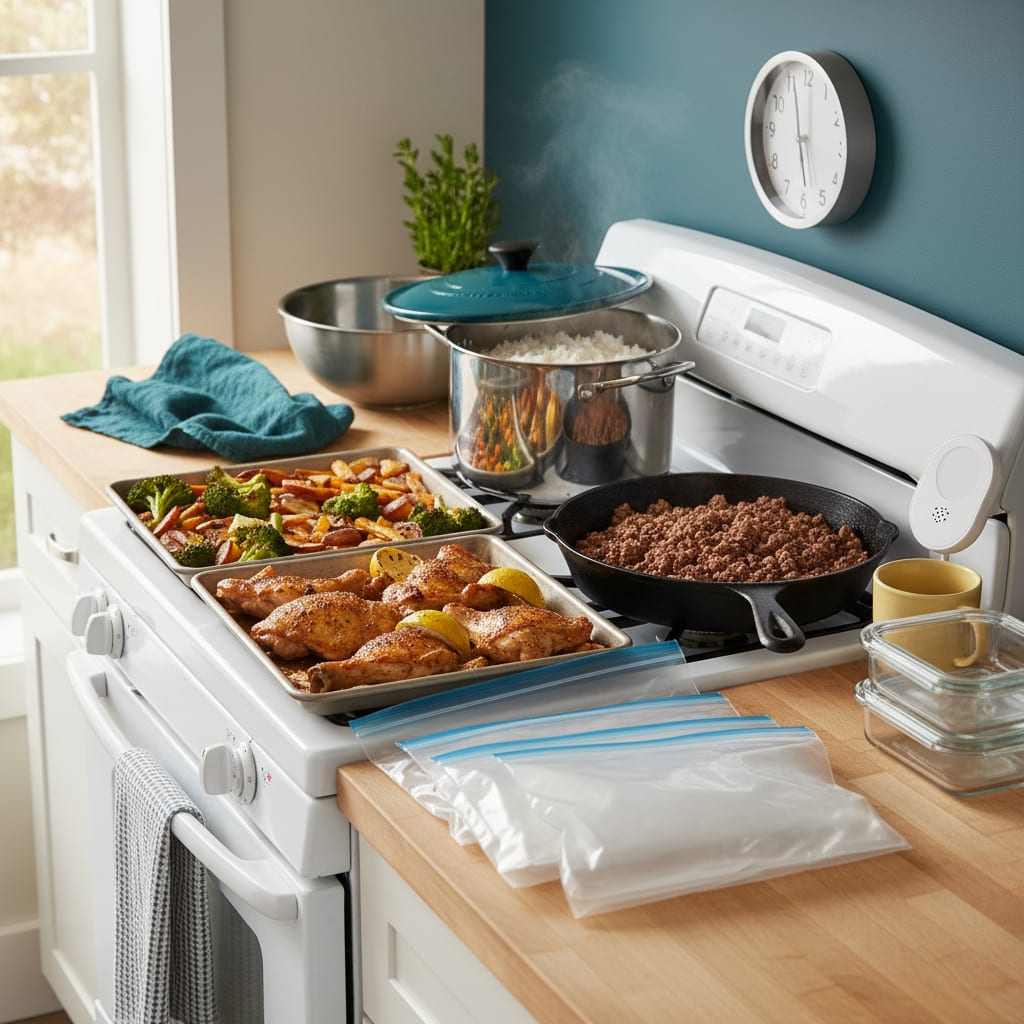
The way to batch-cook during a nap is to stop cooking meals and start cooking components — in a fixed order, loudest job first. Give yourself one two-hour block during the longest nap of the day, spend the first ten minutes putting everything on the counter, load the oven, then work down through stovetop, then cold prep. That order matters because it’s ranked by how badly each task suffers if you have to walk away. Done once a week it produces four or five dinners’ worth of building blocks, and — critically — it still produces something useful if the nap ends at 40 minutes.
That last part is the whole design brief. A two-hour block is the plan. A 45-minute block is the reality on a lot of days, and a plan that collapses when the monitor lights up isn’t a plan.
Pick the right nap
Not all naps are batch-cooking naps. The one you want is the longest, most reliable one — usually the midday nap once a baby is down to two naps, and the single afternoon nap for toddlers. Morning naps tend to be shorter, and the late-afternoon nap is the one most likely to be a 25-minute car-seat situation.
Know roughly what you’re working with before you start. Nap lengths shift by age, and they shift again every time a nap drops — Betteroo’s guide to nap transitions is a good reality check on which window is actually your reliable one this month. If your long nap has quietly turned into a string of 30-minute ones, that’s its own problem with its own fixes — Betteroo’s explainer on short naps is worth ten minutes before you plan a kitchen block around a window that isn’t there.
The two-hour block, in order
0:00–0:10 — Set out, don’t start. Everything on the counter: sheet pans lined, oven on, meat out of the fridge, onions and garlic in one pile, containers and bags stacked open. This ten minutes feels like a waste and is the reason the rest works. Nothing on this list requires you to go hunting for a lid mid-task.
0:10–0:25 — Load the oven. Two sheet pans of vegetables, a tray of chicken thighs, a pan of meatballs — whatever roasts. The oven is the only helper you have that keeps working while you’re upstairs, so it goes first, always. This is also the single most abandon-safe job on the list: a timer runs, the food is fine, and a slightly over-roasted carrot is still a carrot.
0:25–0:55 — Stovetop, the noisy half. Brown a big pan of ground beef. Start a pot of rice or a pot of pasta. Get a soup or chili to a simmer. These need you present but not constantly — and they’re the jobs where the food ends up in the freezer rather than on tonight’s plate, so they earn their spot in the middle of the block.
0:55–1:20 — Cold prep and assembly. Shred the cooled chicken. Portion the browned beef into flat bags. Chop what needs chopping for the week. This is the interruptible tier: you can stop mid-task, put a bowl in the fridge, and pick it up an hour later with zero loss.
1:20–1:40 — Pack, label, cool. Spread hot things thin on sheet pans to cool fast, then bag flat and date everything. Cooling properly is not optional — it’s the difference between rice that reheats fluffy and rice that reheats as a brick, as our can you freeze cooked rice guide gets into.
1:40–2:00 — Reset the kitchen. Dishwasher loaded, counters wiped, one pot left out for tonight. Walking into a clean kitchen at 5pm is worth as much as any of the food.
Cook components, not meals
The instinct is to make three complete dinners. Don’t. Three finished meals give you three options; six components give you a couple of weeks of them, and they don’t get boring on the third night.
The standing six in our house:
| Component | Batch | Becomes |
|---|---|---|
| Shredded chicken | 3–4 lbs thighs, roasted | Tacos, quesadillas, rice bowls, soup, pasta |
| Browned seasoned beef | 2–3 lbs | Chili, taco night, sloppy joes, pasta sauce |
| Roasted vegetables | 2 sheet pans | Side dish, grain bowls, blended soup, frittata |
| Cooked rice | Double batch | Every one of the above |
| A sauce or two | Marinara, teriyaki, salsa verde | The thing that makes it a different dinner |
| Cut fruit and veg | Whatever’s in the drawer | Snacks, lunchboxes, the 4pm crisis |
Assembly at 5:30pm is then genuinely ten minutes: a component, a sauce, a starch, heat. It’s the same logic as our freezer meal prep for beginners system, run inside a smaller window.
Plan B: the nap ended at forty minutes
This happens. The block is built so it degrades gracefully:
- If you got 20 minutes: you did the set-out and loaded the oven. The oven finishes without you. That is a real win — you’ll have roasted chicken and vegetables tonight.
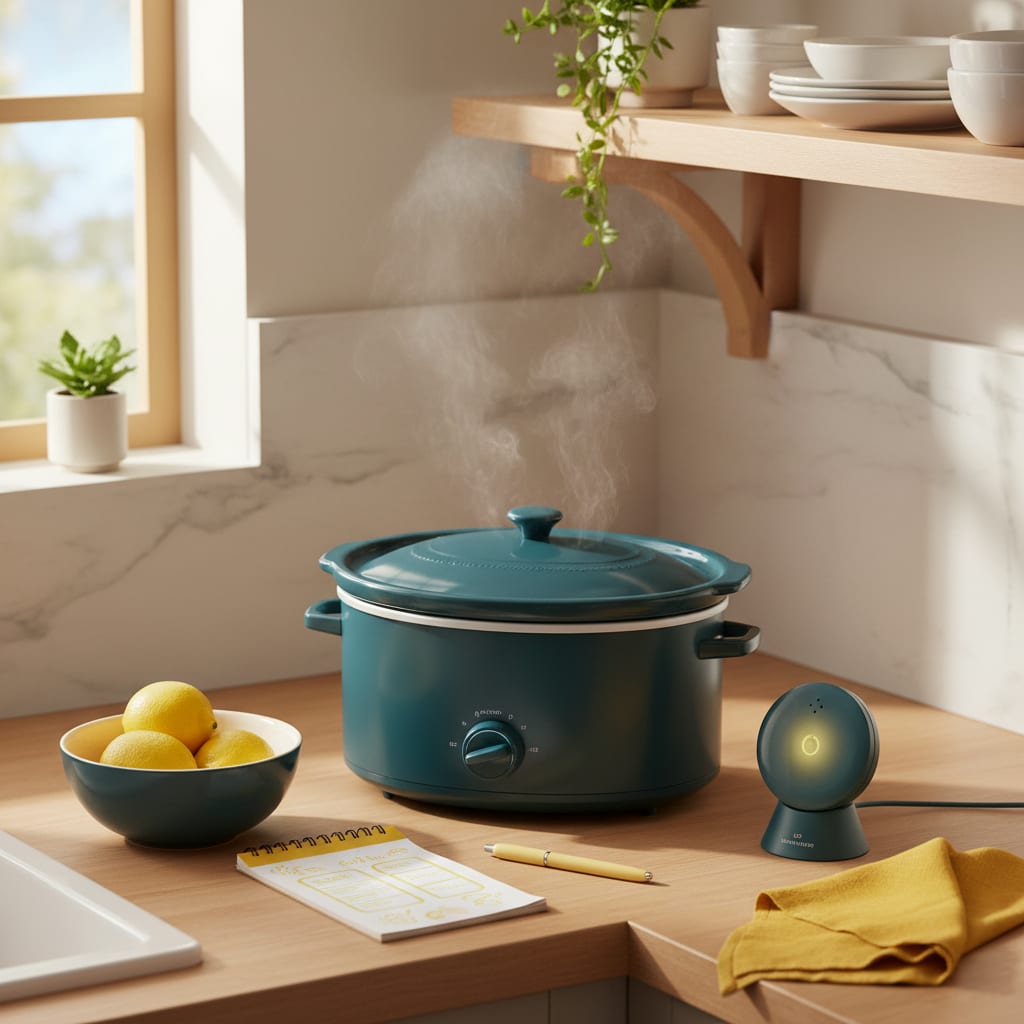
- If you got 40 minutes: oven loaded, one pot going. Move the pot to the back burner on low, or shift it to a slow cooker and let it finish while you’re wearing the baby. Everything in dump-and-go crockpot meals exists for exactly this handoff.
- If you got 60 minutes: you’re through the stovetop tier. Cold prep and packing are the two tiers that survive being done in ten-minute fragments over the rest of the afternoon, and they’re the ones a baby can be worn through.
The rule underneath: never start a task in a tier you can’t abandon. Don’t begin deep-frying at minute 80. Don’t start a recipe with a fussy timing window when you have 25 minutes of monitor silence left in the tank.
Two-block weeks beat one giant Sunday
One four-hour marathon on Sunday mostly produces a burnt-out cook and a fridge of food nobody wants by Thursday. Two two-hour blocks — a Sunday and a Wednesday nap — keep the food fresher and let the second block respond to what actually got eaten.
And when even a two-hour block isn’t happening, drop to the fifteen-minute version: brown a pound of beef, put rice on, cut fruit. That’s still three of tonight’s decisions made. Our cooking dinner with a baby guide is the whole survival version of this, for the season when there’s no reliable nap to plan around at all — and if that’s where you are, the Betteroo nap and sleep quiz takes about as long as browning the beef.
FAQ
How do you cook with a baby who only naps 30 minutes?
Work in tiers rather than recipes. Use the 30 minutes for oven-loading and prep — the jobs that continue without you or stop cleanly — and save anything that needs continuous attention for when someone else is home. Two 30-minute windows in a day add up to more finished food than one interrupted hour of trying to follow a recipe.
What should I batch-cook first if I only do this once?
Shredded chicken and a double batch of rice. Between them they become tacos, bowls, quesadillas, soup and fried rice, they freeze well, and neither punishes you for walking away mid-cook. Add browned ground beef the second time.
Is it better to batch-cook during naps or after bedtime?
Naps, if you can get them, because the food goes in warm and gets cooled and packed properly rather than being rushed at 9pm. Bedtime blocks work for cold prep — chopping, portioning, assembling freezer bags — where nothing needs to cool down before it’s put away.
How do I keep the kitchen quiet enough not to wake the baby?
Front-load the loud jobs. The blender, the stand mixer and anything involving a heavy pot going onto a range go in the first 20 minutes, while the nap is at its deepest. Chopping, packing and dishwashing are quiet and belong at the end of the block anyway.
What if I don’t have freezer space?
Batch for the refrigerator instead, on a three-day horizon. Cooked chicken, browned beef, roasted vegetables and rice all keep about three to four days cold, which covers the weeknights that matter most. Component cooking works exactly the same way — you’re just shortening the runway.
✳ More From the Kitchen
Lunchbox & Kids
Freezer & Meal Prep
Feeding a Crowd