Make-Ahead Sandwiches for a Crowd (No Soggy Bread)
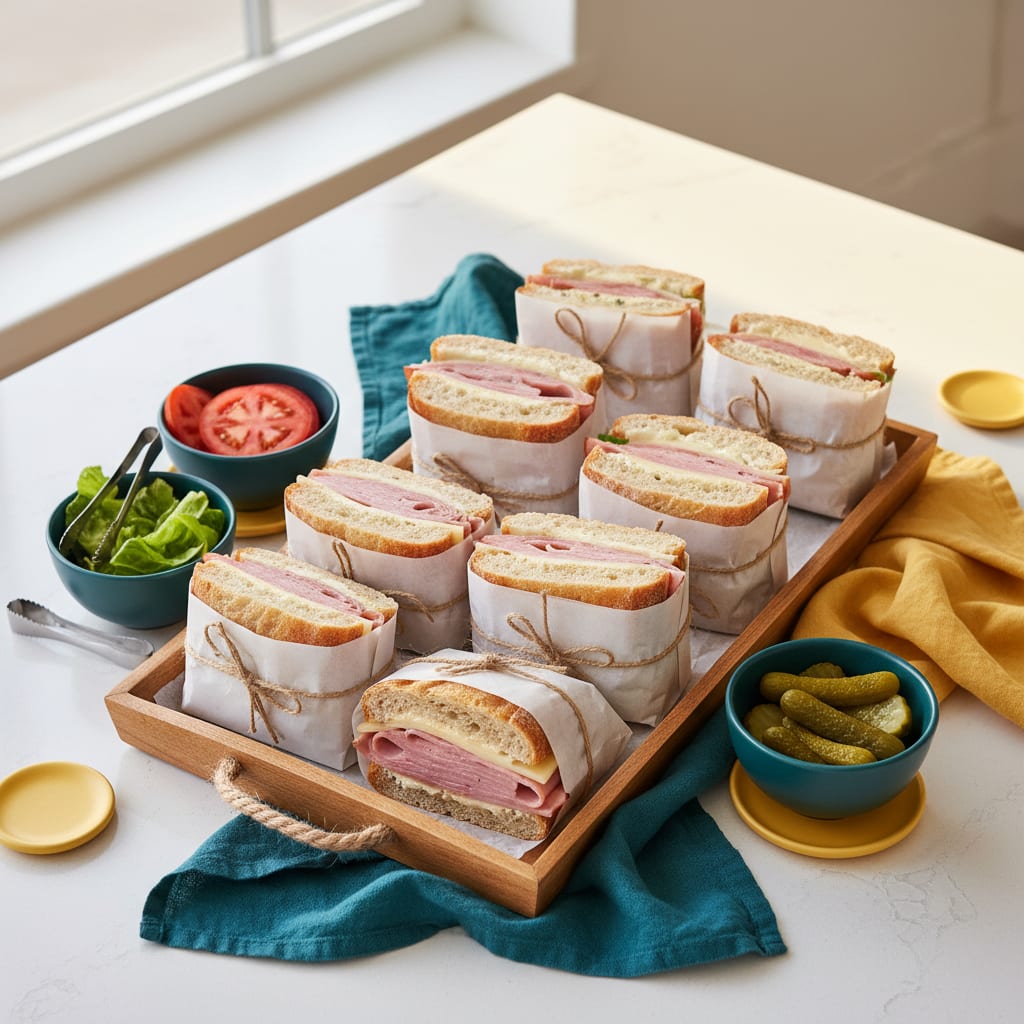
You can build sandwiches a full day ahead as long as you seal the bread with fat and keep every wet ingredient out of the stack until serving. Butter or mayo spread edge-to-edge on both slices is the waterproof layer; sturdy bread, dry-side fillings, and a cold, tightly wrapped rest do the rest. Tomatoes, pickles, dressed greens, and anything vinegary go in at the last minute or ride along in a separate container. Here’s the build order, the breads and fillings that survive, and a prep timeline for feeding 30 people without a soggy tray.
Why sandwiches go soggy (and the one fix)
Bread is a sponge with an appetite for two things: moisture from fillings and moisture from condensation inside the wrap. Fat blocks both. A thin, complete layer of softened butter, mayo, or cream cheese spread all the way to the crust — no bare patches, especially at the corners — is a physical barrier that keeps juice on the filling side.
That single move buys you 24 hours. Skip it and even a dry turkey-and-cheese sandwich turns pale and damp by hour six.
The second fix is structural: put the wettest thing in the middle, insulated by cheese or meat, never touching bread. Order matters as much as ingredients.
The build order that holds
- Fat, edge to edge, on both slices. Butter for ham and roast beef, mayo for turkey and chicken salad, cream cheese for veggie and smoked salmon.
- Cheese against the bread. Cheese is a second waterproof layer and it’s stiff enough to hold shape.
- Meat next, patted dry if it came out of a deli container with liquid in it.
- Wet things in the center, if they must go in at all — a thin smear of mustard, a couple of pickle slices, a spoon of relish.
- Second cheese slice, then the top piece of bread.
- Wrap tight in parchment or wax paper, then in foil or a zip bag, and refrigerate flat with nothing heavy on top.
Skip: sliced tomato, dressed lettuce, cucumber, sauerkraut, and anything oil-and-vinegar. Those go in a bowl on the table with tongs, and people add their own.
Breads that survive 24 hours
| Bread | Holds overnight? | Notes |
|---|---|---|
| Sweet Hawaiian rolls | Yes | The champion — dense crumb, and they’re built for baked sliders |
| Ciabatta and focaccia | Yes | Sturdy, but slice thin or the sandwich gets jaw-breaking cold |
| Sourdough | Yes | Tight crumb, tangy, holds up to juicy fillings |
| Bakery white or wheat sandwich loaf | Yes, with fat | The everyday choice; the butter layer is doing real work here |
| Croissants | Overnight max | Go leathery in the fridge past a day; assemble morning-of |
| Soft store-brand sandwich bread | No | Compresses into a damp brick |
| Baguette | No | Stales fast and shreds the roof of your mouth by day two |
Wraps and tortillas are the sleeper option for a crowd: a tortilla is essentially pre-sealed, and pinwheels sliced from a rolled wrap look like you tried three times harder than you did.
Fillings ranked by how well they wait
Best (make 24 hours ahead, no adjustments): ham and swiss with butter; roast beef and cheddar with horseradish mayo; turkey and provolone; Italian sub fillings without the oil and vinegar; pimento cheese; egg salad on sturdy bread.
Good (make the morning of): chicken salad, tuna salad, and any mayo-bound salad. They’re safe overnight in a container — it’s the bread contact that wants limiting. Mix the salad a day ahead, spread it in the morning.
Assemble at the party: anything with tomato, dressed greens, avocado, or hot sauce.
Better as a hot pan than a cold stack: ham and cheese. If the crowd is coming to a house with an oven, our ham and cheese sliders go together the night before, bake in 20 minutes, and beat any cold sandwich on the table.
Wrapping and stacking for transport
Wrap each sandwich individually if you’re traveling; wrap in a tray-sized block if you’re serving at home. Individual wrapping in unbleached parchment paper — a square, folded over like a package, taped shut — does three jobs at once: it keeps the sandwich together, it blots the tiny bit of condensation that forms, and it makes the tray look like a deli case instead of a pile.
Stack no more than two deep in a container. Sandwiches at the bottom of a four-deep stack compress into something dense and sad, and they take the longest to come back to a good texture.
Cut before wrapping, not after. A pre-halved sandwich is faster to grab, easier for kids, and it lets people take a half and come back — which stretches 30 sandwiches across a room of 40 people. The same logic runs through every dish in our travels-well potluck list.
A 24-hour timeline for 30 sandwiches
Day before, evening (about 45 minutes)
- Soften two sticks of butter on the counter.
- Slice and portion cheese; pat deli meat dry and separate into stacks of the right thickness.
- Mix any salad fillings and refrigerate in containers.
- Build and wrap the sturdy sandwiches — ham, turkey, roast beef, pimento cheese.
- Refrigerate flat, two deep maximum.
Morning of (about 20 minutes)
- Build the mayo-salad sandwiches and the croissants.
- Pack tomato, lettuce, pickles, and onion into separate containers with tongs.
- Load the cooler: sandwiches on the bottom, ice packs on top, add-on containers wedged around the sides.
At the party (5 minutes)
- Unwrap onto trays, or leave wrapped and stand them upright in a basket.
- Set the add-on containers at the end of the line so people finish their own sandwich.
How many to make: 1.5 sandwich halves per adult, 1 half per young child. For 30 adults that’s about 23 whole sandwiches cut in half — round up to 26 and expect to send a few home. If kids are a big share of the crowd, pair the tray with a cooler of fruit and veg from our picnic food list rather than making more sandwiches.
FAQ
How far in advance can you make sandwiches for a party?
Twenty-four hours for butter-sealed sandwiches on sturdy bread with dry fillings. Mayo-salad sandwiches are better assembled the morning of, and anything with tomato or dressed greens should be built at the party.
How do you keep sandwiches from getting soggy overnight?
Spread butter or mayo edge-to-edge on both slices of bread, put cheese directly against the bread as a second barrier, keep tomato and pickles out entirely, and wrap tightly so condensation can’t collect. Refrigerate flat rather than stacked deep.
How many sandwiches do I need for 30 people?
About 45 halves — roughly 23 whole sandwiches, cut. Make 26 to be safe. If sandwiches are the only main dish, plan two halves per adult and add a hearty side so nobody leaves hungry.
What’s the best bread for make-ahead sandwiches?
Sweet Hawaiian rolls, ciabatta, and sourdough hold best because their crumb is tight enough to resist moisture. Soft store-brand sandwich bread is the one to avoid — it compresses and dampens faster than any other option on the table.
Should make-ahead sandwiches be wrapped in foil or plastic?
Parchment first, then foil or a zip bag. Parchment against the bread absorbs the small amount of condensation that forms; the outer layer keeps air out. Plastic wrap alone traps moisture right against the crust.
✳ More From the Kitchen
Lunchbox & Kids
Feeding a Crowd
Freezer & Meal Prep